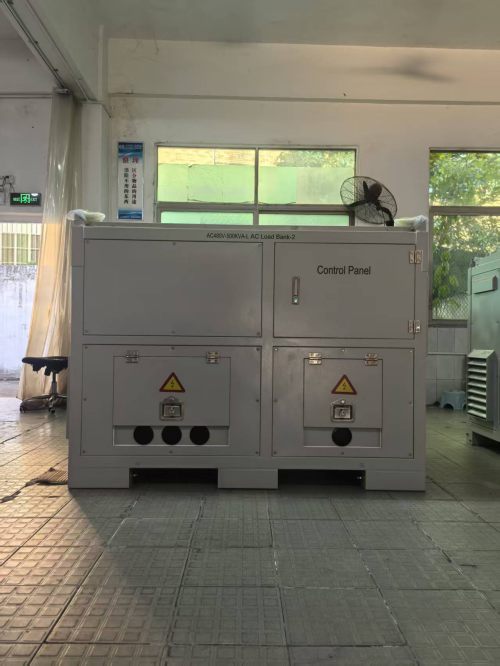
In modern industrial and commercial environments, ensuring generator reliability is critical for uninterrupted power supply during outages or emergencies. A load bank for generator testing factory plays a pivotal role in validating performance under real-world conditions before deployment. These specialized devices simulate electrical loads that mimic actual usage patterns—such as resistive, reactive, or combined RLC (resistance-inductance-capacitance) loads—to verify generator output stability, fuel efficiency, cooling system effectiveness, and control system responsiveness.
For manufacturers conducting factory acceptance tests (FAT), a properly configured load bank ensures generators meet IEC 60349-1 and IEEE 150-2019 standards for voltage regulation, frequency stability, and transient response. Resistive load banks are ideal for evaluating mechanical and thermal performance, while reactive load banks test the generator’s ability to handle inductive or capacitive loads typical in data centers or manufacturing facilities. Combined RLC load banks offer comprehensive testing by simulating complex power profiles found in microgrids or renewable energy systems.
Safety features such as overtemperature protection, short-circuit detection, emergency stop buttons, and grounding compliance (CE/UL/CCC certified) make these units suitable for high-volume production lines. Portable models with IP54-rated enclosures and forklift pockets facilitate easy handling across factory floors. Calibration intervals of every 12 months using NIST-traceable equipment ensure accuracy, while resistor blocks and fans have recommended replacement cycles of 3–5 years depending on usage intensity.
Case studies from anonymized factories show that integrating automated load banks reduced generator failure rates post-installation by up to 40% and improved commissioning times by 25%. By enabling controlled, repeatable testing at full load, manufacturers can confidently certify product quality before shipping—boosting customer trust and minimizing field service costs.