
On-site commissioning, generator acceptance testing, and UPS verification all depend on one thing: a load bank you can actually carry to where the work happens. Over three months we field-tested lightweight portable units across construction sites, data center loading docks, and remote telecom shelters. This report summarizes how five models performed on weight, portability, thermal behavior, control accuracy, and real-world ruggedness, so field engineers can pick the right tool without over-buying capacity they will never wheel up a ramp.
Why portability changed our test criteria
Traditional stationary load banks are rated almost entirely on kW capacity and airflow. For mobile operation that ranking is misleading. A 100 kW unit that needs two technicians and a forklift fails the moment the test point is up three flights of stairs or inside a containerized plant room with a narrow door. We therefore weighted our scoring toward handling and setup time, then confirmed each unit still delivered stable, repeatable loading once in position.
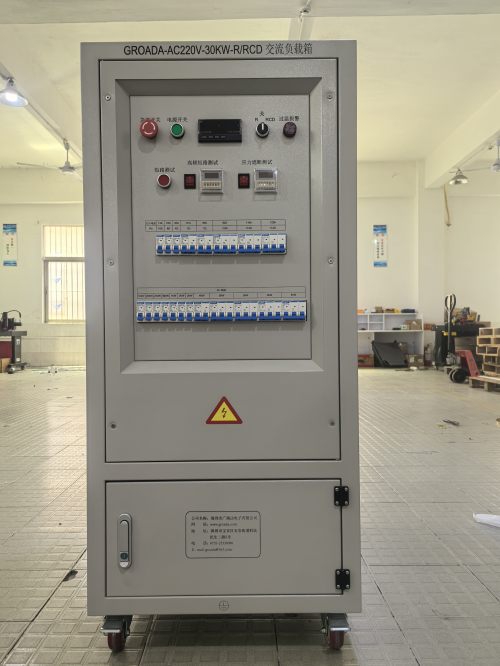
Each model was scored on five dimensions: transport weight and form factor, time from truck to first load step, step resolution and load-holding accuracy, thermal performance during a sustained 60-minute full-load run, and connection safety including cable glands, ratings, and fault protection. All tests used the same calibrated reference instrumentation so the comparison stays fair.
Test method and conditions
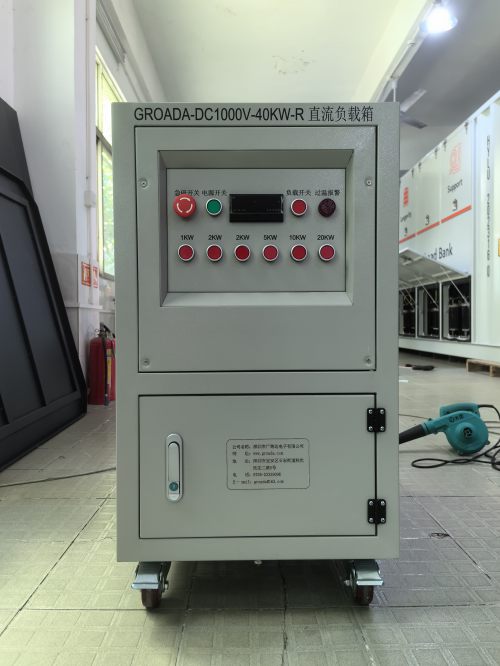
We ran every unit through an identical protocol. First, a timed single-operator carry and setup from a parked vehicle to a simulated test point ten meters away with a 400 mm door threshold. Second, a staged resistive loading sequence in defined increments to check step accuracy against the reference power analyzer. Third, a continuous full-rated run of 60 minutes while logging inlet and exhaust temperatures and watching for thermal fold-back. Ambient conditions ranged from 8°C on an exposed rooftop to 34°C in an unventilated plant room, which deliberately stressed the cooling design of each model.
Load-holding accuracy was recorded as the deviation between commanded and measured true power across the run. Anything drifting more than two percent under steady conditions was flagged, because commissioning sign-off documents depend on numbers an auditor can trust.
The five units, ranked
1. Compact 30 kW resistive, case-mounted
This was the standout for genuine one-person mobility. At roughly 34 kg in a wheeled hard case, a single technician moved it from vehicle to test point and had the first load step applied in under four minutes. Step resolution of 1 kW made it well suited to small generator and UPS acceptance work. Load-holding stayed within one percent across the full hour, and the sealed connector panel with individually fused phases handled a deliberately imperfect cable termination without nuisance tripping. The only compromise is ceiling capacity: at 30 kW it is a precision tool, not a bulk-loading machine.
2. Modular 50 kW stackable
Built as two 25 kW modules that lock together, this design solved the stairs problem elegantly. Carried as separate units each under 25 kg, then combined on site, it earned the best score for awkward access routes. Combined setup took closer to seven minutes because of the inter-module cabling, but the trade-off is worth it where a single heavy chassis simply cannot reach the test point. Thermal performance was strong thanks to independent fans per module, with no fold-back even in the 34°C plant room run.
3. 60 kW trolley-frame resistive
The practical upper limit of what we would call lightweight. At about 78 kg on a purpose-built trolley with pneumatic tyres, it rolled well over gravel and up a loading ramp but needed two people for stairs. Control was the best of the group: 0.5 kW resolution, a clear digital interface, and load-holding inside 0.8 percent. For generator commissioning teams who mostly work at ground level with vehicle access, this unit hits the best balance of capacity and manageability.
4. 100 kW compact convection-assisted
Included to mark the boundary of portability. It is transportable rather than truly portable: 140 kg, requiring a tail-lift or two strong operators and a flat route. Where it justified the weight was sustained high-capacity work, holding full load for the hour with the lowest exhaust temperature rise in the test, a credit to its oversized heat-sink and dual-stage fans. If your typical job is medium data center or large genset testing with dock access, the handling penalty is acceptable.
5. 25 kW battery-integrated field unit
The most specialized entry. A self-powered control section lets it operate where no auxiliary supply exists, which matters at remote towers and early-stage construction sites. Lightest absolute weight at 28 kg, fastest raw setup, but the smallest capacity and a step resolution of 2 kW that limits fine verification work. We rank it fifth overall but first for anyone whose real constraint is lack of site power rather than load capacity.
What the results tell field engineers
Capacity ratings should not drive a portable purchase on their own. In our timed trials the difference between a four-minute and a fifteen-minute setup, multiplied across several test points per day, outweighed modest differences in peak kW. Match the unit to your most common access conditions first, then to the loading range you actually sign off against. A technician who can reach the test point alone and reliably is more productive than one waiting for a second person to help lift a heavier machine.
Thermal headroom deserves a second look. Two units that looked identical on their data sheets behaved very differently in the hot, unventilated plant room, and only the sustained 60-minute run exposed the gap. If your work includes enclosed or high-ambient spaces, treat the full-load endurance figure as more important than the headline rating.
Safety and documentation notes
Every unit we recommend had per-phase protection, properly rated connectors, and clear earthing provisions. For commissioning work the instrument chain matters as much as the load bank: use a calibrated reference analyzer, record ambient temperature with each run, and keep the raw step log so results are defensible during acceptance sign-off. A load bank is only as credible as the measurement record it produces.
Frequently asked questions
1. What counts as a "lightweight" portable load bank?
As a working rule, anything a single technician can move and set up without lifting equipment, roughly up to 35 kg for carried cases or on a wheeled trolley for higher capacities. Above about 120 kg a unit is better described as transportable, since it needs two operators or a tail-lift.
2. Resistive or reactive load bank for mobile work?
Most on-site generator and UPS acceptance tests use resistive load banks because they verify true power output simply and reliably. Reactive and resistive-reactive units are needed when you must test power factor behavior, and they are heavier, so confirm your test standard requires reactive loading before carrying the extra weight.
3. How do I size a portable load bank for generator testing?
Cover your required test steps up to full rated load of the generator or UPS, with a small margin. For portable work, favor finer step resolution over raw capacity, because acceptance tests usually run through staged increments rather than a single full-load point.
4. Can portable load banks run at full load continuously?
Only if their cooling is designed for it. Our 60-minute endurance test showed that two similarly rated units can differ sharply in high ambient conditions. Check the continuous full-load rating and the maximum operating temperature, not just the peak kW figure.
5. What safety checks matter before applying load on site?
Confirm correct earthing, verify connector and cable ratings against the test current, check per-phase protection is functional, and ensure the exhaust airflow is clear of obstructions and personnel. Record ambient temperature and keep the step log for the acceptance report.