
In large-scale industrial environments, verifying the real-world performance of generators, UPS systems, turbines, and switchgear demands reliable high current load testing. A high current load bank delivers controlled electrical loading that simulates operational stress, allowing engineers to confirm capacity, stability, and thermal behavior before equipment is placed into mission-critical service. This evaluation reviews eight leading high current load banks selected for heavy industrial power testing, focusing on capacity, accuracy, cooling design, and field adaptability.
⚡ Key Insight: High current load banks are not merely dummy loads. They are precision test platforms that reveal how industrial power sources respond under sustained maximum draw, exposing weaknesses that light-load commissioning can never detect.

Why High Current Load Testing Matters for Industrial Power Systems
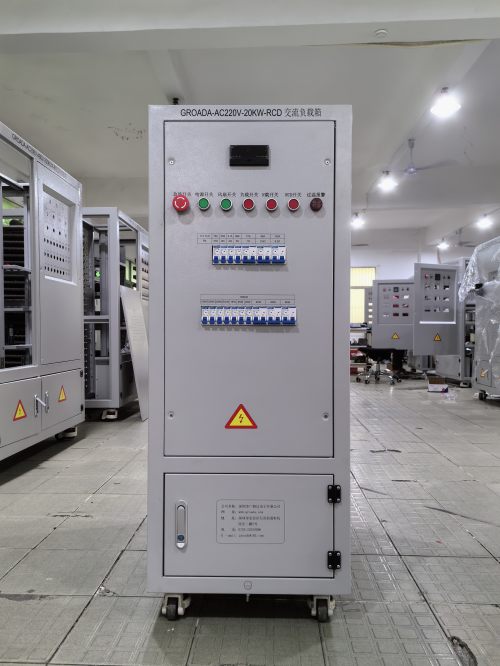
Industrial power assets are expensive, and unplanned downtime carries severe financial and safety consequences. Running equipment at partial capacity during commissioning leaves a dangerous blind spot: many faults—connection overheating, voltage sag, fuel system limitations, and control instability—only appear near full rated output. A properly sized load bank forces the system to operate at or beyond its nameplate rating in a safe, repeatable manner.
For facilities running megawatt-class generators or large battery banks, high current load banks confirm that protective relays, busbars, and cabling can sustain prolonged peak demand. They also support wet-stacking prevention in diesel generators by exercising engines under heavy load to burn off accumulated carbon and unburnt fuel.
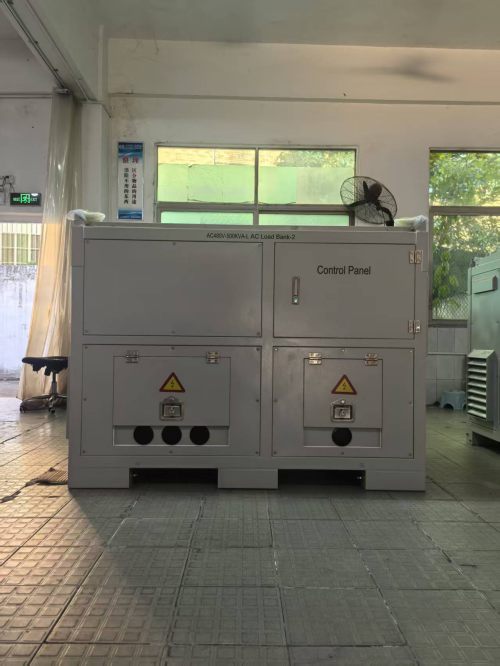
Core Selection Criteria Used in This Evaluation
✅ Rated Capacity: Total kW/MW and sustained current handling.
✅ Load Resolution: Step increments for fine-grained testing.
✅ Cooling Method: Forced-air or water cooling efficiency.
✅ Control & Data: Remote operation and measurement accuracy.
✅ Durability: Enclosure rating and field ruggedness.
The Top 8 High Current Load Banks Evaluated
1. Megawatt-Class Resistive Load Bank
Designed for the largest generator sets, this unit delivers sustained output in the multi-megawatt range with robust forced-air cooling. Its modular architecture allows several cabinets to be paralleled, making it ideal for power plant acceptance testing. Current handling remains stable across long test cycles, and the stainless-steel resistive elements resist corrosion in harsh outdoor sites.
2. Resistive-Reactive Combination Load Bank
Combining both kW and kVAR loading, this model tests generators under realistic lagging power factor conditions. It is particularly valuable for data centers and marine applications where inductive loads dominate. The simultaneous reactive loading reveals voltage regulation performance that purely resistive banks cannot measure.
3. Portable High Current Load Bank
Mounted on a rugged trailer, this unit brings heavy load testing directly to remote substations and field generators. Despite its mobility, it sustains high continuous current with weatherproof enclosures rated for outdoor deployment. Field engineers favor it for routine maintenance verification across distributed assets.
4. Water-Cooled Industrial Load Bank
For extremely high power density in limited floor space, water cooling allows this load bank to dissipate massive heat quietly and efficiently. It suits indoor factory testing where airflow is restricted and acoustic limits apply. The closed-loop cooling design supports long-duration endurance runs without thermal derating.
🔧 Engineering Tip: When current exceeds several thousand amps, water-cooled banks dramatically reduce footprint and noise compared with equivalent forced-air units, a decisive advantage in enclosed industrial halls.
5. DC High Current Load Bank
Battery energy storage systems, rectifiers, and renewable DC sources require dedicated DC loading. This unit provides precise, high-current discharge testing with fine voltage control, essential for validating large battery bank capacity and verifying rated discharge performance in substations and telecom backup systems.
6. Low-Voltage High Amperage Load Bank
Optimized for testing at low voltage but extreme current, this model is suited to specialized processes such as electroplating rectifier verification and industrial power supply validation. Heavy copper busbars and reinforced terminals handle the enormous current without excessive heating at the connection points.
7. Medium-Voltage Load Bank
Testing medium-voltage switchgear and transformers requires loading at the system's native voltage level. This bank integrates appropriate insulation and safety interlocks, enabling direct medium-voltage commissioning without step-down transformers, saving setup time and reducing measurement error.
8. Automated Programmable Load Bank
This intelligent system features full remote control, automated test profiles, and comprehensive data logging. Engineers can program dynamic load steps that mimic real operational cycles, capturing voltage, current, frequency, and power factor in real time. It represents the modern standard for repeatable, documented industrial power testing.
Comparing Cooling and Capacity Trade-Offs
Forced-air resistive load banks remain the workhorse for most large generator testing due to simplicity and lower cost. However, as current levels climb into the thousands of amps, heat dissipation becomes the limiting factor. Water-cooled designs then offer superior density and quieter operation, though they add plumbing complexity. Reactive and combination banks sacrifice some simplicity to deliver the realistic loading that purely resistive units cannot replicate.
📊 Selection Guidance: Match the load bank type to the asset under test—resistive for basic capacity, resistive-reactive for realistic power factor, DC for batteries, and programmable automation for documented compliance reporting.
Safety Considerations During High Current Testing
High current testing generates substantial heat and poses serious electrical hazards. Every connection must be torqued to specification and inspected for discoloration during the test. Adequate clearance, ventilation, and emergency shutdown capability are mandatory. Modern load banks include over-temperature protection, airflow sensing, and fault interlocks that automatically shed load if abnormal conditions arise.
Accurate instrumentation is equally vital. Precision current and power measurement ensures that test results reflect true system performance, which is where quality sensing components and calibrated transducers prove their value in a complete testing ecosystem.
Conclusion
Choosing the right high current load bank depends on your specific power source, voltage class, capacity requirement, and site conditions. From megawatt resistive giants to programmable automated systems, each of the eight units reviewed excels in a defined role within large industrial power testing. Investing in the appropriate load bank protects critical assets, ensures regulatory compliance, and delivers the confidence that your power systems will perform flawlessly when it matters most.