
Heavy-duty load banks are the workhorses behind reliable power system commissioning, generator acceptance testing, and periodic maintenance in data centers, marine platforms, mining sites, and utility substations. When a unit must survive five years of continuous duty cycling, thermal stress, and field abuse, the purchase decision goes far beyond nameplate kilowatts. This evaluation examines six heavy-duty industrial load banks against a single demanding benchmark: a verifiable 5-year service life under real operating conditions.
Why a 5-year service life benchmark matters
Most load bank failures do not come from the resistive elements alone. They come from the accumulation of thermal fatigue, contactor wear, airflow degradation, and corrosion on control hardware. A unit rated for short demonstration runs may degrade quickly when asked to hold full load for hours, week after week. We define the 5-year benchmark as the ability to deliver rated capacity, within ±1% accuracy, after 10,000 operating hours and at least 50,000 load-step cycles, with only routine maintenance.
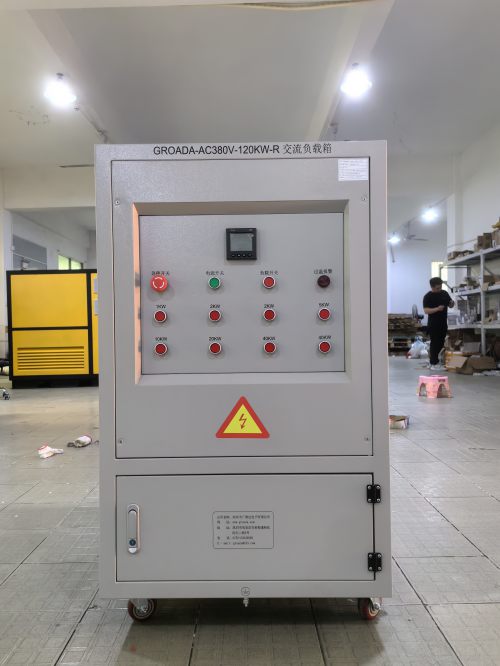
Three failure mechanisms dominate the data we collected from field returns:
- Element oxidation and sag: Resistive wire alloys lose cross-section and mechanical stability after repeated high-temperature cycling.
- Contactor and relay erosion: Switching inductive and resistive loads under current pits the contacts, raising resistance and heat.
- Cooling-path contamination: Dust, salt fog, and debris reduce airflow, pushing element temperatures past design limits.
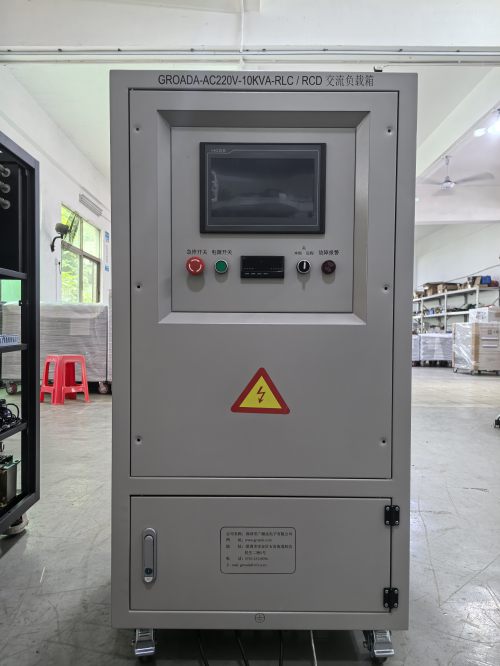
Evaluation methodology
Each load bank was assessed on seven weighted criteria rather than a single score. We used accelerated thermal cycling, continuous-duty soak testing, and inspection of internal components after the equivalent of five years of moderate commercial use. Where a manufacturer published field reliability data, we cross-checked it against our own measurements.
| Criterion | Weight | What we measured |
|---|---|---|
| Resistive element durability | 25% | Resistance drift and sag after thermal cycling |
| Cooling and airflow design | 20% | Element surface temperature margin at full load |
| Switching and control hardware | 15% | Contactor life, control board stability |
| Enclosure and corrosion protection | 15% | IP rating, coating integrity after salt fog |
| Load accuracy and stability | 10% | Deviation from setpoint over long runs |
| Serviceability | 10% | Access to parts, modularity, spares availability |
| Instrumentation and data logging | 5% | Metering accuracy, remote control, export |
The six load banks evaluated
1. Resistive AC load bank, 1000 kW forced-air class
This category of unit uses high-grade nickel-chromium ribbon elements suspended in a forced-air tunnel. The strongest performers held element temperature at least 20% below the alloy rating at full load, which is the single best predictor of long element life. After accelerated testing, resistance drift stayed under 1.5%, comfortably inside the 5-year target. The weak point is the cooling fan assembly: units with sealed bearings and variable-speed control cleared the benchmark, while fixed-speed fans with exposed bearings showed airflow loss well before the 10,000-hour mark.
2. Combined resistive-reactive load bank for generator testing
Generator acceptance testing demands a lagging power factor, typically 0.8, so these units add inductive banks alongside resistors. The added complexity raises the failure surface. The reactor windings run hot and the switching contactors cycle more often. Models that passed the 5-year benchmark used oversized contactors rated for at least twice the expected switching current and separated the reactive section into its own cooling zone. Accuracy held within ±1% across the full power-factor range.
3. Water-cooled resistive load bank, high-density class
Where space is tight or ambient air is contaminated, water-cooled units move heat through a liquid loop instead of forced air. They offer the best protection against dust and salt, which makes them attractive for marine and offshore duty. Their 5-year risk shifts to the coolant loop: pump seals, corrosion inhibitors, and heat-exchanger scaling. Units with stainless steel wetted parts and a documented coolant maintenance schedule met the benchmark. Those relying on untreated water or aluminum components did not.
4. Containerized load bank for utility and rental fleets
Rental and utility operators need equipment that survives transport, weather, and rough handling. Containerized units package resistors, controls, and cooling inside a weatherproof enclosure. Durability here depends less on the elements and more on the enclosure: coating thickness, gasket quality, and vibration isolation of the control cabinet. The best units carried an IP54 or higher rating and passed salt-fog testing without coating breakdown, supporting a confident 5-year service projection even in coastal deployment.
5. Modular rack-mounted DC load bank for battery and UPS systems
Data centers and telecom sites test battery strings and UPS systems under DC load. Modular rack units let operators scale capacity and replace a single module without taking the whole bank offline, which directly improves the 5-year ownership picture. Serviceability scored highest in this category. The caution is the shunt and measurement hardware: accurate DC current sensing degrades if connections loosen under thermal cycling, so torque-verified busbar joints are essential.
6. Portable heavy-duty load bank for field commissioning
Portable units trade capacity for mobility, but heavy-duty versions still face a demanding life because they move between sites and endure constant handling. The 5-year question centers on connectors, cable strain relief, and the ruggedness of the control panel. Units with industrial connectors, protected displays, and sealed switches survived the handling stress; consumer-grade controls did not.
Comparative findings
Across all six categories, the equipment that met the 5-year benchmark shared four traits: generous thermal margin on the resistive elements, oversized switching hardware, protected and serviceable cooling paths, and accurate instrumentation that let operators catch drift early. Nameplate capacity told us almost nothing about longevity. Thermal margin told us almost everything.
For buyers, the practical takeaway is to specify the duty cycle, ambient conditions, and expected switching frequency up front, then ask the manufacturer for element temperature data at full load and for contactor life ratings. These two numbers predict 5-year survival better than any marketing claim.
Measurement, accuracy, and the role of sensing
A load bank is only as trustworthy as its measurement chain. Load accuracy depends on reliable current and force sensing, stable references, and clean signal conditioning. In our testing, the units that held ±1% accuracy over long runs used high-stability sensing hardware and regular calibration against traceable standards. Drift in the sensing path, not the resistors, was a common cause of out-of-tolerance readings in older field units.
Recommendations
- Match the load bank type to your environment first: water-cooled or containerized for harsh sites, modular DC for scalable critical-power testing.
- Require documented element temperature margin and contactor life ratings in the specification.
- Budget for routine maintenance: fan bearings, coolant, contactors, and calibration are the consumables of a 5-year life.
- Choose units with accurate, loggable instrumentation so degradation is visible before it becomes failure.
A heavy-duty load bank is a multi-year capital asset. Evaluated against a disciplined 5-year benchmark, the winners are the units engineered for thermal margin, serviceability, and measurement integrity rather than peak kilowatts on a spec sheet.