
Resistive load banks are essential tools for verifying the performance and reliability of electrical generators, especially in industrial, commercial, and utility applications. These devices simulate real-world electrical loads by converting electrical energy into heat through resistive elements, allowing engineers to test generator output under controlled conditions. A properly designed resistive load bank enables full-load testing at various power levels—typically from 25% to 100% of rated capacity—to ensure the generator can handle peak demand without failure.
Key parameters include rated power (kW), voltage level (e.g., 480 V AC), phase configuration (single or three-phase), current range (e.g., 100–600 A), and power factor adjustment capability (usually fixed at unity PF for resistive loads). Modern units often feature remote monitoring via Modbus, Ethernet, or CAN interfaces, enabling automated load control and data logging. Thermal protection systems, such as temperature sensors and automatic shutdown on overheating, ensure safe operation during prolonged tests.
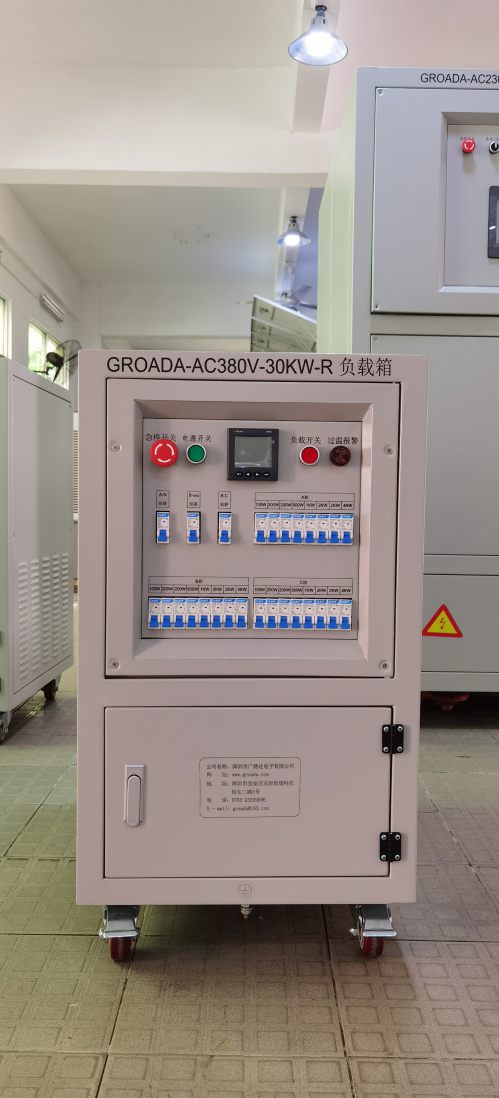
According to IEC 60034-1, motors and generators must undergo mechanical and thermal stress testing under load to validate design integrity—a process where resistive load banks play a critical role. In an anonymized case study from a power plant in Southeast Asia, a 1 MW diesel generator was tested using a portable resistive load bank over 12 hours at 90% load. The test revealed minor voltage regulation issues that were corrected before commissioning, avoiding potential downtime during grid integration.
For portability and ease of use, load banks are typically built with IP54-rated enclosures, fork-lift pockets, and lifting eyes. Maintenance includes annual calibration (per IEEE 1547 standards) and replacement of resistor blocks every 3–5 years based on usage intensity. Compliance with CE, UL, and CCC certifications ensures safety across international markets.