
AC load banks are essential tools used in the testing and validation of electrical power systems, especially for generators, UPS units, and renewable energy installations. These devices simulate real-world electrical loads to ensure that power sources perform reliably under various conditions—from full load to partial load scenarios. Unlike mechanical or dynamometer-based testing, AC load banks provide precise control over resistive, reactive, and combined (RLC) load characteristics, enabling comprehensive performance evaluation without physical stress on the equipment.
For example, a resistive load bank mimics the behavior of lighting, heating, and motor loads by converting electrical energy into heat, making it ideal for generator acceptance tests and engine performance verification. A reactive load bank, on the other hand, introduces inductive or capacitive reactance to assess how well a system handles voltage regulation and reactive power flow—critical for grid integration projects involving wind turbines or solar inverters. Modern three-phase load banks offer balanced loading across all phases, ensuring uniform thermal stress distribution and accurate simulation of industrial power environments.
Portable AC load banks are increasingly popular due to their ease of deployment in field applications such as construction sites, remote data centers, and emergency backup systems. These units often feature integrated cooling mechanisms like forced air or liquid cooling, with temperature monitoring and automatic shutdown protection to prevent overheating. Advanced models support remote control via Modbus, Ethernet, or CAN interfaces, allowing engineers to monitor voltage, current, active power, reactive power, and power factor in real time—even from a distance.
According to IEC 60034-1 and IEEE Std 115, proper load testing is required for generator commissioning to verify output stability, fuel efficiency, and harmonic distortion levels. In one anonymized case study conducted at a microgrid installation, a 200 kW three-phase resistive-reactive load bank was used to validate a diesel generator’s response during sudden load changes; the test confirmed stable voltage regulation within ±2% and no overheating issues after 8 hours of continuous operation.
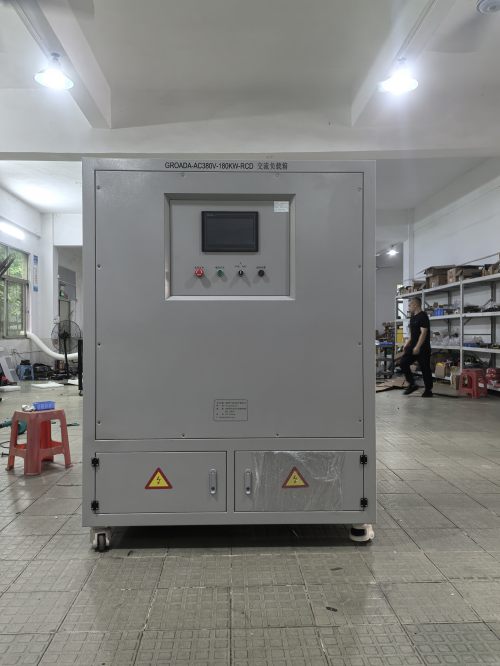
These tools also play a key role in factory acceptance testing (FAT), where manufacturers must demonstrate that equipment meets contractual specifications before shipment. As demand grows for reliable off-grid power solutions and smart grid technologies, AC load banks remain indispensable for ensuring safety, compliance, and long-term operational integrity.