
Portable load banks are essential tools for validating the performance of generators, UPS systems, and renewable energy sources such as wind turbines or solar inverters before they are connected to the grid. These devices simulate real-world electrical loads, allowing engineers to test equipment under controlled conditions without relying on actual power consumption. A well-designed portable load bank—whether resistive, reactive, or combination (RLC)—enables precise calibration, fault detection, and efficiency validation in both factory acceptance testing (FAT) and field applications.
Resistive load banks convert electrical energy into heat through high-power resistor elements, making them ideal for testing engine cooling systems, fuel consumption, and generator voltage regulation. Reactive load banks introduce inductive or capacitive loads to assess power factor correction and reactive power handling capabilities—critical for grid compliance. Combination RLC load banks offer the most comprehensive testing by simulating complex industrial loads that include active, reactive, and harmonic components.
Modern portable load banks often feature remote monitoring via Modbus, Ethernet, or CAN bus interfaces, enabling automated control and data logging. They also incorporate thermal protection, short-circuit safeguards, and overvoltage/undervoltage alerts to ensure safe operation during prolonged tests. Certified to standards like IEC 60034-1 and UL 1577, these units must meet strict safety and accuracy requirements—typically within ±1% for voltage, current, and power measurements.
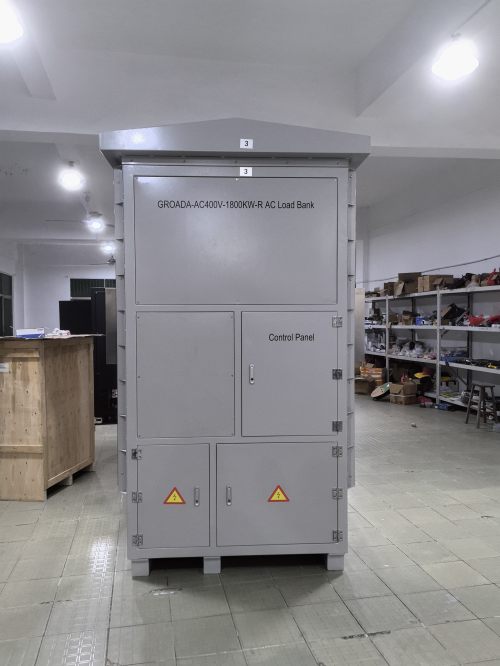
In one anonymized case study from a microgrid deployment in rural India, a 200 kW three-phase resistive load bank was used to verify a diesel generator’s ability to handle full-load conditions over 8 hours. The test revealed a 5% deviation in voltage regulation at 75% load, prompting adjustments to the AVR settings before commissioning. This highlights how portable load banks reduce downtime and prevent costly failures in critical infrastructure projects worldwide.
For procurement teams and engineers seeking reliable, flexible, and certified solutions, choosing a portable load bank with modular design, water-cooled options for higher power density, and IP54-rated enclosures ensures durability across diverse environments—from construction sites to offshore platforms.