
Resistive load banks are essential tools for verifying the performance, reliability, and safety of electrical power systems such as generators, uninterruptible power supplies (UPS), and backup power units. These devices simulate real-world electrical loads by converting electrical energy into heat through resistive elements, allowing engineers to test system behavior under full-load conditions without requiring an actual consumer.
A typical resistive load bank operates by applying a controlled resistance across the power source—often in single-phase or three-phase configurations—to mimic the active power demand (kW) that a generator or UPS must deliver. This type of testing is crucial during factory acceptance tests (FAT), commissioning, and periodic maintenance. For example, a 100 kW resistive load bank can be used to verify that a diesel generator maintains stable voltage and frequency when running at 100% capacity over several hours.
Modern resistive load banks are designed with multiple safety features including overtemperature protection, short-circuit protection, and emergency stop functions. They often include remote monitoring via Modbus, CAN, or Ethernet interfaces, enabling automated data logging and control from a central location. Cooling is typically air-based, though water-cooled models exist for high-power applications (>500 kW). The thermal design ensures safe operation within specified ambient temperatures, typically up to 40°C, while maintaining accuracy in power measurement (±1% for active power).
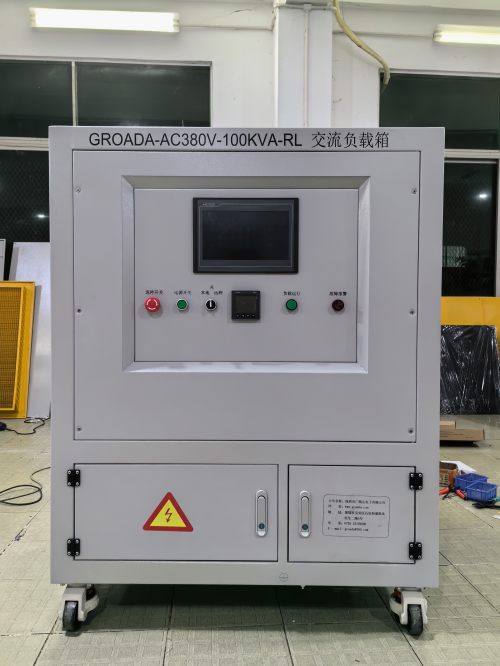
Standards such as IEC 60034-1 and IEEE 1159 guide the design and application of load banks for motor and generator testing. In one anonymized case study, a hospital’s standby generator was tested using a 200 kW resistive load bank for 8 hours at 100% load. The test revealed inconsistent voltage regulation at partial loads, prompting corrective adjustments before the system was commissioned.
These load banks are also used in renewable energy integration, such as validating microgrid stability during grid-tie scenarios. Their portability—featuring lifting eyes, fork-lift pockets, and IP54-rated enclosures—makes them suitable for field use in industrial, commercial, and utility settings. Regular calibration every 12 months and fan replacement every 3 years are recommended maintenance practices based on field data.









