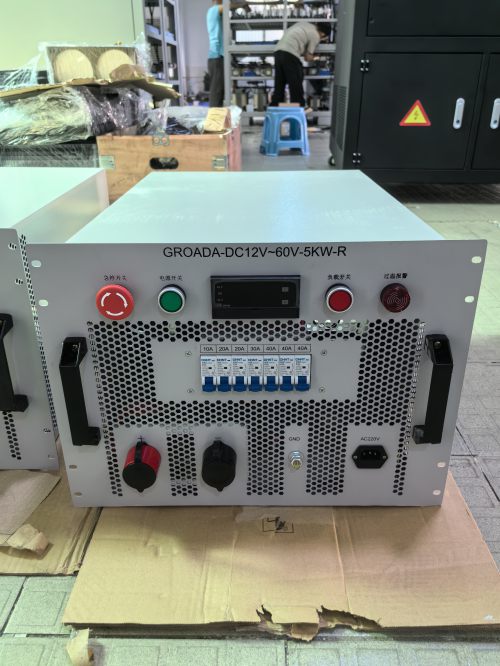
Portable load banks are essential tools for validating generator performance across industries such as construction, data centers, and remote power generation. Unlike fixed installations, portable load banks offer flexibility in testing engines under real-world conditions—whether during factory acceptance tests (FAT), commissioning, or routine maintenance. These units typically feature resistive, reactive, or combination (RLC) load configurations to simulate various electrical loads, allowing engineers to assess voltage regulation, frequency stability, fuel efficiency, and thermal behavior. Modern portable models incorporate digital control systems with Modbus or Ethernet interfaces, enabling remote monitoring and automated load stepping for precise test protocols. For example, a 100 kW three-phase resistive load bank can be used to verify a diesel generator’s ability to maintain stable output at 50% and 100% load over several hours—a requirement often mandated by IEC 60348 standards. Safety features like overtemperature protection, emergency stop functionality, and certified grounding ensure compliance with CE/UL/CCC regulations. The design also includes IP54-rated enclosures, lifting eyes, and forklift pockets for safe transport between job sites. Calibration intervals of 12 months and modular resistor blocks extend service life while maintaining measurement accuracy within ±1%. In an anonymized case study from a mining site in Australia, a portable reactive load bank was used to validate a 500 kVA generator prior to grid interconnection. Test results showed that the unit met all power factor requirements under varying load conditions, identifying a minor governor delay issue that was corrected before full deployment. This proactive approach saved approximately $15,000 in potential downtime costs. With increasing demand for renewable energy integration—such as solar farms or wind turbines requiring synchronized grid connection—portable load banks remain indispensable for reliable, repeatable, and safe generator testing.