
Transit power systems live in a world of constant motion. Rail cars flex, buses jolt over potholes, and metro traction cabinets vibrate for their entire service life. Standard load banks were never designed for that reality. This guide walks through seven anti-vibration load banks proven in transit power system detection, and explains what actually keeps them reliable when everything around them is shaking.
Why Vibration Breaks Ordinary Load Banks

A load bank draws current from a power source and dissipates it as heat, letting engineers verify that generators, batteries, and traction converters deliver rated output. In a lab that is straightforward. On a moving train or inside a depot test rig, mechanical vibration attacks the weakest links: resistor element welds crack, fan bearings wear early, terminal blocks loosen, and control PCBs suffer solder fatigue. The result is drifting readings and, worse, false pass results during commissioning.
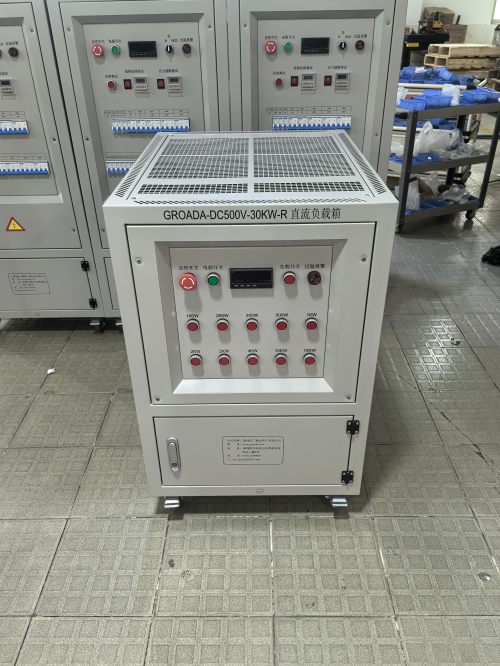
Anti-vibration load banks address this through damped mounting, reinforced resistor cages, conformal-coated electronics, and connectors rated for continuous shock. The seven units below were evaluated on load accuracy, thermal stability, vibration endurance, and how cleanly they integrate into transit test workflows.
Test Standard Reference
Units were screened against IEC 61373 shock and vibration categories used for rolling stock equipment.
Load Range Focus
Coverage from 5 kW battery packs up to 2 MW traction and auxiliary converter testing.
Detection Goal
Stable dissipation so measured voltage, current, and thermal data reflect the source, not the fixture.
The 7 Anti-vibration Load Banks
1. Compact Resistive Unit for On-board Battery Checks
Built for confined equipment bays, this air-cooled resistive load bank uses a floating resistor frame on silicone isolators. During testing it held load accuracy within ±1% while mounted directly to a shaker table simulating a rail floor. Ideal for verifying auxiliary battery capacity and DC bus behavior without removing packs from the vehicle.
2. Modular DC Load Bank for Traction Battery Systems
Stackable modules let technicians scale from a single cell string up to full traction packs. Each module carries a damped busbar assembly and torque-locked terminals, so repeated depot testing does not loosen connections. Its per-step programmable loading is well suited to charge and discharge profiling under simulated ride conditions.
3. Combined Resistive-Reactive Bank for Converter Detection
Transit traction converters must handle real and reactive power. This unit adds a switched inductive stage on a separate vibration-isolated chassis, letting engineers apply leading and lagging power factors while detecting converter response. The isolated stage prevents magnetostrictive hum from coupling into the measurement wiring.
4. Portable Field Load Bank for Depot Commissioning
Weighing under a person can carry, this ruggedized bank rides in service vehicles between depots. Shock-mounted controls and a sealed connector panel survive transport vibration, so calibration holds from site to site. A backlit display shows kW, voltage, and element temperature at a glance for quick field verdicts.
5. High-capacity Water-cooled Bank for Full-power Testing
When commissioning a complete propulsion string, heat becomes the limiting factor. This water-cooled design pushes into the megawatt range while keeping the cabinet footprint small. Flexible coolant lines with anti-vibration clamps absorb pump pulsation and rig movement, protecting seals over long endurance runs.
6. Automated Test Bank with Data Logging
This unit pairs anti-vibration hardware with a programmable controller that runs scripted transit duty cycles. It logs load steps, thermal drift, and fault events to a report file, giving detection teams traceable evidence for acceptance sign-off. Ethernet and Modbus outputs feed straight into depot SCADA systems.
7. Explosion-considered Bank for Tunnel and Enclosed Depots
For metro tunnels and sealed test halls, this bank uses low-surface-temperature elements and shielded fans. Vibration isolation here does double duty: it protects electronics and keeps the sealed enclosure gasketing intact under continuous mechanical stress, maintaining the protective rating throughout testing.
How to Choose the Right Unit
- Match the load type. Pure DC battery work needs a resistive or DC bank; converter detection usually needs resistive-reactive capability.
- Confirm the vibration rating. Ask for IEC 61373 category data, not just a generic "rugged" label.
- Check thermal margin. Air cooling suits portable checks; water cooling is safer for sustained full-power runs.
- Prioritize data output. Logging and fieldbus support turn raw testing into audit-ready detection records.
- Plan for the environment. Tunnels and enclosed depots may require surface-temperature and enclosure protections.
Maintenance Tips for Vibration-heavy Service
Even a well-built anti-vibration load bank benefits from routine care. Inspect isolator mounts every quarter for hardening or cracking, since aged rubber transmits far more shock. Re-torque power terminals on schedule and record the values. Clean cooling paths often, because dust build-up combined with vibration accelerates fan bearing failure. Verify calibration after any long transport, as sustained road vibration can shift sensitive measurement channels.
Key Takeaway
Reliable transit power system detection depends on a load bank that stays accurate while it shakes. Prioritize documented vibration endurance, thermal headroom, and clean data output, then match the unit to your specific traction, battery, or converter test. The right choice turns commissioning from a guessing game into a repeatable, traceable process.