
Selecting the right load bank for generator testing in the United States is a decision that blends engineering precision with an understanding of local operating conditions, regulatory expectations, and regional work culture. Whether you are commissioning a backup power system for a Texas data center, validating a hospital genset in New England, or performing routine maintenance on standby units across the Midwest, the load bank you choose directly determines the reliability of your test results. This white paper walks through the key technical and practical factors that shape load bank selection for American generator testing projects.
Why Load Bank Testing Matters for US Generators
Diesel and gas generators are the backbone of emergency power across American infrastructure. Hospitals, data centers, airports, and municipal facilities all rely on standby power that must perform flawlessly during outages. Under NFPA 110, the Standard for Emergency and Standby Power Systems widely referenced across the US, facilities are often required to conduct periodic load testing to confirm their generators can carry rated loads without wet stacking, overheating, or voltage instability.
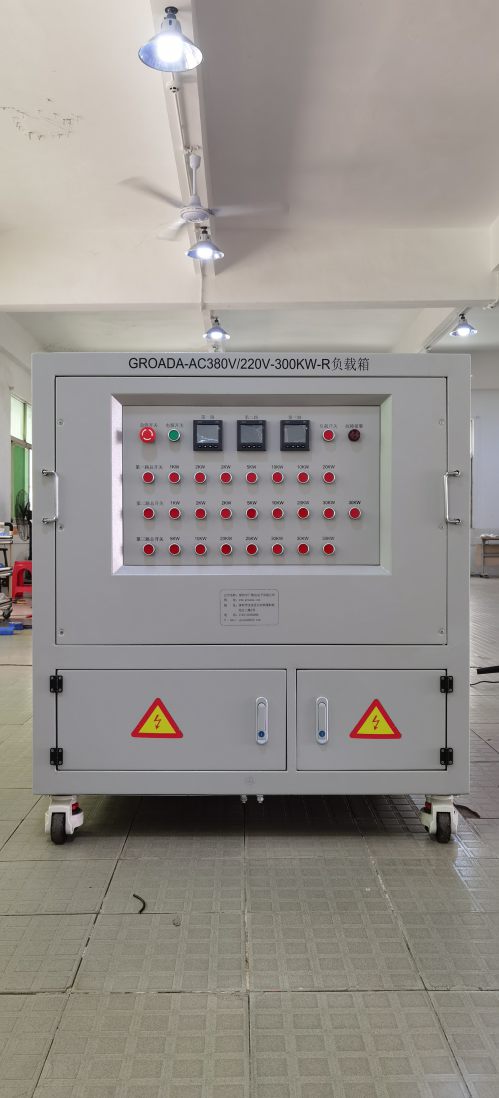
Load banks provide a controlled, repeatable load that simulates real-world demand. Without them, a generator may sit idle for months and quietly develop faults that only surface during a genuine emergency. In a country where hurricane season along the Gulf Coast, winter storms in the Northeast, and wildfire-driven grid shutoffs in California make reliable backup power a public safety issue, load testing is not a formality. It is an operational necessity.
Understanding Load Bank Types
Choosing the correct load bank starts with matching the load type to your testing objective. Three primary categories dominate US generator testing projects.
Resistive Load Banks
Resistive load banks convert electrical energy into heat through resistive elements, applying a load at unity power factor (1.0). They are the most common choice for verifying a generator's kilowatt capacity, exercising the engine, and burning off unburned fuel that causes wet stacking. For many standby applications, a resistive load bank is sufficient and cost effective.
Reactive Load Banks
Reactive load banks introduce inductive or capacitive loads, testing the generator at power factors below unity, typically 0.8 lagging, which mirrors real-world commercial and industrial loads. In the US, most electrical distribution systems operate at 0.8 power factor, so reactive testing gives a more realistic picture of how a generator will behave under actual conditions.
Resistive-Reactive Load Banks
Combining both technologies, resistive-reactive units allow full-spectrum testing of both the engine and the alternator under realistic load profiles. For critical facilities such as data centers and hospitals, these units deliver the most complete validation and are increasingly the standard for high-stakes commissioning.
Key Selection Criteria for US Projects
1. Match Voltage and Frequency Standards
The United States operates on a 60 Hz frequency, distinct from the 50 Hz standard common in Europe and much of Asia. Common US voltages include 208V, 240V, 480V, and 600V for commercial and industrial systems. Always confirm that your load bank is rated for the specific voltage class of your generator. A mismatch not only produces invalid data but can damage equipment.
2. Size the Capacity Correctly
Your load bank should be capable of testing the generator at or near its full rated capacity. Best practice recommends load testing at a minimum of 30 percent of nameplate rating to prevent wet stacking, with full-capacity testing preferred for commissioning. Oversizing slightly provides headroom, while undersizing leaves capacity unverified. For large facilities, modular load banks that can be paralleled offer flexibility across multiple generator sizes.
3. Portable vs. Permanent Installation
American testing projects span a wide range of environments. Rental and service companies often favor trailer-mounted or portable load banks that can travel between job sites across large states and long interstate distances. Facilities with recurring compliance testing, on the other hand, may install permanent load banks for convenience and consistency. Consider your project geography carefully. In sprawling regions like Texas or the Mountain West, portability can dramatically reduce logistics costs.
4. Environmental and Climate Considerations
The US spans an enormous range of climates, and this directly affects load bank selection. Units deployed in the humid Southeast need robust corrosion protection, while those in the arid Southwest must handle high ambient temperatures and dust. Cold-weather operation in the Upper Midwest and Alaska demands components rated for low temperatures. Outdoor-rated enclosures with proper NEMA ratings are essential for field testing in unpredictable American weather.
5. Control Systems and Data Logging
Modern US projects increasingly demand digital control interfaces, automated load stepping, and detailed data logging for compliance documentation. Look for load banks with programmable test sequences and the ability to export reports, which simplifies demonstrating NFPA 110 and Joint Commission compliance for healthcare facilities.
Respecting Local Work Culture and Practices
Beyond the technical specifications, successful load bank deployment in the US benefits from an appreciation of regional work customs. American job sites place a strong emphasis on safety culture, and OSHA compliance is taken seriously. Contractors expect clear lockout-tagout procedures, arc-flash protection, and thorough job hazard analysis before energizing equipment.
Scheduling also reflects local rhythms. Many facilities prefer to conduct disruptive load testing outside standard business hours, and it is customary to avoid major national holidays such as Thanksgiving, Independence Day, and the winter holiday season, when staffing is reduced and building occupancy patterns shift. In the Northeast, planning around harsh winter windows is common, while Gulf Coast projects often accelerate testing ahead of the June to November hurricane season.
The American approach to vendor relationships tends to value responsiveness, clear documentation, and strong after-sales support. Offering readily available technical assistance, local service networks, and rental options that fit the flexible, deadline-driven pace of US construction and maintenance schedules goes a long way toward building trust.
Practical Selection Checklist
When finalizing your load bank choice for a US generator testing project, confirm the following. First, verify voltage, frequency, and phase compatibility with your generator. Second, select the load type resistive, reactive, or combined that matches your test objectives. Third, size capacity to allow full-rated testing with reasonable headroom. Fourth, choose between portable and permanent based on project geography and frequency of use. Fifth, ensure environmental ratings suit the local climate. Finally, confirm the control and data-logging features meet your compliance documentation needs.
Conclusion
Choosing the right load bank for a US generator testing project is a balance of engineering rigor and regional awareness. By matching electrical specifications precisely, accounting for the diverse American climate, respecting local safety and scheduling customs, and prioritizing reliable service support, you set the foundation for accurate testing and dependable backup power. In a nation where reliable emergency power protects lives and critical operations, the load bank you select is far more than a piece of test equipment. It is a safeguard for resilience.