
US Industrial Power Testing
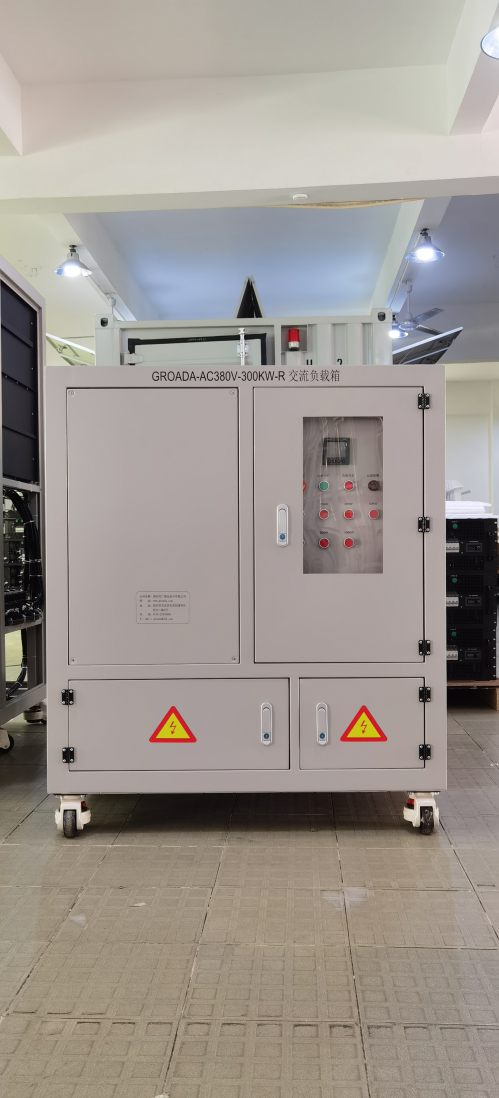
How to Buy the Right Industrial Load Bank Without Costly Mistakes
A practical, engineer-written guide to selecting, sizing, and verifying load banks for generators, UPS systems, and data centers across the United States.
Industrial load banks are the backbone of reliable power testing. Whether you are commissioning a standby generator, validating a UPS battery string, or running a scheduled maintenance test at a data center, the load bank you choose directly affects test accuracy, safety, and compliance. Yet many US buyers overspend or under-spec because they focus on price alone. This guide walks you through what actually matters.
Why Load Banks Matter
A generator that "runs fine" at idle can still fail under real load. Load banks apply a controlled, measurable electrical load so you can confirm your power system performs at rated capacity. In the US, regular load testing also helps meet NFPA 110 requirements for emergency and standby power systems, and supports insurance and audit documentation.
Quick takeaway
Buy for the load profile you need to test, not the headline kW number. Sizing, cooling, and connection style cause more field problems than raw capacity.
Load Bank Types Explained
| Type | Best For | Watch Out For |
|---|---|---|
| Resistive | Generator kW verification, unity power factor testing | Does not stress the engine like a real reactive load |
| Reactive (Inductive) | Simulating motor loads, testing at 0.8 PF | Usually paired with a resistive unit; higher cost |
| Resistive/Reactive Combined | Full kVA testing of gensets and switchgear | Larger footprint, more control complexity |
| DC / Battery | UPS and battery bank capacity testing | Voltage range and cutoff settings must match your bank |
How to Size a Load Bank
Sizing is where most buyers go wrong. A few rules to keep you safe:
- Match voltage and phase first. A 480V 3-phase load bank cannot safely test a 208V panel. Confirm voltage, phase, and frequency (60 Hz in the US).
- Test to at least 80% of rated capacity. NFPA 110 guidance points toward loading generators enough to reach proper exhaust temperatures and prevent wet stacking.
- Account for altitude and ambient temperature. Both derate generator output, so your load bank plan should reflect real site conditions.
- Plan for growth. If your facility may expand, a modular load bank saves you from buying twice.
Portable Units
Ideal for field service teams testing multiple sites. Look for lifting points, weatherproof enclosures, and trailer options.
Permanent Units
Best for data centers and hospitals with recurring tests. Integrated controls and remote monitoring reduce labor.
Radiator-Mounted
Space-saving option that uses the generator's own airflow. Verify airflow and clearance ratings before ordering.
Common Pitfalls to Avoid
- Ignoring power factor. Testing only with a resistive bank at unity PF gives a false sense of security. Real facility loads are reactive.
- Underestimating cooling and ventilation. Load banks reject serious heat. Indoor testing without exhaust planning can trip alarms or damage equipment.
- Skipping cable and connection ratings. Undersized cables and loose lugs cause voltage drop and dangerous hot spots.
- Buying on price without support. A cheap import with no US service, spare parts, or calibration support becomes expensive during downtime.
- Overlooking data logging. Modern load banks record kW, voltage, current, and frequency. Manual readings invite errors and weak audit trails.
Field tip
Always confirm UL listing or equivalent US safety certification, and ask whether the control system supports remote start/stop and automated step loading. These features protect both operators and equipment.
Buy or Rent?
If you test annually or run a single facility, renting a load bank may cut costs. If you perform regular testing across multiple sites, or need documented compliance every quarter, owning a unit usually pays back within a few years. Factor in transportation, setup labor, and calibration when comparing.
Final Checklist Before You Order
- Confirm voltage, phase, frequency, and target load percentage.
- Choose resistive, reactive, or combined based on the load you must simulate.
- Verify cooling, ventilation, and site clearance.
- Check UL listing, control features, and data logging.
- Confirm US-based service, warranty, and calibration support.
Choosing the right industrial load bank is not about the biggest number on the spec sheet. It is about matching the unit to your real electrical load, your site conditions, and your compliance needs. Get those right, and every test delivers trustworthy results, protects your equipment, and keeps your critical power ready when it matters most.
Need help sizing a load bank for your US facility?
Talk to an engineer about voltage, capacity, and compliance before you buy.









