
Uninterruptible power supply (UPS) systems form the backbone of mission-critical facilities across the United States, from data centers and hospitals to financial institutions and manufacturing plants. Yet a UPS is only as reliable as its last verified test. Load banks are the essential tools that simulate real electrical demand, allowing engineers to validate battery capacity, confirm runtime, and expose hidden weaknesses before an outage does. This guide walks US buyers through everything needed to source the right load bank for UPS testing—covering types, sizing, standards, vendor evaluation, and total cost of ownership.
A load bank is a device that applies a controlled, artificial electrical load to a power source. When connected to a UPS, it draws current in a measurable, repeatable way so technicians can confirm the system delivers rated output under stress. Without regular load testing, batteries silently degrade, connections loosen, and capacitors age—problems that only surface during a genuine grid failure, precisely when downtime is most expensive.
Understanding Load Bank Types for UPS Applications
Choosing the correct technology is the first step in any sourcing decision. Three primary categories dominate the US market, each suited to different UPS testing goals.
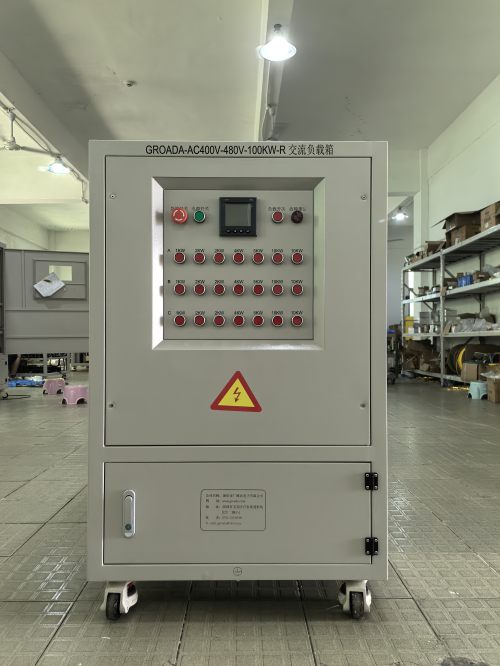
Resistive load banks are the most common choice for UPS work. They convert electrical energy into heat through resistive elements, presenting a unity power factor (1.0) load. This makes them ideal for verifying the true kW capacity of a UPS and its backup batteries. Resistive units are cost-effective, straightforward to operate, and available in portable and stationary configurations.
Reactive load banks introduce inductive or capacitive loads to simulate real-world equipment such as motors and transformers that operate at a lagging power factor, typically 0.8. Because actual data center and industrial loads are rarely purely resistive, reactive testing gives a more realistic picture of how a UPS behaves under authentic conditions.
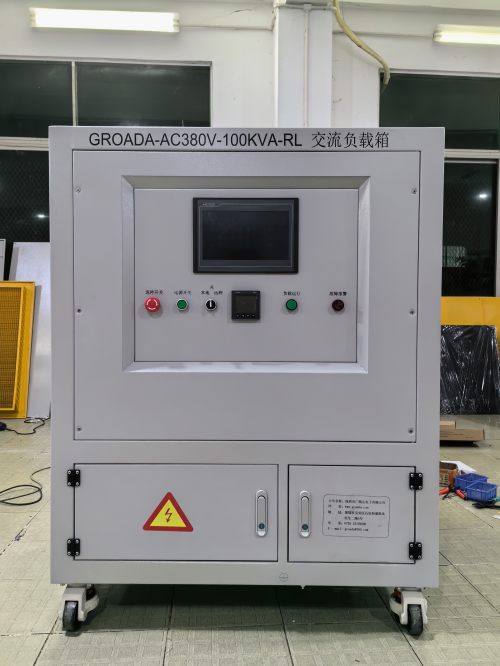
Resistive-reactive (combined) load banks merge both technologies into a single unit, allowing operators to test at variable power factors. For large UPS installations and full-system commissioning, these units deliver the most comprehensive validation, though at a higher price point and larger footprint.
Sizing a Load Bank Correctly
Undersized load banks fail to stress the UPS meaningfully, while oversized units waste capital and add unnecessary weight. Accurate sizing hinges on several factors. Begin with the UPS rated capacity in kVA and kW, then match the load bank to the voltage class of your system—common US configurations include 208V, 480V, and 600V three-phase.
A practical rule is to select a load bank capable of applying at least 100 percent of the UPS rated load, with headroom for future expansion. Many facilities specify units rated 110 to 125 percent of current demand to accommodate growth. Also account for battery discharge testing, which may require sustained loading over the full backup runtime to prove autonomy.
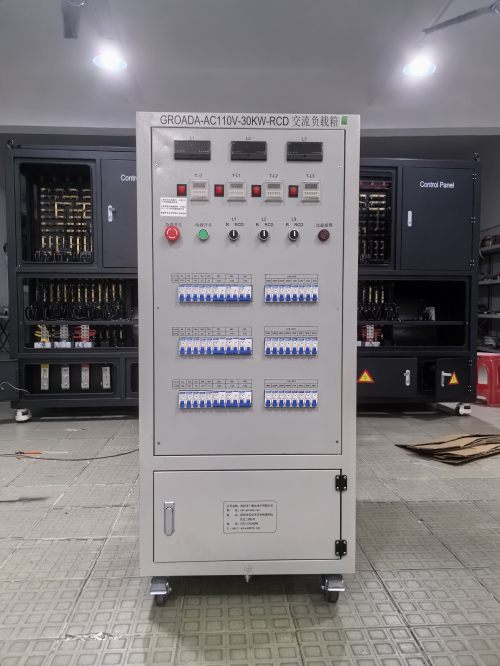
When testing at the module level in modular UPS architectures, smaller portable load banks in the 10 kW to 100 kW range often suffice. For enterprise data centers running megawatt-scale UPS systems, containerized or trailer-mounted load banks exceeding 1 MW become necessary.
Standards and Compliance in the US Market
Sourcing for US facilities means aligning with recognized codes and standards. Look for load banks that carry UL listing or are built to comply with UL 508A for industrial control panels. Electrical installation should conform to the National Electrical Code (NEC / NFPA 70). Data center operators frequently reference Uptime Institute Tier requirements and ANSI/TIA-942 during commissioning, both of which call for documented load testing.
For OSHA workplace safety and NFPA compliance, verify that the load bank includes proper thermal protection, emergency stop functions, and overtemperature shutdown. Units intended for outdoor or generator-paralleled use should carry appropriate NEMA enclosure ratings such as NEMA 3R for weather resistance.
Portable Versus Permanent Installations
The decision between portable and permanent load banks shapes both cost and workflow. Portable and trailer-mounted units offer flexibility for facilities that test infrequently or manage multiple sites; they can be rented or shared across locations. Permanent, hardwired load banks integrate directly into the electrical infrastructure, enabling scheduled automated testing without manual setup—an attractive option for large data centers with strict maintenance calendars.
Many US organizations adopt a hybrid strategy: permanent load banks for routine monthly verification and rented high-capacity units for annual full-load commissioning. Evaluating your testing frequency against staff availability will clarify the right mix.
Evaluating Load Bank Suppliers
Not all vendors deliver equal value. When comparing suppliers, weigh the following criteria. Confirm domestic manufacturing or a robust US distribution and service network to minimize lead times and support delays. Ask about calibration certificates and traceability to NIST standards, which underpin credible test documentation. Review the availability of control features such as automatic load stepping, data logging, remote operation, and integration with building management systems.
Warranty terms, spare-parts availability, and on-site commissioning support separate long-term partners from transactional sellers. Request references from comparable US facilities and, where possible, arrange a factory or on-site demonstration before committing.
Total Cost of Ownership
The purchase price is only part of the equation. Factor in shipping and rigging for heavy stationary units, installation labor, ongoing calibration, and energy consumed during testing. For infrequent testing, renting can dramatically reduce total cost of ownership, while high-frequency programs justify capital purchase through amortized savings. Consider resale value and the vendor's upgrade path as your UPS fleet evolves.
Best Practices for UPS Load Testing
Once sourced, a load bank delivers maximum value when integrated into a disciplined maintenance regime. Schedule load tests at least annually, and after any major electrical modification. Document each test with time-stamped data logs capturing voltage, current, power factor, and battery voltage decline. Combine load testing with infrared thermography to catch loose connections, and coordinate testing windows to avoid disrupting live operations. Consistent records not only satisfy auditors but also reveal degradation trends early enough to act.
Frequently Asked Questions
1. What size load bank do I need for my UPS? Select a load bank rated to apply at least 100 percent of your UPS rated load, ideally with 10 to 25 percent additional headroom for future growth. Match it to your system voltage—typically 208V, 480V, or 600V three-phase in the US.
2. Should I buy or rent a load bank? Rent if you test infrequently or across multiple sites; buy if you run scheduled monthly testing or operate a large facility where a permanent, integrated unit lowers long-term cost and labor.
3. Resistive or reactive load bank for UPS testing? Resistive load banks verify true kW and battery capacity and are the standard starting point. Reactive or combined units add realism by simulating the lagging power factor of actual equipment, which is valuable for comprehensive commissioning.
4. What standards should a US load bank meet? Look for UL listing, NEC/NFPA 70 compliance, NIST-traceable calibration, and appropriate NEMA enclosure ratings for the installation environment.
5. How often should UPS load testing be performed? Perform full load testing at least once per year and after any significant electrical change, supplemented by lighter periodic verification to track battery and system health over time.









