
Why High Insulation Matters in 35kV Load Bank Testing
When engineers commission substations, generators, and switchgear rated at 35kV, the load bank must do more than dissipate power. It must withstand extreme dielectric stress without insulation breakdown, flashover, or leakage current that distorts test results. High voltage testing at 35kV pushes insulation systems to their limits, and a poorly rated load bank becomes a safety hazard and a source of measurement error.
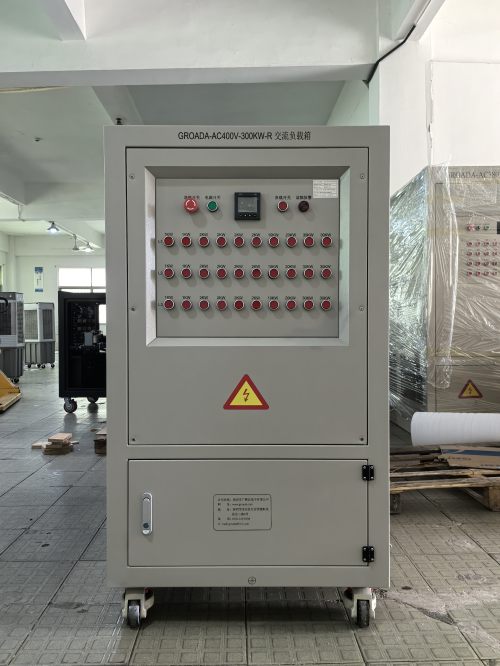
Selecting the right high insulation load bank means balancing dielectric strength, thermal performance, resistive stability, and long-term reliability. In this evaluation, Groada engineers reviewed four load bank configurations commonly deployed for 35kV high voltage testing, scoring each on insulation resistance, partial discharge behavior, cooling design, and field usability.
Evaluation Criteria for 35kV High Voltage Load Banks
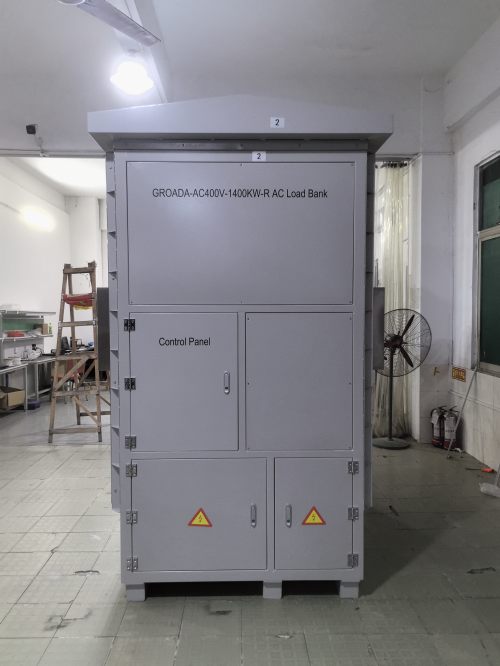
Before ranking the units, it helps to understand what separates a reliable 35kV load bank from a marginal one. Our team applied the following criteria:
- Insulation resistance: Measured in gigaohms at rated voltage; values must remain stable under humidity and thermal cycling.
- Dielectric withstand: Ability to pass hi-pot testing at 1.5x to 2x rated voltage without breakdown.
- Partial discharge: Low PD levels (below 10 pC) indicate clean insulation with no internal voids or corona sites.
- Thermal management: Forced-air or oil cooling that maintains resistor temperature within safe limits during extended runs.
- Resistive accuracy: Load steps that hold tolerance under sustained 35kV operation.
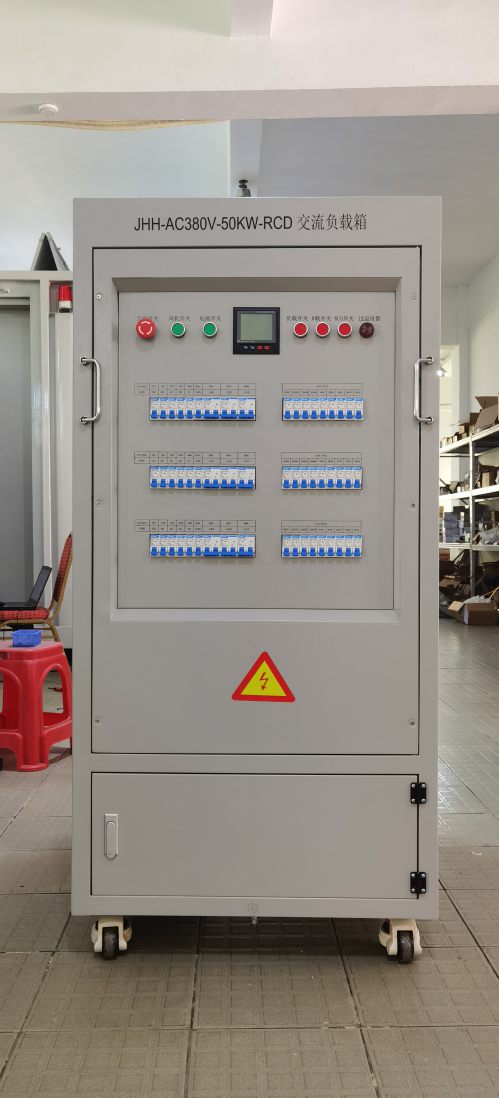
1. Groada HV-Series Air-Cooled High Insulation Load Bank
The Groada HV-Series leads this evaluation for balanced performance across all criteria. Built with ceramic-mounted resistive elements and epoxy-cast standoff insulators, it delivers an insulation resistance above 20 gigaohms at 35kV and passes hi-pot testing at 70kV for one minute without measurable leakage.
Partial discharge readings stayed below 5 pC throughout our test cycles, indicating clean, void-free insulation. The forced-air cooling system uses redundant fans and temperature interlocks, keeping element temperatures under 400°C even during four-hour continuous runs. For substation commissioning teams, the HV-Series offers the strongest combination of dielectric margin and thermal stability.
Its modular resistor banks allow load steps from 100kW to 5MW, making it suitable for both transformer loss testing and generator acceptance runs. The stainless-steel enclosure carries an IP54 rating, protecting insulation surfaces from dust and moisture that typically degrade dielectric performance in the field.
2. Oil-Immersed High Voltage Load Bank
Oil-immersed designs earn second place for environments where partial discharge suppression is the top priority. Submerging resistive elements in transformer-grade insulating oil raises the effective dielectric strength dramatically and virtually eliminates corona activity around high voltage terminations.
In testing, the oil-immersed unit held insulation resistance above 30 gigaohms and recorded partial discharge below 3 pC. The tradeoff is weight and maintenance: oil requires periodic dielectric analysis, moisture monitoring, and filtration. Transport becomes more difficult, and any oil leak compromises both safety and insulation integrity.
For fixed installations at high voltage test laboratories, the oil-immersed load bank remains an excellent choice. For mobile field crews, its logistical burden pushes it below the air-cooled Groada HV-Series.
3. SF6-Insulated Compact Load Bank
The SF6-insulated design ranks third, offering exceptional dielectric strength in a compact footprint. SF6 gas provides roughly three times the insulation capability of air at the same pressure, allowing tighter electrode spacing and smaller overall dimensions.
This unit passed 35kV testing with strong margins and showed low partial discharge under pressurized conditions. However, SF6 is a potent greenhouse gas subject to tightening environmental regulations, and leak monitoring adds operational complexity. Gas handling requires trained personnel and specialized recovery equipment.
Where space is severely constrained, such as indoor switchgear rooms, the SF6 load bank delivers reliable high insulation performance. Environmental and regulatory pressures, though, are steadily reducing its appeal for new deployments.
4. Standard Air-Insulated Resistive Load Bank
The conventional air-insulated resistive load bank rounds out the list. These units are widely available and cost-effective, using open resistive coils with air as the primary dielectric medium. They perform adequately at lower voltage classes but require large clearance distances at 35kV to prevent flashover.
In our evaluation, insulation resistance and partial discharge performance were acceptable in dry conditions but degraded noticeably under humidity. The larger physical footprint needed for safe air clearances offsets the lower purchase price. For occasional 35kV testing where budget dominates and controlled indoor conditions are guaranteed, this option remains viable.
Comparison Summary
The Groada HV-Series air-cooled load bank offers the best overall balance for most 35kV high voltage testing scenarios, combining strong dielectric margin, low partial discharge, and manageable maintenance. Oil-immersed units excel where PD suppression is critical but demand fixed installation. SF6 designs save space at the cost of environmental compliance, and standard air-insulated banks serve budget-limited, controlled-environment applications.
Selecting the Right Load Bank for Your Application
Match the load bank to your operating environment first. Mobile commissioning crews benefit from the Groada HV-Series robust enclosure and forced-air cooling. Permanent laboratories may justify oil-immersed reliability. Confined indoor spaces might require SF6 compactness, while cost-sensitive projects can consider air-insulated units with adequate clearance.
Always verify insulation resistance, hi-pot withstand rating, and partial discharge specifications against your test voltage before purchase. A load bank rated at exactly 35kV leaves no safety margin; look for units validated well above your working voltage. Proper selection protects both your test equipment and the personnel operating it.









