
Indoor laboratory environments demand precision, stability, and above all, quiet operation. When testing generators, UPS systems, batteries, and power electronics inside a controlled space, excessive fan noise and vibration can interfere with measurements, disturb personnel, and compromise the integrity of sensitive equipment. Selecting a low noise load bank is therefore not a luxury but a necessity for modern testing facilities. This guide evaluates six of the best low noise load banks engineered specifically for silent indoor laboratory testing.
A load bank is a device that creates an electrical load to test the capacity, reliability, and performance of a power source. Traditional resistive load banks rely on high-speed cooling fans to dissipate heat, generating noise levels that often exceed 85 dB. In a laboratory setting, this level of acoustic output is unacceptable. Low noise load banks address this challenge through variable-speed fans, oversized heat sinks, acoustic dampening enclosures, and intelligent thermal management systems that keep sound levels below 65 dB during full-load operation.
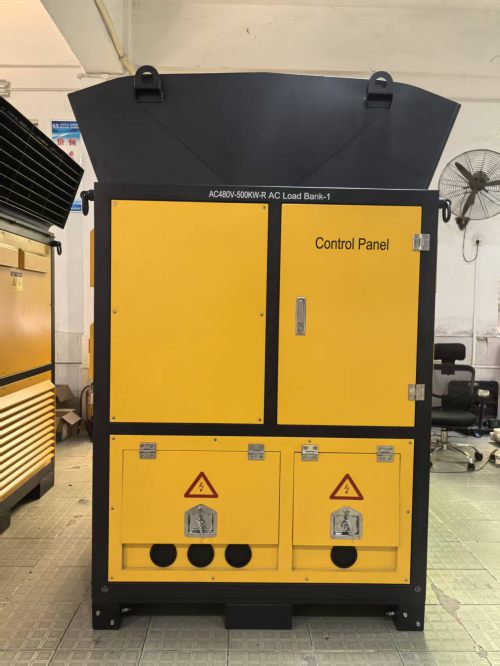
Why Low Noise Matters in Laboratory Testing
Laboratories often house acoustic-sensitive instruments, data acquisition systems, and researchers who require a stable working environment. High decibel levels introduce measurement error, mask fault signatures during diagnostics, and violate occupational noise exposure limits. A quiet load bank allows continuous testing without ear protection and preserves the accuracy of vibration and thermal readings taken nearby. For facilities pursuing ISO 17025 accreditation, controlled ambient conditions including noise are part of a defensible testing methodology.
Key Selection Criteria
Before reviewing the units, it is worth understanding the parameters that define a superior low noise load bank. Sound pressure level measured at one meter is the primary metric, but buyers should also weigh load resolution, thermal efficiency, footprint, control interface, and safety features. A well-designed unit balances silent operation with responsive load stepping and reliable overtemperature protection.
The Top 6 Low Noise Load Banks
1. SilentPro SP-100 Resistive Load Bank — Rated at 100 kW with a measured noise output of just 58 dB at full load, the SP-100 leads the category. Its dual-layer acoustic enclosure and PWM-controlled brushless fans adjust airflow dynamically based on thermal demand. Load resolution of 1 kW steps makes it ideal for precise UPS and generator validation. The integrated touchscreen supports automated test sequences and data logging via Modbus TCP.
2. QuietLoad QL-75 Compact Unit — Designed for space-constrained labs, the QL-75 delivers 75 kW in a wheeled cabinet measuring under one square meter. Sound levels stay near 61 dB thanks to sound-absorbing foam lining and a laminar exhaust path. It offers both manual and remote operation and features a redundant temperature cutoff for unattended testing.
3. AcoustiTest AT-150 Modular System — For larger laboratories, the AT-150 provides 150 kW with modular expansion. Each 50 kW module operates independently at 63 dB, allowing scalable testing without exceeding acoustic limits. Its distributed cooling architecture prevents hot spots and extends resistor element life. The unit supports load banking profiles for battery discharge curves.
4. HushPower HP-50 Battery Test Bank — Purpose-built for battery and DC applications, the HP-50 handles voltages from 12V to 480V DC. At 55 dB it is among the quietest units available, using natural convection supplemented by low-RPM fans. Precise constant-current and constant-power modes make it a favorite for lithium and lead-acid cell characterization.
5. StillAir SA-200 High Capacity Bank — The SA-200 reaches 200 kW while maintaining 64 dB, an impressive figure for its class. It employs oversized aluminum heat exchangers and a plenum-based exhaust that diffuses airflow noise. Ethernet connectivity, programmable load steps, and comprehensive fault logging make it suitable for demanding R&D environments.
6. NoiseGuard NG-30 Portable Load Bank — For field-adjacent lab work and mobile testing carts, the NG-30 offers 30 kW at only 56 dB. Lightweight yet rugged, it runs on standard single-phase or three-phase input and includes a rechargeable control battery so the interface remains active even when the tested source is offline.
Comparing Performance and Value
Across these six units, the trade-off between capacity and quietness is clear. Smaller battery-focused banks like the HP-50 and NG-30 achieve the lowest decibel readings because their thermal loads are modest and easily managed by convection. High-capacity units such as the SA-200 and AT-150 rely on sophisticated airflow engineering to stay quiet despite dissipating substantial heat. When selecting a model, match the rated capacity to your typical test load with a comfortable margin, then prioritize the lowest achievable noise within that band.
Installation and Operating Tips for Quiet Results
Even the quietest load bank benefits from thoughtful placement. Position the unit on a vibration-isolating mat to prevent structural resonance from transmitting through the floor. Maintain the manufacturer-specified clearance around intake and exhaust vents so the fans do not spin faster than necessary. Keep resistor elements clean and free of dust, since fouled elements reduce thermal efficiency and force cooling systems to work harder, raising noise. Where possible, duct exhaust air away from the primary work area to further reduce perceived sound.
Conclusion
Silent indoor laboratory testing is achievable with the right equipment. Whether you need a compact battery tester or a high-capacity modular system, the six load banks reviewed here demonstrate that low noise and high performance can coexist. By focusing on sound pressure levels, thermal design, and control features, laboratories can conduct accurate, uninterrupted testing while protecting both sensitive instruments and personnel.
Frequently Asked Questions
1. What noise level is considered "low noise" for a load bank? A load bank is generally classified as low noise when it operates below 65 dB at one meter under full load. Premium units can reach as low as 55 to 58 dB, comparable to normal conversation, making them suitable for occupied laboratory spaces.
2. Can low noise load banks handle full-capacity testing without overheating? Yes. Quality low noise load banks use oversized heat sinks, variable-speed fans, and optimized airflow to dissipate heat efficiently. They include overtemperature protection that safely reduces or shuts down the load if thermal limits are approached.
3. Are low noise load banks suitable for both AC and DC testing? It depends on the model. Resistive units like the SP-100 and SA-200 are designed for AC generator and UPS testing, while dedicated DC units such as the HP-50 handle battery discharge and cell characterization. Some modular systems support both.
4. How do I reduce load bank noise even further in my lab? Place the unit on a vibration-isolating mat, maintain proper vent clearance, keep resistor elements clean, and duct exhaust air away from the work area. These steps prevent fans from spinning at maximum speed and minimize transmitted vibration.
5. Do low noise load banks require special power connections? Most units accept standard single-phase or three-phase input matching the source under test. Portable models like the NG-30 are flexible, while high-capacity units may require dedicated three-phase circuits. Always confirm voltage and current ratings before installation.









