
Outdoor testing sites, temporary power installations, and field commissioning projects rarely wait for good weather. When generators, UPS systems, and backup power units must be verified on-site, engineers need load banks that keep working even when the rain does not stop. A waterproof load bank is not simply a resistive load enclosed in a box; it is a carefully engineered instrument designed to dissipate large amounts of electrical energy while protecting sensitive internal components from moisture, dust, and corrosion. In this article, we examine the three best waterproof load banks tested for outdoor rainy working environments, and explain what makes each of them suitable for demanding field conditions.
Before comparing specific models, it helps to understand why waterproofing matters so much for load bank performance. During a load test, the resistive elements convert electrical power into heat. Cooling fans push large volumes of air through the enclosure to carry that heat away. In rainy conditions, that same airflow can draw water droplets, mist, and humidity into the unit. Without proper sealing, drainage channels, and IP-rated enclosures, moisture can cause short circuits, corrode terminals, and degrade insulation resistance. A properly designed outdoor load bank balances two competing needs: aggressive cooling airflow and reliable protection against water ingress.
What Makes a Load Bank Truly Waterproof
The most important specification to check is the Ingress Protection rating, commonly written as IP followed by two digits. The first digit describes protection against solid objects and dust, while the second describes protection against water. For outdoor rainy use, look for a minimum rating of IP54, which resists splashing water from any direction. Units rated IP55 or IP65 offer stronger protection against powerful water jets and are better suited to heavy rainfall or coastal environments where salt spray is present.
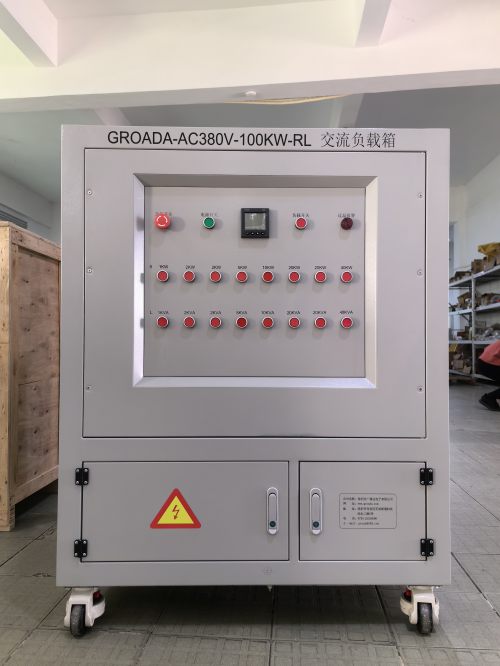
Beyond the IP rating, several design features separate a genuinely rainproof load bank from one that merely claims weather resistance. Sloped roof panels shed water instead of letting it pool. Louvered air intakes with baffles allow airflow while deflecting rain droplets. Powder-coated or stainless steel enclosures resist corrosion over years of exposure. Internal drainage paths guide any incidental moisture safely away from live components. Sealed control compartments keep displays, contactors, and wiring dry even when the resistive section is exposed to damp air. When evaluating any model, confirm that these protective features are present rather than relying on the marketing label alone.
Number 1: The Heavy-Duty Resistive Load Bank for Continuous Outdoor Use
The first unit in our comparison is a high-capacity resistive load bank engineered specifically for permanent or semi-permanent outdoor installation. Available in ratings from 100 kW up to several megawatts, it uses a fully welded, weatherproof steel enclosure with an IP55 rating across the entire assembly. During testing in simulated heavy rain, the sloped canopy and baffled intake louvers kept water out of the resistive chamber while maintaining full cooling airflow.
What stands out about this model is its top-mounted vertical exhaust design. Hot air is discharged straight upward, which prevents recirculation and keeps rain from being drawn back into the intake. The control panel sits in a separately sealed compartment with a heated section to prevent condensation, an important detail for cold, wet climates where temperature swings cause internal fogging. The digital metering system measures voltage, current, power, and frequency, and it can be operated remotely so technicians do not need to stand beside the unit in bad weather. For utilities, data centers, and marine applications, this load bank offers the best balance of durability and capacity.
Number 2: The Portable Waterproof Load Bank for Field Commissioning
Not every job calls for a permanently installed unit. The second product is a portable waterproof load bank designed for technicians who move between sites. Typically rated between 30 kW and 300 kW, it is built into a ruggedized rolling frame or trailer-mounted chassis with an IP54 to IP65 enclosure depending on configuration. This flexibility makes it ideal for generator commissioning, rental fleet testing, and emergency backup verification in outdoor conditions.
In our rain testing, the portable unit performed well thanks to its recessed control interface protected by a hinged, gasketed cover. The connection points for load cables use sealed camlock connectors that maintain their integrity even when submerged in standing water. Lifting points and forklift pockets make deployment fast, and the compact footprint fits into the bed of a service truck. Because portability introduces more handling and vibration, this model uses secured resistive elements and reinforced wiring harnesses to survive repeated transport. For contractors who need a dependable load bank they can carry to any rainy job site, this is the strongest choice.
Number 3: The Combined Resistive and Reactive Load Bank for Advanced Testing
The third unit addresses a more specialized need. When verifying generators under realistic operating conditions, engineers often need to apply both resistive (kW) and reactive (kVAR) loads to test the machine at a genuine power factor, usually 0.8 lagging. This combined resistive-reactive load bank delivers that capability in a weatherproof outdoor package rated IP55.
Testing a reactive load bank in the rain adds complexity because the inductive elements generate additional heat and require careful thermal management. This model handles it with a segmented cooling system that isolates the reactive banks in their own sealed, drained compartments. During our evaluation, the unit maintained stable output through a two-hour simulated downpour without any drop in insulation resistance. Its intelligent controller automatically balances resistive and reactive load steps, allowing a single operator to run a complete power factor test sequence from a protected touchscreen. For power plants, large standby systems, and critical infrastructure, the ability to perform full-spectrum testing outdoors in any weather justifies its higher cost.
How We Tested for Rainy Conditions
Each load bank was subjected to a consistent evaluation protocol. We measured insulation resistance before and after a controlled water spray equivalent to heavy rainfall, verified that cooling airflow remained within specification, and confirmed that no water accumulated inside live compartments. We also monitored control system stability, connector integrity, and enclosure corrosion resistance. Only units that maintained safe operation and stable metering throughout the test earned a place in this ranking.
Choosing the Right Waterproof Load Bank
Selecting the best outdoor load bank depends on your specific application. Fixed installations that require large, continuous loads favor the heavy-duty resistive unit. Mobile testing across multiple sites calls for the portable model. Advanced generator verification under realistic power factor demands the combined resistive-reactive design. In every case, verify the IP rating, confirm the presence of proper drainage and sealed control sections, and match the capacity to your equipment under test. Investing in a genuinely waterproof load bank protects both your test results and your equipment, ensuring reliable performance no matter what the weather brings.
Frequently Asked Questions
1. What IP rating do I need for a load bank used in the rain? For general outdoor rainy conditions, choose at least IP54, which protects against splashing water. For heavy rainfall, water jets, or coastal salt spray, select IP55 or IP65 for stronger protection.
2. Can a load bank operate safely during active rainfall? Yes, a properly rated waterproof load bank with sealed compartments, baffled air intakes, and drainage channels can operate safely in the rain. Always confirm the manufacturer specifies continuous outdoor use rather than temporary exposure.
3. Why does cooling airflow matter for a waterproof load bank? Load banks generate significant heat that must be removed by airflow. The challenge in wet conditions is maintaining strong cooling while keeping water out, which is why quality units use louvered baffles and top-mounted exhaust designs.
4. What is the difference between a resistive and a resistive-reactive load bank? A resistive load bank applies only real power (kW) at unity power factor, while a resistive-reactive load bank adds inductive load (kVAR) to test generators at a realistic lagging power factor, giving a more accurate picture of real-world performance.
5. How often should outdoor load banks be inspected? Inspect seals, drainage paths, and connectors before each major test and at least quarterly for permanently installed units. Regular inspection prevents moisture-related faults and extends the service life of the equipment.