
As battery energy storage systems (BESS) scale rapidly across the United States, reliable performance validation has become non-negotiable. Load banks sit at the heart of this validation process, simulating real-world electrical demand so engineers can confirm that storage assets deliver rated power, hold capacity, and behave safely under stress. Choosing the right load bank, however, is far from a plug-and-play decision. It requires matching electrical characteristics, environmental conditions, and compliance requirements to the specific storage chemistry and grid application you are testing.
Why Load Banks Matter for Energy Storage Testing
A load bank is a device that creates an artificial electrical load, drawing power from a source and dissipating it, typically as heat. For new energy storage projects, load banks are used to verify discharge capacity, measure round-trip efficiency, validate inverter and PCS (power conversion system) behavior, and commission systems before they connect to the grid. Without a properly sized and configured load bank, a facility risks accepting battery assets that underperform, degrade prematurely, or fail to meet interconnection standards.
In the US market, testing protocols are increasingly shaped by utility interconnection rules, NFPA 855 fire safety guidance, UL 9540 and UL 9540A standards, and IEEE 1547 grid interconnection requirements. The load bank you select must support the measurement precision and repeatability these standards demand.

Match the Load Type to Your Storage Application
Load banks come in three primary types, and each serves a distinct purpose in storage validation.
Resistive load banks convert energy directly into heat and apply a unity power factor load. They are the workhorse for capacity and discharge testing because they provide a clean, predictable load. For most BESS acceptance testing focused on kilowatt-hour capacity verification, a resistive load bank is the starting point.
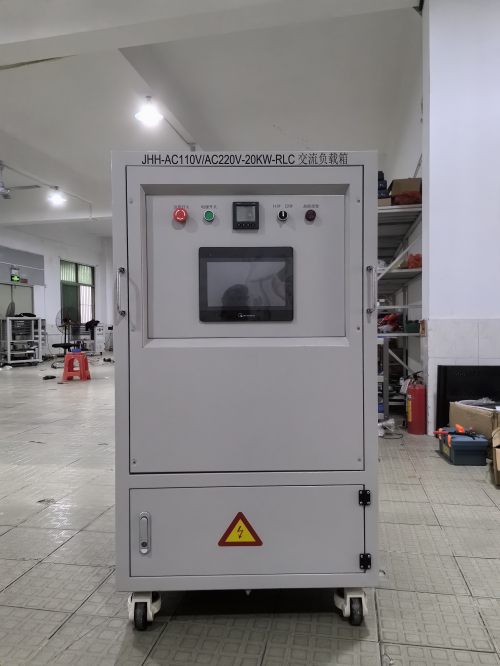
Reactive load banks introduce inductive or capacitive loads that shift the power factor away from unity. These are essential when you need to test how a PCS or inverter handles reactive power, voltage regulation, and grid-support functions. Modern storage systems often provide volt-VAR control, so reactive testing capability matters more than it once did.
Resistive-reactive combined load banks deliver both real and reactive load in a single unit. For utility-scale storage that must demonstrate full grid-compliance behavior, a combined unit lets you simulate realistic operating conditions, including the leading and lagging power factors the grid will actually impose.
Size the Capacity Correctly
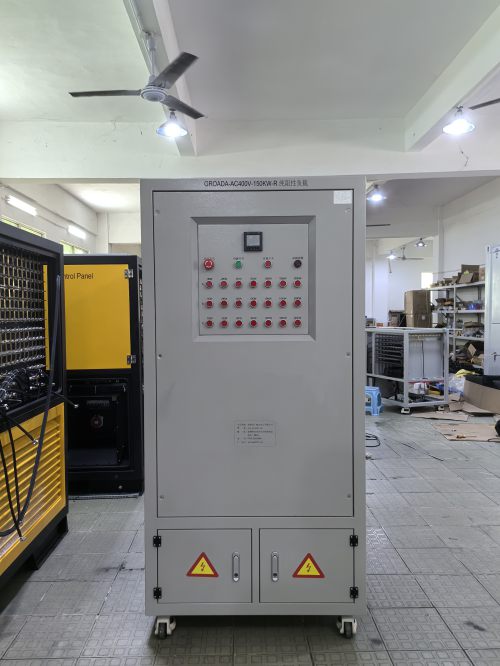
Undersizing is the most common and most costly mistake. Your load bank must handle the full rated power of the storage system, plus a safety margin. If you are commissioning a 2 MW / 4 MWh battery, a load bank rated below that power cannot fully exercise the asset, and partial-load testing can mask defects that only appear at full discharge.
Consider both continuous and peak ratings. Some storage systems are designed for short-duration high-power bursts, and your load bank should be able to absorb those peaks without derating or tripping. Modular load banks that combine multiple units offer flexibility here, letting you scale capacity up as project sizes grow across a testing fleet.
Confirm Voltage and Frequency Compatibility
US grid infrastructure operates at 60 Hz, and storage systems interface at a range of voltages, from 480 V AC commercial systems to medium-voltage utility installations. Verify that the load bank supports your exact voltage class, and confirm whether you need AC, DC, or both. DC load banks connect directly to the battery terminals for cell and pack-level testing, while AC load banks test the system downstream of the inverter.
For projects that span multiple voltage levels, a load bank with wide voltage flexibility or configurable tap settings reduces the number of units you need to own or rent.
Prioritize Measurement Accuracy and Data Logging
Acceptance testing is only as trustworthy as its data. Look for load banks with integrated metering that captures voltage, current, power, power factor, and energy with documented accuracy classes. High-resolution data logging, timestamped records, and export to CSV or direct SCADA integration make it far easier to produce the test reports that owners, financiers, and authorities having jurisdiction require.
Automated test sequencing is another valuable feature. Programmable load profiles let you replicate specific duty cycles, ramp rates, and hold periods, improving repeatability across units and reducing operator error.
Account for Environmental and Site Conditions
US storage projects span deserts, coastal zones, and cold northern climates. A load bank rated for a controlled lab may struggle at a windswept substation in summer heat. Check the ambient temperature rating, ingress protection, and cooling method. Air-cooled units are common and cost-effective, but they exhaust significant heat and need clearance and airflow. In confined or indoor spaces, that heat rejection becomes a real planning constraint.
Portability matters too. Trailer-mounted and containerized load banks simplify deployment across multiple field sites, while permanently installed units suit dedicated testing facilities. Match the form factor to how and where you will actually use the equipment.
Verify Safety Features and Standards Compliance
Given the energy densities involved in modern batteries, safety cannot be an afterthought. Look for over-temperature protection, emergency stop, ground-fault detection, and interlocks that prevent unsafe operation. Confirm that the unit carries relevant certifications and that its documentation supports the compliance narrative your project needs, whether that is UL listing, CSA marking, or manufacturer test data aligned with IEEE and NFPA guidance.
For DC testing directly on battery packs, isolation and arc-flash considerations are especially important. Your load bank supplier should be able to speak clearly to how their equipment mitigates these hazards.
Weigh Rental Versus Purchase
Not every project justifies buying a load bank outright. For a single commissioning event, renting a right-sized unit can be far more economical and shifts maintenance and calibration burdens to the provider. For organizations running continuous acceptance testing across a portfolio of storage assets, ownership makes sense, and modular systems let you build capacity incrementally.
When comparing options, factor in calibration cadence, control interfaces, spare parts availability, and vendor support. A slightly more expensive unit with responsive technical support and traceable calibration often delivers better total value than a cheaper alternative that leaves you troubleshooting alone in the field.
Build a Selection Checklist
Before finalizing any purchase or rental, work through a practical checklist. Confirm the load type against your test objectives. Verify power capacity with margin. Match voltage, frequency, and AC/DC requirements. Check measurement accuracy and data export. Assess environmental ratings and portability. Validate safety features and compliance documentation. Finally, weigh rental against purchase based on how often you will use the equipment.
By approaching load bank selection methodically, US energy storage teams can validate their systems with confidence, satisfy interconnection and safety requirements, and protect the long-term value of their assets. The right load bank is not simply a testing accessory. It is the instrument that turns performance claims into documented, defensible results.