
Understanding Load Banks and Why Custom Power Ratings Matter
A load bank is a self-contained device that applies an electrical load to a power source and dissipates the resulting energy, usually as heat. It is one of the most important tools in the power generation, data center, marine, and industrial sectors because it allows engineers to verify that generators, uninterruptible power supplies (UPS), batteries, and turbines can deliver rated output under real operating conditions. Without regular load testing, standby power systems risk failing precisely when they are needed most.
While off-the-shelf load banks are widely available, many facilities in the United States require custom power rating load banks tailored to their specific voltage, current, frequency, and environmental needs. A hospital backup system, a hyperscale data center, and an offshore drilling platform each demand very different capacities and configurations. This is where custom load bank manufacturers become essential partners, engineering solutions that match the exact kW, kVA, and voltage profile of the equipment being tested.
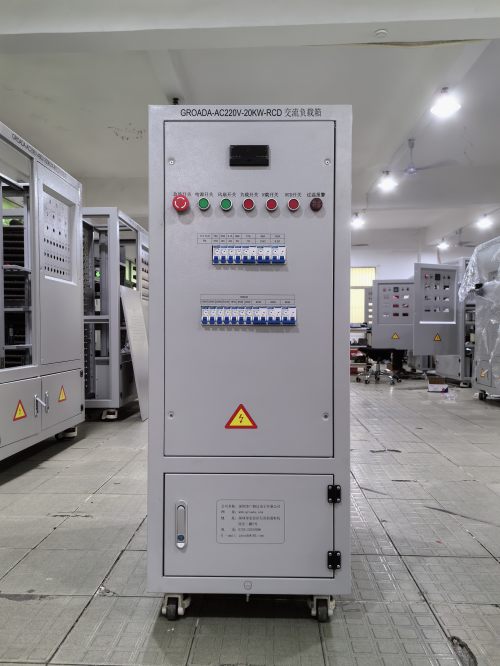
Types of Load Banks Offered by US Manufacturers
Before reviewing the leading manufacturers, it helps to understand the primary load bank categories that most US companies design and build. Each type serves a distinct testing purpose, and many custom projects combine two or more into a single integrated unit.
Resistive Load Banks
Resistive load banks simulate a purely real power load, expressed in kilowatts (kW). They convert electrical energy into heat through resistive elements and are the most common choice for testing generators at unity power factor. Resistive units are ideal for confirming that a prime mover and alternator can produce full rated power, and they are widely used for routine maintenance testing.
Reactive Load Banks
Reactive load banks add an inductive or capacitive component, expressed in kilovolt-amperes reactive (kVAR). They allow testing at a lagging power factor, typically 0.8, which more closely reflects real-world electrical loads that include motors, transformers, and other inductive equipment. Reactive testing reveals how a generator's voltage regulator and excitation system respond under demanding conditions.
Resistive/Reactive Combination Load Banks
Combination units integrate both resistive and reactive elements, letting operators test the complete power system at realistic power factors. These are frequently specified for critical facilities that must validate performance under conditions that mirror actual site loads.
Capacitive Load Banks
Capacitive load banks introduce a leading power factor and are increasingly relevant in data centers and telecommunications environments, where modern switch-mode power supplies can create leading power factor conditions. Testing with capacitive loads ensures UPS systems remain stable across the full range of expected loads.
What to Look for in a Custom Load Bank Manufacturer
Selecting the right partner for a custom power rating load bank involves more than comparing prices. Because these units protect mission-critical power infrastructure, the manufacturer's engineering depth, quality control, and support capabilities directly affect long-term reliability. The following criteria consistently separate top-tier US manufacturers from the rest.
- Engineering flexibility: The ability to design around specific voltage classes, frequency requirements, enclosure ratings, and control interfaces rather than forcing customers into fixed catalog models.
- Power range and scalability: Support for everything from small portable units of a few kilowatts up to multi-megawatt systems that can be paralleled for large plant testing.
- Cooling and enclosure options: Air-cooled and water-cooled designs, along with indoor, outdoor, trailer-mounted, and containerized enclosures suited to harsh environments.
- Control and data systems: Modern digital controllers, remote operation, automated test sequences, and data logging that support compliance documentation.
- Safety and compliance: Adherence to UL, NEC, and relevant IEEE standards, plus robust overtemperature and overcurrent protection.
- Service and lead time: Domestic manufacturing, responsive technical support, and reasonable delivery schedules for custom builds.
Leading Custom Power Rating Load Bank Manufacturers in the US
The United States is home to several well-established load bank manufacturers with strong reputations for custom engineering. The companies below are widely recognized across the power generation, data center, and industrial markets for their ability to deliver tailored solutions.
1. Simplex
Simplex is one of the most recognized names in the North American load bank industry. The company designs and manufactures resistive, reactive, and combination load banks across a broad power range, from portable units to large trailer-mounted systems. Simplex is known for its engineering-driven approach to custom projects, working closely with data centers, utilities, and rental fleets to deliver units that match precise voltage and capacity requirements. Their digital control platforms and automated testing features make them a frequent choice for facilities that require detailed compliance records.
2. Avtron Power Solutions
Avtron has a long history in load bank manufacturing and is especially respected for high-capacity and megawatt-class systems used in turbine testing, shipyards, and large generator plants. The company offers extensive customization for voltage, frequency, and cooling, including both air-cooled and water-cooled designs. Avtron's experience with demanding industrial and marine applications makes it a strong partner for projects that push beyond standard catalog capacities.
3. ASCO Power Technologies
ASCO, a well-known name in power control and transfer switch technology, also provides load banks engineered for standby power testing. Their solutions integrate smoothly with automatic transfer switches and power monitoring systems, which appeals to facilities that want a coordinated approach to backup power validation. ASCO's custom offerings emphasize reliability and integration with broader electrical infrastructure.
4. Mosebach Manufacturing
Mosebach is a US-based manufacturer with decades of experience building rugged load banks for industrial, transit, and utility applications. The company is known for durable resistive and reactive designs, including permanent installations and portable units. Mosebach frequently handles custom requirements for transit systems and heavy industry, where reliability under continuous operation is critical.
5. Load Banks Direct / Metal Deploye Resistor Group
Operating as part of a larger international resistor group, this manufacturer supplies custom-engineered load banks with flexible power ratings and enclosure options. They serve rental companies, generator dealers, and end users who need tailored units delivered on practical timelines. Their focus on configurable designs makes them a useful option for buyers seeking a balance between customization and availability.
6. Northbridge (formerly Loadbank Solutions)
Northbridge focuses on data center and mission-critical power testing, offering resistive, reactive, and capacitive load banks. Their emphasis on capacitive testing reflects the growing importance of validating UPS systems under leading power factor conditions common in modern IT loads. Custom rack-mount and modular designs support the tight space constraints often found in data halls.
How Custom Load Banks Are Engineered
Understanding the engineering process behind a custom load bank helps buyers set realistic expectations and communicate their needs clearly. A well-executed custom project typically follows several stages.
Requirement Definition
The process begins by defining the electrical parameters of the equipment under test: rated power in kW or kVA, nominal voltage, frequency, and target power factor. Engineers also gather site conditions such as ambient temperature, altitude, available space, and whether the unit will operate indoors, outdoors, or in a mobile configuration.
Load Element Design
Resistive elements are sized to dissipate the required kilowatts while maintaining safe surface temperatures and long service life. Reactive components are calculated to deliver the specified kVAR at the target power factor. Element selection directly influences the unit's durability, so quality manufacturers use materials rated for repeated thermal cycling.
Cooling System Selection
Because load banks convert electrical energy into heat, cooling is a central design consideration. Air-cooled units use fans to move air across the elements and are common for portable and mid-range applications. Water-cooled units handle very high capacities in compact footprints and are favored for large fixed installations where airflow is limited.
Controls and Instrumentation
Modern custom load banks feature digital controllers that allow operators to select load steps, run automated test sequences, and log data for reporting. Remote operation via network connections is increasingly standard, enabling technicians to conduct tests safely from a distance and integrate results into facility monitoring systems.
Enclosure and Safety Design
The enclosure protects internal components and personnel while directing heated exhaust safely away from the equipment under test. Safety features such as overtemperature shutdown, airflow sensors, and overcurrent protection are integrated to prevent damage and hazards during operation.
Applications Driving Demand for Custom Load Banks
Several industries in the US rely heavily on custom power rating load banks, each with distinct requirements.
- Data centers: Commissioning and periodic testing of generators and UPS systems demand precise, often capacitive-capable load banks that validate performance without risking live IT loads.
- Healthcare facilities: Hospitals must test standby power under realistic conditions to meet code requirements and ensure life-safety systems remain reliable.
- Marine and offshore: Shipboard and platform power systems require ruggedized, corrosion-resistant load banks capable of high-capacity testing in confined spaces.
- Utilities and power generation: Turbine and large generator testing calls for megawatt-class systems, frequently custom-built for specific plant configurations.
- Rental and service fleets: Equipment rental companies need versatile, transportable units that can serve many customers with varying voltage and capacity needs.
The Value of Domestic Manufacturing
Choosing a US-based manufacturer offers meaningful advantages for custom projects. Domestic engineering teams can collaborate closely with customers, shorten communication cycles, and provide responsive support throughout the equipment's life. Locally built units also simplify compliance with US electrical standards and reduce lead times compared with imported alternatives. For mission-critical applications where downtime is costly, the ability to reach a knowledgeable service team quickly is a significant benefit.
Best Practices for Load Bank Testing
Regardless of which manufacturer you choose, following sound testing practices ensures reliable results and protects your equipment.
- Test at the correct power factor to reflect real operating conditions, especially for critical facilities.
- Apply load in graduated steps to observe system response and avoid abrupt stress on the power source.
- Monitor temperatures, voltage, and frequency throughout the test and record data for compliance documentation.
- Ensure adequate ventilation and clearance around air-cooled units to prevent recirculation of hot exhaust.
- Perform regular exercise testing of standby systems to prevent wet-stacking in diesel generators and to confirm ongoing reliability.
Conclusion
Custom power rating load banks are indispensable tools for verifying that critical power systems perform as designed. The leading US manufacturers—including Simplex, Avtron, ASCO, Mosebach, and others—bring deep engineering expertise, broad power ranges, and flexible customization to meet the needs of data centers, hospitals, utilities, marine platforms, and industrial facilities. When selecting a partner, prioritize engineering flexibility, compliance, cooling and enclosure options, modern controls, and responsive domestic support. By matching a load bank precisely to your equipment's voltage, capacity, and power factor requirements, you gain confidence that your standby and prime power systems will deliver when it matters most.