
Why Silent Operation Matters in Hospital Power Testing
Hospitals never sleep. Operating theaters, intensive care units, neonatal wards, and diagnostic imaging suites all depend on an uninterrupted power supply around the clock. To guarantee that backup generators and uninterruptible power supply (UPS) systems will perform when the grid fails, facilities teams run regular load tests. The challenge is doing this without disturbing patients, staff, or sensitive medical equipment. That is where silent operation load banks earn their place. They let engineers verify full-load capacity and detect wet-stacking in diesel generators while keeping noise, vibration, and heat within limits that a healthcare environment can tolerate.
In this white paper we share our top three silent operation load banks for hospital power testing, explain the engineering behind their low-noise performance, and offer practical guidance on selection, commissioning, and routine use.
What Makes a Load Bank "Silent"?
No load bank is truly silent, because resistive elements generate heat that must be removed by airflow. The term "silent operation" refers to designs engineered to minimize sound pressure levels, typically to the 65 to 75 dB(A) range measured at one meter, compared with 85 dB(A) or higher for conventional units. Several design features contribute to this:
- Low-speed, high-diameter fans that move the required volume of air at reduced rotational speed, cutting aerodynamic noise.
- Acoustic enclosures and baffles lined with sound-absorbing material to dampen fan and element noise.
- Vibration isolation mounts that stop structural noise from transmitting into floors and walls.
- Variable-speed control that matches cooling airflow to the actual load, so the unit is not running full fans at partial load.
- Optimized exhaust routing that spreads hot air over a larger area and reduces turbulent, high-frequency noise.
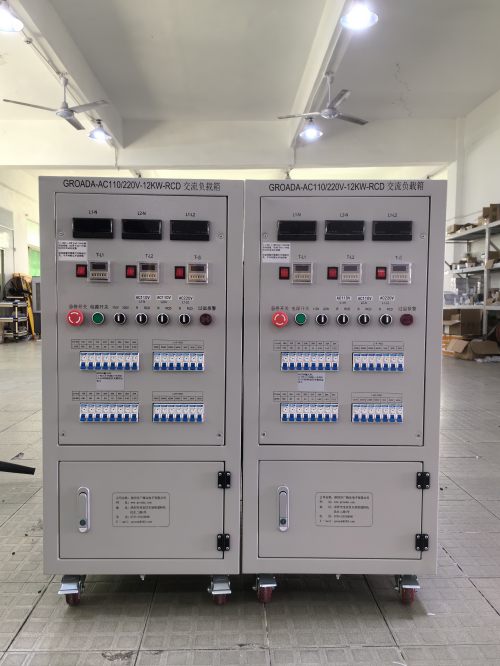
For hospital applications these features are not luxuries. A load bank running during a weekday test near a recovery ward must not raise ambient noise to a level that compromises patient rest or staff communication.
Our Top 3 Silent Operation Load Banks
1. The Compact Resistive Unit for Indoor Generator Rooms
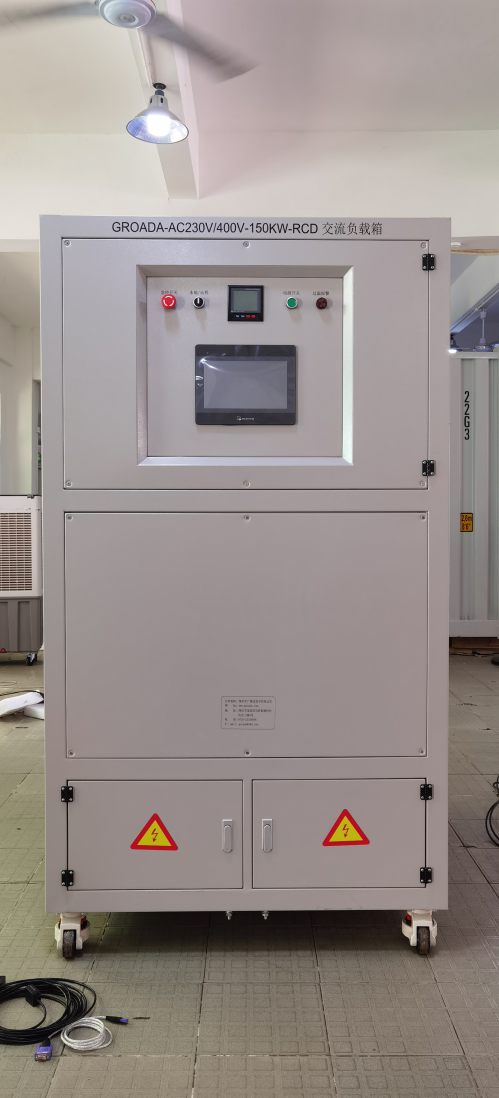
Our first recommendation is a compact resistive load bank rated from 100 kW to 500 kW, built specifically for indoor installation in generator or electrical plant rooms. Its strength is a fully enclosed acoustic housing with top-mounted exhaust, so hot air discharges upward and away from personnel. The fan assembly uses electronically commutated (EC) motors with stepless speed control, holding sound levels around 68 dB(A) at one meter under full load.
This unit suits hospitals where the backup generator sits in a basement or ground-floor plant room directly below or beside occupied spaces. Load steps can be as fine as 1 kW, allowing engineers to ramp the generator gradually and observe engine response, exhaust temperature, and governor stability. Integrated temperature and airflow sensors shut the unit down safely if cooling is ever compromised, protecting both the equipment and the building.
2. The Trailer-Mounted Resistive Load Bank for Shared Campuses
Larger hospital campuses often maintain several generators feeding a central distribution system. For these sites our second recommendation is a trailer-mounted resistive load bank in the 500 kW to 1,500 kW class. Mobility lets a single unit serve multiple buildings across a medical campus without permanent installation at each location.
The acoustic package here is more substantial, combining a double-skin insulated enclosure with dual-stage silencers on the exhaust path. Even at 1,000 kW the unit holds close to 72 dB(A) at one meter, which is acceptable for outdoor positioning a short distance from ward blocks. Because it is self-contained with its own cabling and control panel, facilities teams can set up a test quickly, run the generator to full nameplate capacity, and demonstrate compliance with annual testing standards. The trailer also carries the advantage of flexible siting, so the operator can position the exhaust away from air intakes and open windows.
3. The Resistive-Reactive Load Bank for Realistic kVA Testing
Real hospital loads are not purely resistive. Motors in HVAC systems, elevators, chillers, and imaging equipment introduce reactive, inductive load that affects how a generator behaves. Our third recommendation is a combined resistive-reactive load bank that applies both kW and kVAR, letting engineers test the generator at its true rated power factor, typically 0.8 lagging.
This is the most sophisticated of the three and the most valuable for critical healthcare power systems, because it reveals voltage regulation and automatic voltage regulator (AVR) performance that resistive-only testing cannot. It carries the same silent-operation design philosophy: variable-speed fans, acoustic lining, and vibration isolation keep the unit quiet despite handling both load types. For hospitals commissioning new generators or validating a UPS and generator combination, this unit provides the most complete picture of real-world readiness.
Selecting the Right Load Bank for Your Hospital
Choosing between these three comes down to a few practical questions:
- Where is the generator located? An indoor plant room beneath occupied floors favors the compact enclosed unit with upward exhaust.
- How many generators and buildings must you cover? A multi-building campus benefits from the mobility of the trailer-mounted unit.
- What test depth do you need? Routine exercising may only require resistive load, while commissioning and compliance verification call for resistive-reactive testing at true power factor.
- What are your noise limits? Confirm the permitted sound level at the nearest ward, then match it against the published dB(A) figure of each unit at the load you intend to apply.
Safe Commissioning and Routine Use
Even the quietest load bank demands careful handling in a healthcare setting. Before any test, verify that exhaust discharge will not be drawn into fresh-air intakes serving operating theaters or isolation rooms. Confirm cable ratings and connection torque, and ensure emergency stop circuits are functional. Schedule tests during lower-activity periods where possible, and notify ward managers so staff are aware. During the test, monitor generator coolant temperature, oil pressure, exhaust gas temperature, and frequency stability alongside the load bank readings.
For routine exercising, many hospitals adopt a monthly light-load run and an annual full-load test. Silent load banks make the annual full-load test far easier to schedule, because it no longer needs to wait for a weekend or overnight window simply to avoid noise complaints.
The Value of Quiet, Reliable Testing
A hospital's backup power system is only as trustworthy as its last successful full-load test. Silent operation load banks remove the main obstacle that keeps teams from testing often enough: disruption. By reducing noise, controlling heat discharge, and offering flexible siting, these three units let facilities engineers prove generator and UPS capacity without compromising patient care. Whether you need a compact indoor unit, a mobile campus solution, or a full resistive-reactive package for true power-factor testing, matching the load bank to your environment is the key to confident, compliant, and quiet power testing.