GROADA-AC380V-50KW-R/RCD逆变器负载组
The GROADA AC380V-50KW-R/RCD inverter test load bank is a high-performance testing device specifical...
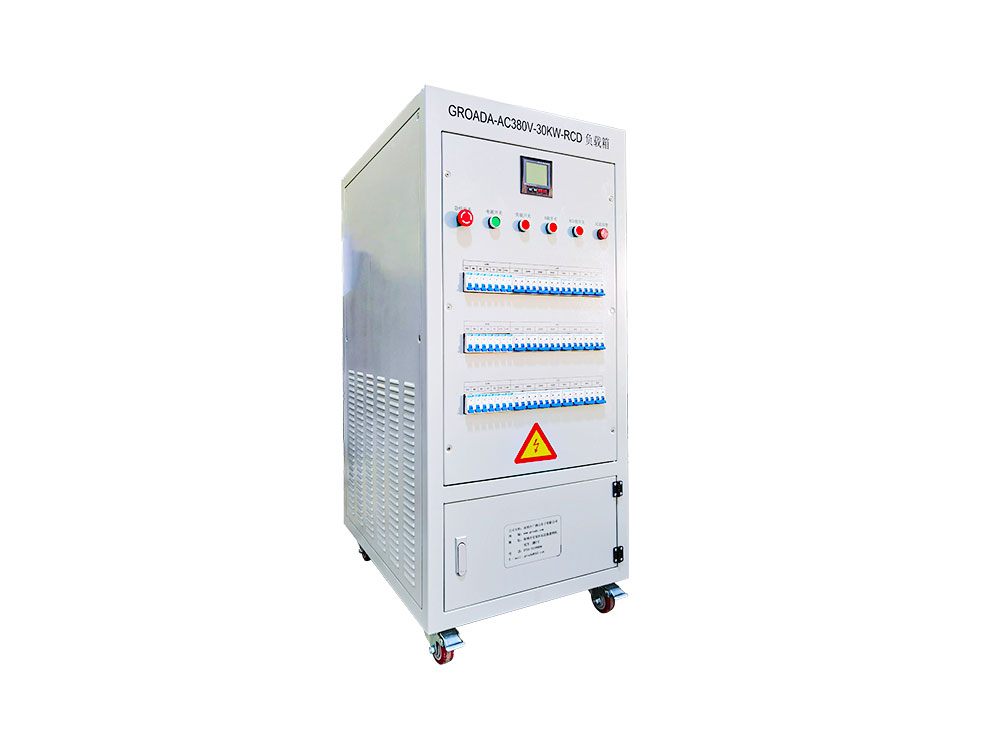
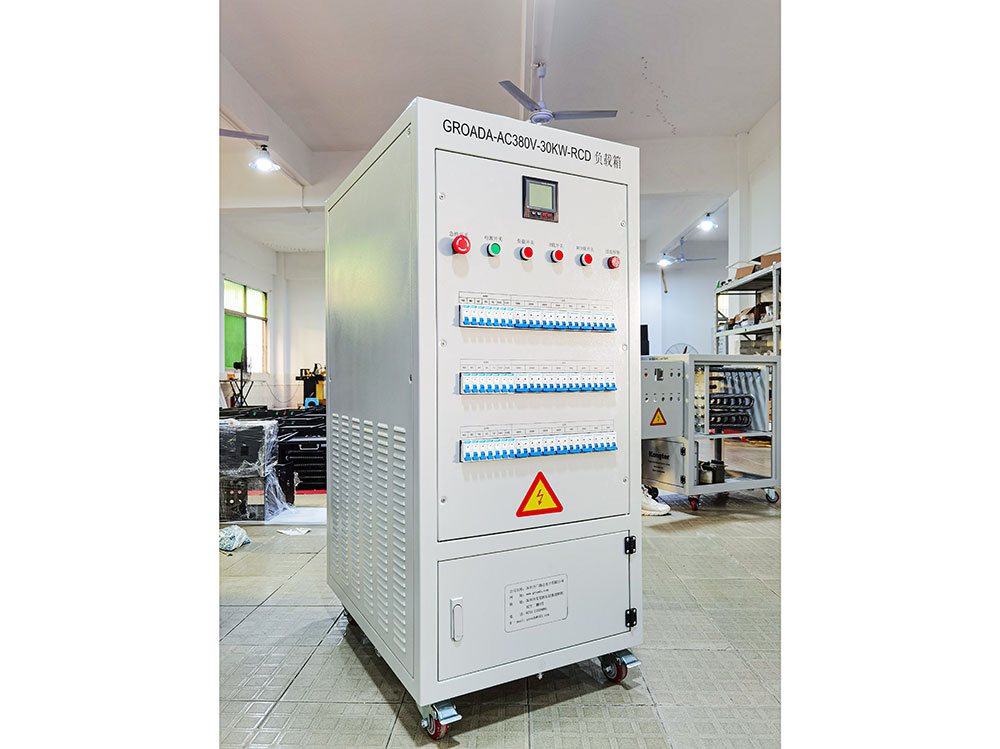
| 模型 | AC220V-5KW-RCD | AC220V-10KW-RCD | AC220V-15KW-RCD | AC220V-20KW-RCD | 交流380v-30千瓦/日 | 交流380v-50KW-RCD | 交流380v-60KW-RCD | 交流380v-100KW-RCD | 交流380v-200KW-RCD |
| 额定功率 | R=5KW | R=10KW | R=15KW | R=20KW | R=30KW | R=50KW | R=60KW | R=100KW | R=200KW |
| RCD=5KVA | RCD=10KVA | RCD=15KVA | RCD=20KVA | RCD=30KVA | RCD=50KVA | RCD=60KVA | RCD=100KVA | RCD=200KVA | |
| 输入电流 | 0-22A | 0-45A | 0-45A | 0-90A | 0-45A | 0-3:00 | 0-450A | 0-600A | 0-750A |
| 尺寸(宽*深*高mm) | 500*600*800 | 500*600*1000 | 500*600*1100 | 500*750*1100 | 600*850*1400 | 600*850*1600 | 600*850*1850 | 700*1000*1800 | 1100*1400*1800 |
| 重量 | 50KG | 80公斤 | 100公斤 | 130公斤 | 200KG | 300公斤 | 350公斤 | 450公斤 | 550公斤 |
| 输入电压 | 交流220/230V | 交流380/400V | |||||||
| 其他输入电压可根据要求定制 | |||||||||
| 最小载荷 | 100W | 100W | 100W | 100W | 100W | 1千瓦 | 1千瓦 | 1千瓦 | 1千瓦 |
| 其他最小负载功率可根据要求定制 | |||||||||
| 整体精度 | 3%(其他精度要求可根据要求定制) | ||||||||
| 功率因数 | PF=0.6~1.0 | ||||||||
| 峰形系数 | 2至3 | ||||||||
| 控制模式 | 本地手动/远程主机(本地手动控制模式:断路器/按钮/触摸屏三路可选,其他方法可根据需要定制) | ||||||||
| 远程接口 | RS232/RS485/USB/RJ45/CAN/GPIB(其他接口模式可根据要求定制) | ||||||||
| 保护功能 | 紧急停机保护、超温保护、风机负载联锁保护、接地保护(选择过压保护、过流保护、短路保护、风机超负荷、风量不足) | ||||||||
| 工作电源 | AC220V | AC220V/AC380V | |||||||
| 显示精度 | 0.5级(其他显式精度可根据要求定制) | ||||||||
| 显示参数 | 电压、电流、功率、频率、功率因数等。(其他显式方法可根据要求定制) | ||||||||
| 冷肯定的方式 | 侧进风口和上出风口(其他出风口方式可根据要求定制) | ||||||||
| 保护级别 | IP20(其他防护等级可根据要求定制) | ||||||||
| 外观颜色 | RAL7035(其他颜色可根据要求定制) | ||||||||
| 工作温度 | -10 ℃ ~ 55 ℃ | ||||||||
| 相对湿度 | ≤95%相对湿度 | ||||||||
| 高度 | ≤2500米 | ||||||||
Inverter testing under realistic and controllable loads is essential for verifying performance, reliability, durability, and safety. A properly designed load bank allows:
Reproducible stress testing under full load, partial load, and transient conditions
Control over resistive, inductive, or combined loads simulating real-world motor or grid interactions
Validation of protection circuits (overcurrent, overvoltage, thermal shutdown)
Verification of long-term thermal stability, aging, and component degradation
Without such a load bank, inverter testing may rely solely on field conditions or motor coupling, which can obscure root cause analysis and reduce repeatability.
In fact, industry-standard test labs use both passive (resistive/inductive) and active loads (regenerative electronic loads or motor emulators) to fully stress inverters.
This product page presents a high-precision inverter load bank, specifically designed for AC 380 V systems, capable of handling up to 30 kW rated load. Below is an enhanced, SEO-optimized description:
Nominal Voltage: 380 V AC
额定功率: 30 kW continuous
负载类型: RCD (Resistive + Capacitive + Inductive combinations)
Load Control Modes: stepwise or continuous adjustment, enabling partial load (e.g. 10 %, 25 %, 50 %, 75 %, 100 %)
Cooling & Thermal Management: forced-air or liquid cooling to maintain stable temperatures under full load
Protection Mechanisms: overcurrent, overvoltage, short-circuit, phase loss, overheating
Load Bank Construction: high-stability precision resistors/inductors, modular load elements
Measurement & Monitoring: integrated current, voltage, power, and temperature sensors; optional logging or remote communication
These features empower R&D labs, quality assurance teams, and inverter manufacturers to test inverters precisely under controlled, repeatable load conditions.
During the design and prototyping phases, engineers can use this load bank to:
Verify full-load performance, thermal limits, and efficiency curves
Stress-test inverter switching components (IGBTs, MOSFETs)
Simulate part-load, transient, and overload scenarios
Validate cooling systems under real thermal load
In mass manufacturing, this load bank can be integrated into automatic test sequences:
Run “burn-in” or "soak" tests to detect early-life failures
Ensure each unit meets declared performance before shipping
Automate pass/fail criteria based on voltage, current, power, and temperature thresholds
After deployment (in solar farms, microgrids, industrial power systems), periodic or after-maintenance tests help:
Confirm the inverter still performs within specification
Detect degradation (e.g. diminished cooling, capacitor aging)
Validate protection circuits and safety margins
Testing inverters with a load bank is considered a best practice in many critical power installations to prevent unexpected failure.
Below is a recommended step-by-step workflow and key considerations:
| Phase | Actions | Purpose / Checks |
|---|---|---|
| Setup & Safety Check | Inspect wiring, ensure insulation and grounding, perform open-circuit checks | Prevent shorts or unsafe conditions |
| No-load / Idle Measurement | Run inverter unloaded, measure baseline current, voltage, harmonic distortion | Confirm zero-load behavior and idle losses |
| Step Load Ramp | Apply incremental loads (e.g. 10 %, 25 %, 50 %, 75 %, 100 %) | Assess linearity, thermal drift, current stability |
| Full-load Endurance / Soak Test | Run at full load for extended duration (hours to days) | Monitor temperature, drift, cooling effectiveness |
| Transient Tests | Introduce load steps, sudden load removal (load rejection), or overload transients | Measure inverter’s dynamic response, grid-interaction behavior |
| Protection Verification | Deliberately exceed ratings to trigger overcurrent, overvoltage, or thermal protections | Validate that safety circuits engage reliably |
Always wear proper PPE (insulating gloves, goggles) when handling high-voltage systems.
Ensure the load bank and inverter are in good ventilation and clean environment (no dust accumulation).
Use power meters or precision instrumentation to measure input/output, so your efficiency calculations are accurate.
Avoid exceeding design limits of the inverter or load bank – inconsistent or overloaded operation can damage components.
Record all data logs systematically for traceability and future analysis.
To support EEAT and improve trust, you may wish to include:
Testing data and charts (efficiency curve, thermal profiles)
Third-party lab certifications (e.g. IEC, UL, CE compliance)
Case studies or whitepapers where this or similar load banks have been used (e.g. in inverter manufacturers’ labs)
Technical team credentials (engineers, years in power electronics, publications)
Guarantees and warranty terms, e.g. accuracy drift, calibration support
Our AC 380V 30 kW RCD Inverter Load Bank is engineered by a team with over 10 years of experience in power electronics test systems. Designed for R&D, QA, and maintenance verification, it meets international accuracy and safety standards. Each unit is factory-calibrated and accompanied by a calibration certificate. We also offer custom configurations (higher power, alternate voltages, communication interfaces) to support evolving test requirements.
 01
01
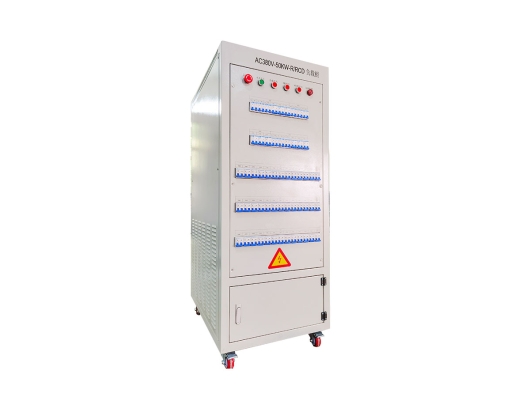
The GROADA AC380V-50KW-R/RCD inverter test load bank is a high-performance testing device specifical...
 02
02
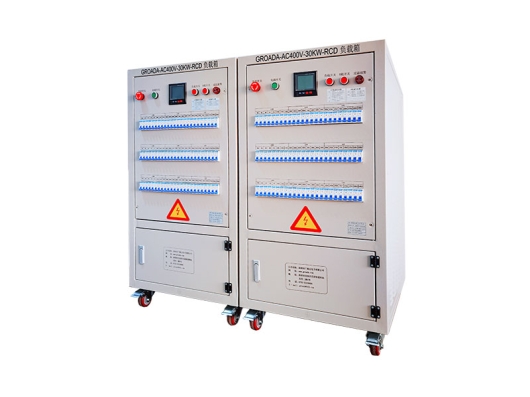
GROADA-AC400V-30KW-RCD Inverter AC Load_Shenzhen Guangluda Electronics Co., Ltd. is a high-tech ente...
 03
03
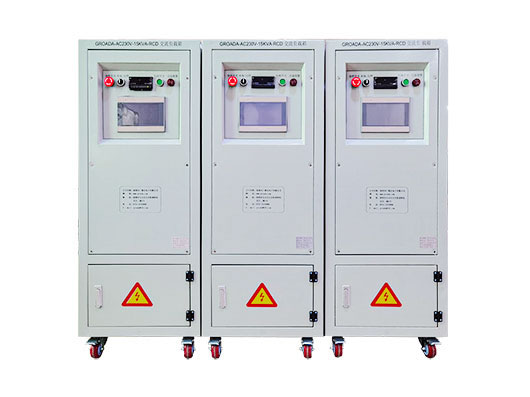
The GROADA AC Load Test Bench (AC230V, 15 kW, with Residual Current Device protection) is purpose-bu...
 04
04
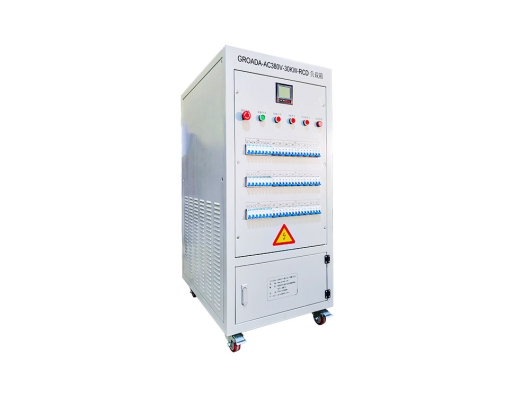
GROADA-AC380V-30KW-RCD Inverter Load Box_Shenzhen Guang Lu Da Electronics Co., Ltd. is a high-tech e...