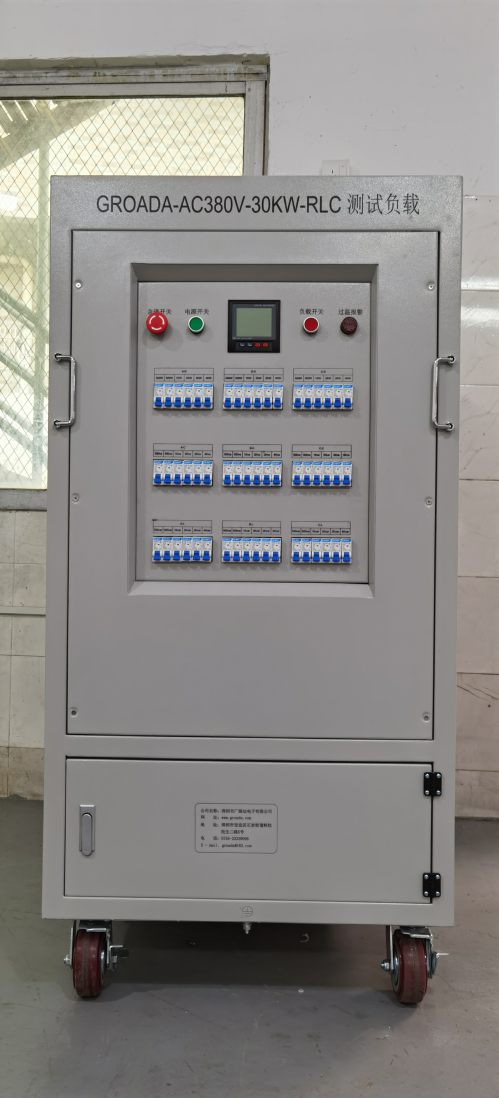
発電機の検証と電源システムの信頼性のための抵抗負荷銀行テスト
Resistive load banks are essential tools in the testing and validation of electrical generators, UPS systems, and renewable energy installations. These devices simulate real-world electrical loads by converting electrical power into heat through high-power resistors, allowing engineers to verify generator performance under various operating conditions—such as full load, partial load, and transient response—without relying on actual utility power or connected equipment.
A typical resistive load bank is designed for single-phase or three-phase applications, with power ratings ranging from 50 kW to over 10 MW. The most common configuration includes adjustable load steps (e.g., 10%–100% increments) and precise control of active power (kW). For example, a 300 kW three-phase resistive load bank can be used to test a diesel generator rated at 350 kVA. During testing, the load bank draws current proportional to the applied voltage (I = P/V), ensuring accurate simulation of resistive loads like lighting, heating, and motor drives.
These units often incorporate advanced safety features such as overtemperature protection, short-circuit detection, and emergency stop functionality. Compliance with international standards like IEC 60034-1 (for electric machines) and IEEE 1159 (power quality) ensures safe and repeatable test results. Cooling methods vary—air-cooled models use forced convection fans, while water-cooled systems are preferred for continuous high-load operations exceeding 4 hours.

Field applications include factory acceptance testing (FAT) of generators, commissioning of backup power systems, and grid integration testing for solar farms or wind turbines. An anonymized case study from a hospital backup system showed that resistive load testing identified a 12% drop in voltage regulation at 80% load, prompting corrective maintenance before critical failure. This highlights how regular testing improves system reliability and reduces downtime risk.
Modern load banks integrate digital control interfaces like Modbus RTU or Ethernet-based SCADA protocols, enabling remote monitoring and automated load cycling. Calibration intervals typically range from 12 to 24 months, depending on usage intensity, and should follow ISO/IEC 17025 guidelines for measurement traceability.