Банк нагрузки инвертора GROADA-AC380V-50KW-R/RCD
The GROADA AC380V-50KW-R/RCD inverter test load bank is a high-performance testing device specifical...
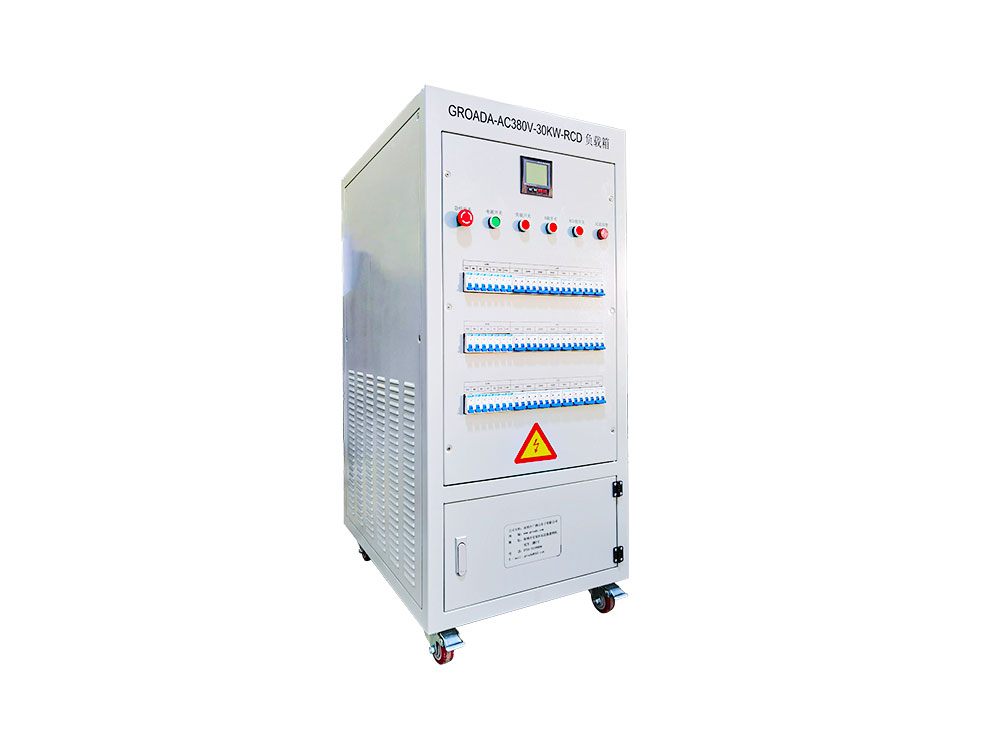
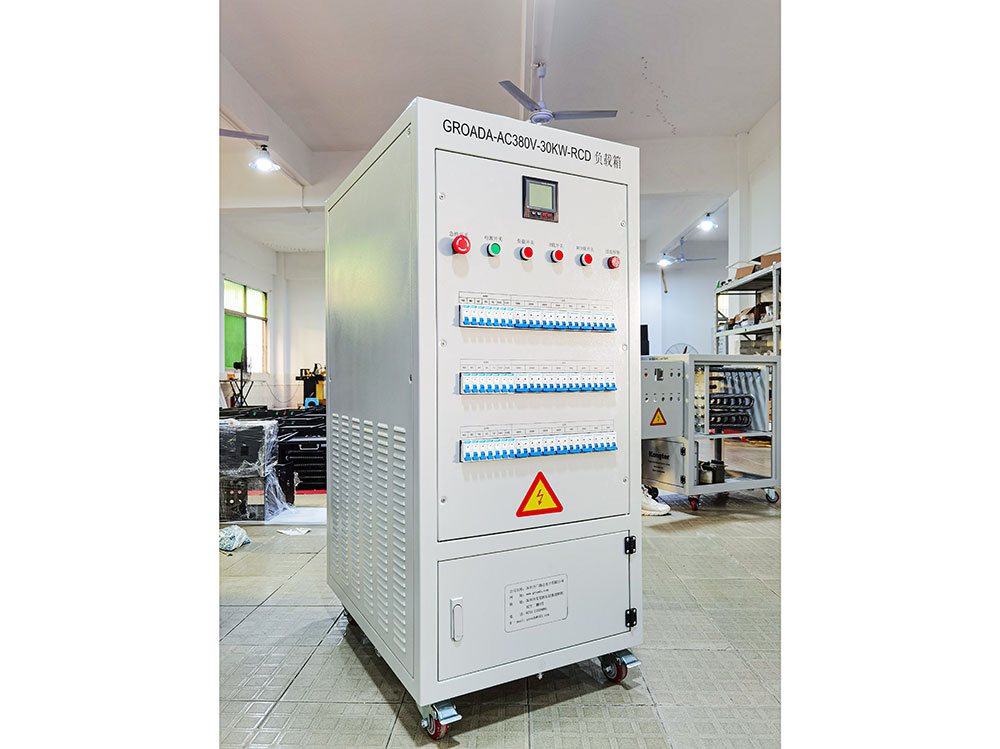
| Модель | AC220V-5KW-РКД | AC220V-10KW-РКД | AC220V-15KW-РКД | AC220V-20KW-РКД | АЦ380В -30KW-РКД | АЦ380В -50KW-РКД | АЦ380В60KW-РКД | АЦ380В100кВт-РКД | АЦ380В -200 кВт-РКД |
| Номинальная мощность | R = 5 кВт | R = 10 кВт | R = 15 кВт | R = 20 кВт | R = 30 кВт | R = 50 кВт | R = 60 кВт | R = 100 кВт | R = 200 кВт |
| РКД = 5КВА | RCD = 10 КВА | RCD = 15 КВА | RCD = 20 КВА | РКД = 30КВА | RCD = 50КВА | RCD=60КВА | RCD=100КВА | RCD=200КВА | |
| Входный ток | 0-22А | 0-45А | 0-45А | 0-90А | 0-45А | 0-300А | 0-450А | 0-600А | 0-750А |
| Размер (ширина * глубина * высота мм) | 500*600*800 | 500*600*1000 | 500*600*1100 | 500*750*1100 | 600*850*1400 | 600*850*1600 | 600*850*1850 | 700*1000*1800 | 1100*1400*1800 |
| Вес | 50 кг | 80 кг | 100 кг | 130 кг | 200 кг | 300 кг | 350 кг | 450 кг | 550кг |
| Входное напряжение | AC220/230В | AC380/400В | |||||||
| Другое входное напряжение может быть настроено в соответствии с требованиями | |||||||||
| Минимальная нагрузка | 100 Вт | 100 Вт | 100 Вт | 100 Вт | 100 Вт | 1 кВт | 1 кВт | 1 кВт | 1 кВт |
| Другая минимальная мощность загрузки может быть настроена в соответствии с требованиями | |||||||||
| Общая точность | 3% (другие требования точности могут быть настроены в соответствии с требованиями) | ||||||||
| коэффициент мощности | PF = 0,6 ~ 1,0 | ||||||||
| пиковый коэффициент | от 2 до 3 | ||||||||
| Режим управления | Локальный ручный/удаленный хост-компьютер (локальный режим ручного управления: выключатель/кнопка/сенсорный экран трехсторонний опциональный, другие методы могут быть настроены по мере необходимости) | ||||||||
| Удаленный интерфейс | RS232/RS485/USB/RJ45/CAN/GPIB (другие режимы интерфейса могут быть настроены в соответствии с требованиями) | ||||||||
| Функция защиты | Защита от аварийной остановки, защита от перетемпературы, защита от блокировки нагрузки вентилятора, защита от заземления (выберите защиту от перенапряжения, защиту от перетока, защиту от короткого замыкания, перегрузку вентилятора, недостаточный объем воздуха) | ||||||||
| Рабочее питание | АЦ220В | AC220V / AC380V | |||||||
| Точность отображения | Уровень 0,5 (другая явная точность может быть настроена в соответствии с требованиями) | ||||||||
| Параметры отображения | Напряжение, ток, мощность, частота, коэффициент мощности и т.д. (другие явные методы могут быть настроены в соответствии с требованиями) | ||||||||
| Холодный уверенный способ | Бочный вход воздуха и верхний выход воздуха (другие методы выхода воздуха могут быть настроены в соответствии с требованиями) | ||||||||
| Уровень защиты | IP20 (другой уровень защиты может быть настроен в соответствии с требованиями) | ||||||||
| Внешний цвет | RAL7035 (другие цвета могут быть настроены в соответствии с требованиями) | ||||||||
| Рабочая температура | -10 ℃ ~ 55 ℃ | ||||||||
| Относительная влажность | ≤95%RH | ||||||||
| Высота | ≤ 2500 м | ||||||||
Испытание инвертора при реалистичных и контролируемых нагрузках имеет важное значение для проверки производительности, надежности, долговечности и безопасности. Правильно спроектированный нагрузочный банк позволяет:
Повторяемое стрессовое испытание при полной нагрузке, частичной нагрузке и переходных условиях
Контроль сопротивляющих, индуктивных или комбинированных нагрузок, имитирующих взаимодействие двигателя или сети в реальном мире
Валидация защитных схем (переток, перенапряжение, тепловое отключение)
Проверка долгосрочной тепловой стабильности, старения и деградации компонентов
Без такого банка нагрузки испытания инвертора могут полагаться исключительно на условия на поле или соединение двигателя, что может затемнить анализ коренных причин и снизить повторяемость.
Фактически, стандартные испытательные лаборатории используют как пассивные (сопротивляющие/индуктивные), так и активные нагрузки (регенеративные электронные нагрузки или эмуляторы двигателей) для полного напряжения инверторов.
This product page presents a high-precision inverter load bank, specifically designed for AC 380 V systems, capable of handling up to 30 kW rated load. Below is an enhanced, SEO-optimized description:
Nominal Voltage: 380 V AC
Номинальная мощность: 30 kW continuous
Тип нагрузки: RCD (Resistive + Capacitive + Inductive combinations)
Load Control Modes: stepwise or continuous adjustment, enabling partial load (e.g. 10 %, 25 %, 50 %, 75 %, 100 %)
Cooling & Thermal Management: forced-air or liquid cooling to maintain stable temperatures under full load
Protection Mechanisms: overcurrent, overvoltage, short-circuit, phase loss, overheating
Load Bank Construction: high-stability precision resistors/inductors, modular load elements
Measurement & Monitoring: integrated current, voltage, power, and temperature sensors; optional logging or remote communication
These features empower R&D labs, quality assurance teams, and inverter manufacturers to test inverters precisely under controlled, repeatable load conditions.
During the design and prototyping phases, engineers can use this load bank to:
Verify full-load performance, thermal limits, and efficiency curves
Stress-test inverter switching components (IGBTs, MOSFETs)
Simulate part-load, transient, and overload scenarios
Validate cooling systems under real thermal load
In mass manufacturing, this load bank can be integrated into automatic test sequences:
Run “burn-in” or "soak" tests to detect early-life failures
Ensure each unit meets declared performance before shipping
Automate pass/fail criteria based on voltage, current, power, and temperature thresholds
After deployment (in solar farms, microgrids, industrial power systems), periodic or after-maintenance tests help:
Confirm the inverter still performs within specification
Detect degradation (e.g. diminished cooling, capacitor aging)
Validate protection circuits and safety margins
Testing inverters with a load bank is considered a best practice in many critical power installations to prevent unexpected failure.
Below is a recommended step-by-step workflow and key considerations:
| Phase | Actions | Purpose / Checks |
|---|---|---|
| Setup & Safety Check | Inspect wiring, ensure insulation and grounding, perform open-circuit checks | Prevent shorts or unsafe conditions |
| No-load / Idle Measurement | Run inverter unloaded, measure baseline current, voltage, harmonic distortion | Confirm zero-load behavior and idle losses |
| Step Load Ramp | Apply incremental loads (e.g. 10 %, 25 %, 50 %, 75 %, 100 %) | Assess linearity, thermal drift, current stability |
| Full-load Endurance / Soak Test | Run at full load for extended duration (hours to days) | Monitor temperature, drift, cooling effectiveness |
| Transient Tests | Introduce load steps, sudden load removal (load rejection), or overload transients | Measure inverter’s dynamic response, grid-interaction behavior |
| Protection Verification | Deliberately exceed ratings to trigger overcurrent, overvoltage, or thermal protections | Validate that safety circuits engage reliably |
Always wear proper PPE (insulating gloves, goggles) when handling high-voltage systems.
Ensure the load bank and inverter are in good ventilation and clean environment (no dust accumulation).
Use power meters or precision instrumentation to measure input/output, so your efficiency calculations are accurate.
Avoid exceeding design limits of the inverter or load bank – inconsistent or overloaded operation can damage components.
Record all data logs systematically for traceability and future analysis.
To support EEAT and improve trust, you may wish to include:
Testing data and charts (efficiency curve, thermal profiles)
Third-party lab certifications (e.g. IEC, UL, CE compliance)
Case studies or whitepapers where this or similar load banks have been used (e.g. in inverter manufacturers’ labs)
Technical team credentials (engineers, years in power electronics, publications)
Guarantees and warranty terms, e.g. accuracy drift, calibration support
Our AC 380V 30 kW RCD Inverter Load Bank is engineered by a team with over 10 years of experience in power electronics test systems. Designed for R&D, QA, and maintenance verification, it meets international accuracy and safety standards. Each unit is factory-calibrated and accompanied by a calibration certificate. We also offer custom configurations (higher power, alternate voltages, communication interfaces) to support evolving test requirements.
 01
01
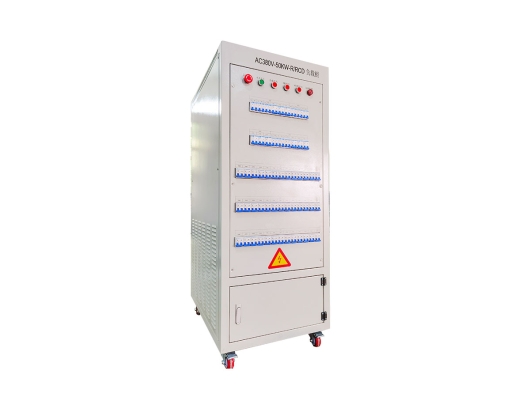
The GROADA AC380V-50KW-R/RCD inverter test load bank is a high-performance testing device specifical...
 02
02
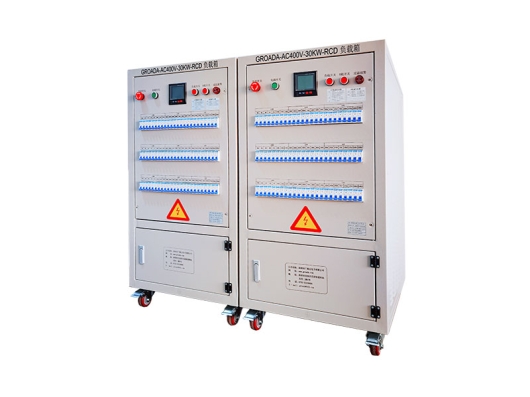
GROADA-AC400V-30KW-RCD Inverter AC Load_Shenzhen Guangluda Electronics Co., Ltd. is a high-tech ente...
 03
03
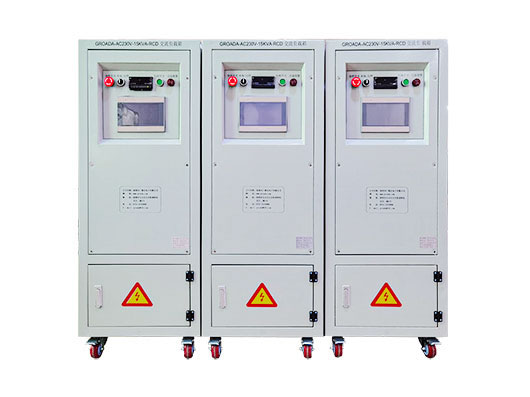
The GROADA AC Load Test Bench (AC230V, 15 kW, with Residual Current Device protection) is purpose-bu...
 04
04
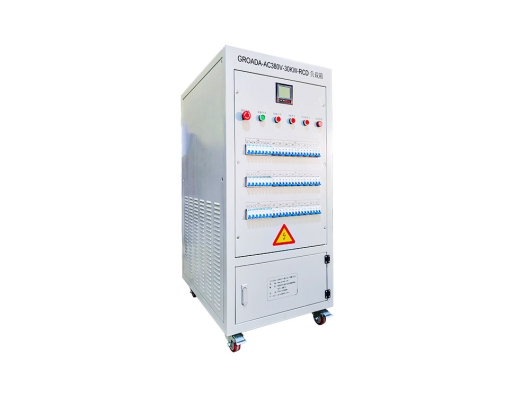
GROADA-AC380V-30KW-RCD Inverter Load Box_Shenzhen Guang Lu Da Electronics Co., Ltd. is a high-tech e...