GROADA-AC380V-50KW-R/RCD omvormer laadbank
The GROADA AC380V-50KW-R/RCD inverter test load bank is a high-performance testing device specifical...
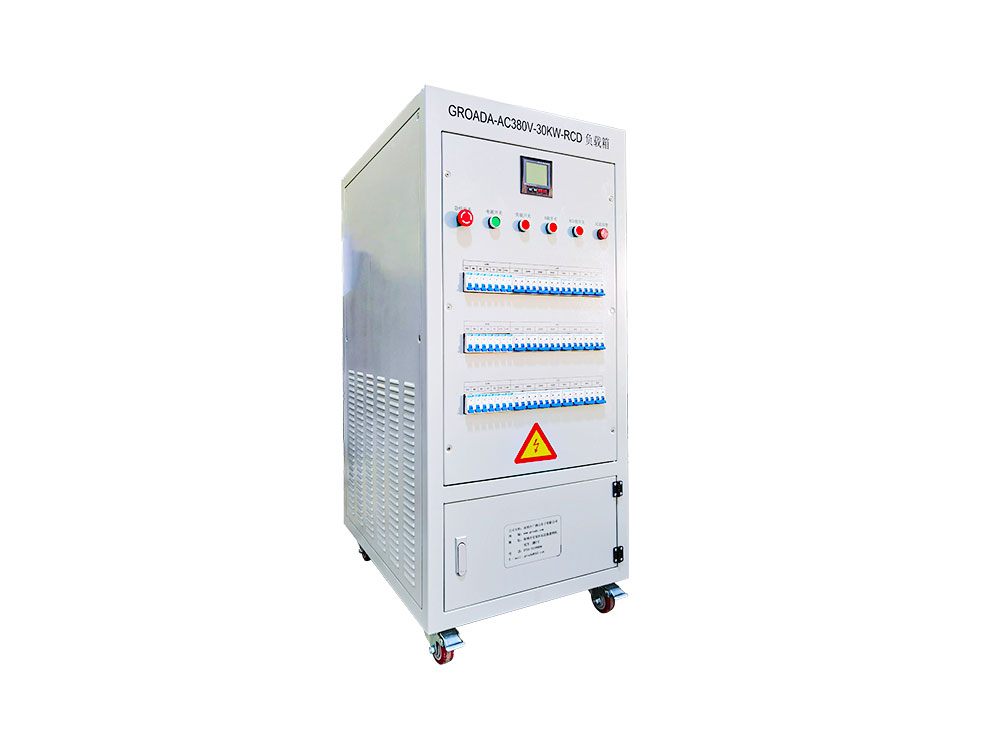
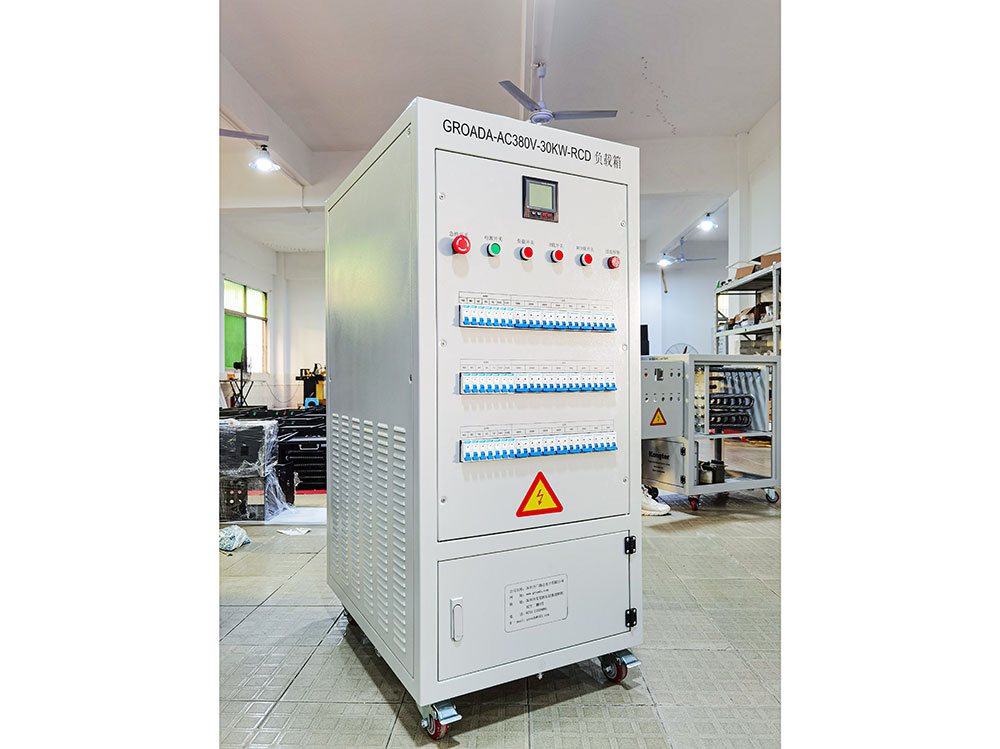
| Model | AC220V-5KW-RCD | AC220V-10KW-RCD | AC220V-15KW-RCD | AC220V-20KW-RCD | AC380V - 30KW-RCD | AC380V - 50KW-RCD | AC380V - 60KW-RCD | AC380V - 100KW-RCD | AC380V - 200KW-RCD |
| Nominale vermogen | R = 5KW | R = 10KW | R = 15KW | R = 20KW | R = 30KW | R = 50KW | R = 60KW | R = 100KW | R = 200KW |
| RCD = 5KVA | RCD = 10KVA | RCD = 15KVA | RCD = 20KVA | RCD = 30KVA | RCD = 50KVA | RCD = 60KVA | RCD = 100KVA | RCD = 200KVA | |
| Input stroom | 0-22A | 0-45A | 0-45A | 0-90A | 0-45A | 0-300A | 0-450A | 0-600A | 0-750A |
| Grootte (breedte * diepte * hoogte mm) | 500*600*800 | 500*600*1000 | 500*600*1100 | 500*750*1100 | 600*850*1400 | 600*850*1600 | 600*850*1850 | 700*1000*1800 | 1100*1400*1800 |
| gewicht | 50 kg | 80 kg | 100 kg | 130 kg | 200 kg | 300 kg | 350 kg | 450 kg | 550 kg |
| Ingangsspanning | AC220 / 230V | AC380 / 400V | |||||||
| Andere ingangsspanning kan volgens vereisten worden aangepast | |||||||||
| Minimale lading | 100W | 100W | 100W | 100W | 100W | 1kw | 1kw | 1kw | 1kw |
| Andere minimale laadmacht kan volgens vereisten worden aangepast | |||||||||
| Algemene nauwkeurigheid | 3% (andere nauwkeurigheidsvereisten kunnen volgens vereisten worden aangepast) | ||||||||
| vermogensfactor | PF = 0,6 ~ 1,0 | ||||||||
| piekcoëfficiënt | 2 tot 3 | ||||||||
| Controle modus | Lokale handmatige/externe gastcomputer (lokale handmatige besturingsmodus: schakelaar/knop/aanraakscherm drieweg optioneel, andere methoden kunnen worden aangepast zoals vereist) | ||||||||
| Interface op afstand | RS232/RS485/USB/RJ45/CAN/GPIB (andere interfacemodies kunnen volgens vereisten worden aangepast) | ||||||||
| Beschermingsfunctie | Bescherming tegen noodstop, bescherming tegen overtemperatuur, bescherming tegen ventilatorbelasting, bescherming tegen aarding (selecteer bescherming tegen overspanning, bescherming tegen overstroom, bescherming tegen kortsluiting, overbelasting van de ventilator, onvoldoende luchtvolume) | ||||||||
| Werkende voeding | AC220V | AC220V / AC380V | |||||||
| Vertoningsnauwkeurigheid | 0,5 niveau (andere expliciete precisie kan volgens vereisten worden aangepast) | ||||||||
| Weergave parameters | Spanning, stroom, vermogen, frequentie, vermogensfactor, enz. (andere expliciete methoden kunnen volgens vereisten worden aangepast) | ||||||||
| Koude zekere manier | Zijluchtingang en bovenluchtuitlaat (andere luchtuitlaatmethoden kunnen volgens vereisten worden aangepast) | ||||||||
| Beschermingsniveau | IP20 (andere beschermingsniveau kan volgens vereisten worden aangepast) | ||||||||
| Kleur van uiterlijk | RAL7035 (andere kleuren kunnen volgens vereisten worden aangepast) | ||||||||
| Werktemperatuur | -10 ℃ ~ 55 ℃ | ||||||||
| Relatieve vochtigheid | ≤95%RH | ||||||||
| Hoogte | ≤ 2500 m | ||||||||
Het testen van omvormers onder realistische en controleerbare belastingen is essentieel voor het controleren van prestaties, betrouwbaarheid, duurzaamheid en veiligheid. Een goed ontworpen laadbank maakt het mogelijk:
Reproduceerbare spanningstests onder volle belasting, gedeeltelijke belasting en voorbijgaande omstandigheden
Controle over resistieve, inductieve of gecombineerde belastingen die echte motor- of netwerkinteracties simuleren
Validatie van beschermingscircuits (overstroom, overspanning, thermische uitschakeling)
Controle van thermische stabiliteit op lange termijn, veroudering en afbraak van componenten
Zonder een dergelijke belastingbank kan het testen van omvormers uitsluitend vertrouwen op veldomstandigheden of motorkoppeling, wat de analyse van de oorzaak kan verduisteren en de herhaalbaarheid kan verminderen.
In feite gebruiken industriële testlaboratoria zowel passieve (resistieve / inductieve) als actieve ladingen (regeneratieve elektronische ladingen of motoremulatoren) om omvormers volledig te spannen.
This product page presents a high-precision inverter load bank, specifically designed for AC 380 V systems, capable of handling up to 30 kW rated load. Below is an enhanced, SEO-optimized description:
Nominal Voltage: 380 V AC
Nominale macht: 30 kW continuous
Laadtype: RCD (Resistive + Capacitive + Inductive combinations)
Load Control Modes: stepwise or continuous adjustment, enabling partial load (e.g. 10 %, 25 %, 50 %, 75 %, 100 %)
Cooling & Thermal Management: forced-air or liquid cooling to maintain stable temperatures under full load
Protection Mechanisms: overcurrent, overvoltage, short-circuit, phase loss, overheating
Load Bank Construction: high-stability precision resistors/inductors, modular load elements
Measurement & Monitoring: integrated current, voltage, power, and temperature sensors; optional logging or remote communication
These features empower R&D labs, quality assurance teams, and inverter manufacturers to test inverters precisely under controlled, repeatable load conditions.
During the design and prototyping phases, engineers can use this load bank to:
Verify full-load performance, thermal limits, and efficiency curves
Stress-test inverter switching components (IGBTs, MOSFETs)
Simulate part-load, transient, and overload scenarios
Validate cooling systems under real thermal load
In mass manufacturing, this load bank can be integrated into automatic test sequences:
Run “burn-in” or "soak" tests to detect early-life failures
Ensure each unit meets declared performance before shipping
Automate pass/fail criteria based on voltage, current, power, and temperature thresholds
After deployment (in solar farms, microgrids, industrial power systems), periodic or after-maintenance tests help:
Confirm the inverter still performs within specification
Detect degradation (e.g. diminished cooling, capacitor aging)
Validate protection circuits and safety margins
Testing inverters with a load bank is considered a best practice in many critical power installations to prevent unexpected failure.
Below is a recommended step-by-step workflow and key considerations:
| Phase | Actions | Purpose / Checks |
|---|---|---|
| Setup & Safety Check | Inspect wiring, ensure insulation and grounding, perform open-circuit checks | Prevent shorts or unsafe conditions |
| No-load / Idle Measurement | Run inverter unloaded, measure baseline current, voltage, harmonic distortion | Confirm zero-load behavior and idle losses |
| Step Load Ramp | Apply incremental loads (e.g. 10 %, 25 %, 50 %, 75 %, 100 %) | Assess linearity, thermal drift, current stability |
| Full-load Endurance / Soak Test | Run at full load for extended duration (hours to days) | Monitor temperature, drift, cooling effectiveness |
| Transient Tests | Introduce load steps, sudden load removal (load rejection), or overload transients | Measure inverter’s dynamic response, grid-interaction behavior |
| Protection Verification | Deliberately exceed ratings to trigger overcurrent, overvoltage, or thermal protections | Validate that safety circuits engage reliably |
Always wear proper PPE (insulating gloves, goggles) when handling high-voltage systems.
Ensure the load bank and inverter are in good ventilation and clean environment (no dust accumulation).
Use power meters or precision instrumentation to measure input/output, so your efficiency calculations are accurate.
Avoid exceeding design limits of the inverter or load bank – inconsistent or overloaded operation can damage components.
Record all data logs systematically for traceability and future analysis.
To support EEAT and improve trust, you may wish to include:
Testing data and charts (efficiency curve, thermal profiles)
Third-party lab certifications (e.g. IEC, UL, CE compliance)
Case studies or whitepapers where this or similar load banks have been used (e.g. in inverter manufacturers’ labs)
Technical team credentials (engineers, years in power electronics, publications)
Guarantees and warranty terms, e.g. accuracy drift, calibration support
Our AC 380V 30 kW RCD Inverter Load Bank is engineered by a team with over 10 years of experience in power electronics test systems. Designed for R&D, QA, and maintenance verification, it meets international accuracy and safety standards. Each unit is factory-calibrated and accompanied by a calibration certificate. We also offer custom configurations (higher power, alternate voltages, communication interfaces) to support evolving test requirements.
 01
01
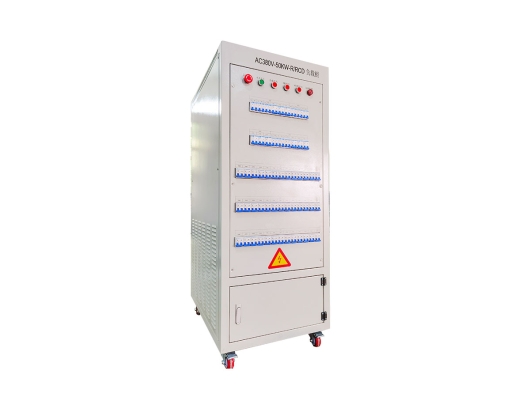
The GROADA AC380V-50KW-R/RCD inverter test load bank is a high-performance testing device specifical...
 02
02
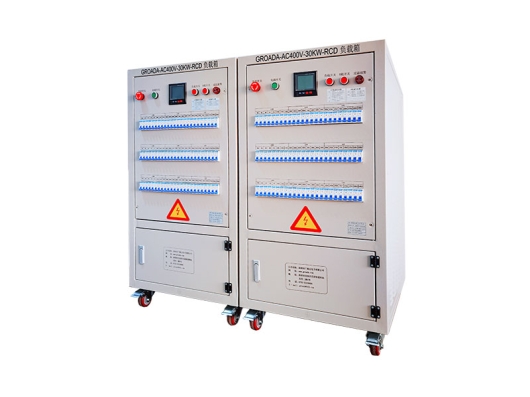
GROADA-AC400V-30KW-RCD Inverter AC Load_Shenzhen Guangluda Electronics Co., Ltd. is a high-tech ente...
 03
03
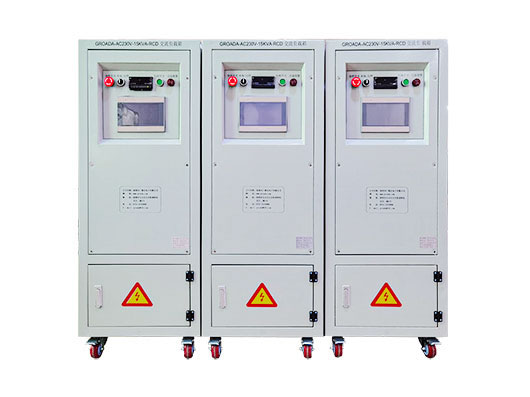
The GROADA AC Load Test Bench (AC230V, 15 kW, with Residual Current Device protection) is purpose-bu...
 04
04
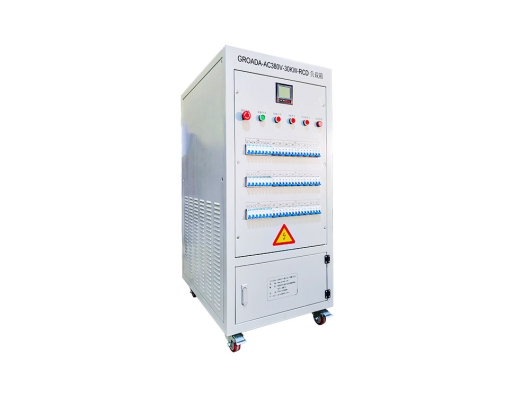
GROADA-AC380V-30KW-RCD Inverter Load Box_Shenzhen Guang Lu Da Electronics Co., Ltd. is a high-tech e...