Banco de carga do inversor GROADA-AC600V-25KW-RCD
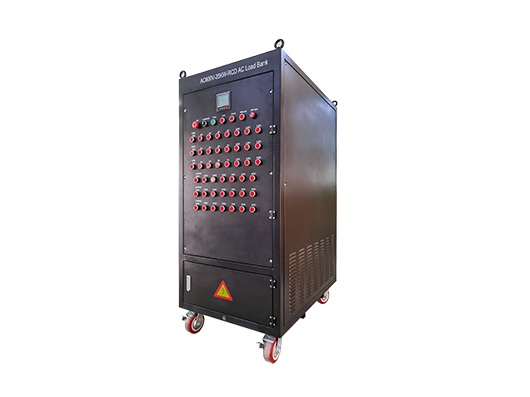
The GROADA AC600V-25kW RCD Load Bank is a professional testing device designed to simulate real-worl...
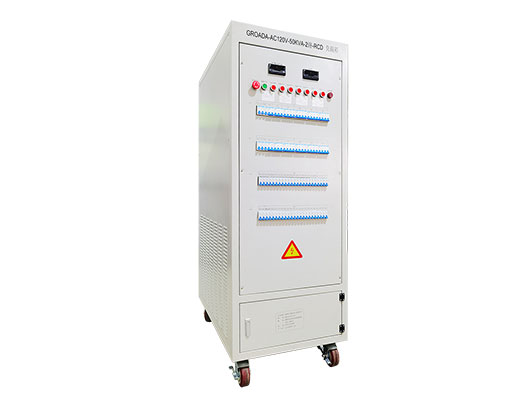
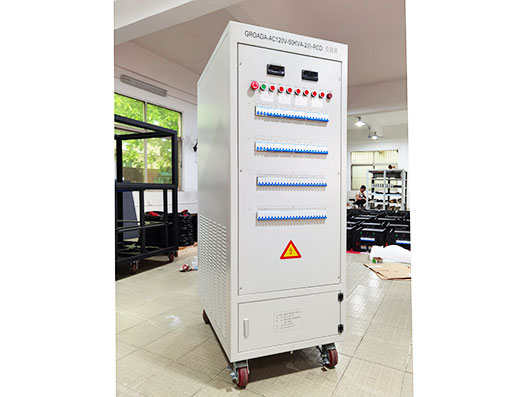
| Modelo | AC220V-5KW-RCD | AC220V-10KW-RCD | AC220V-15KW-RCD | AC220V-20KW-RCD | AC380V - 30KW-RCD | AC380V - 50KW-RCD | AC380V - 60KW-RCD | AC380V - 100KW-RCD | AC380V - 200KW-RCD |
| Potência nominal | R = 5KW | R = 10KW | R = 15KW | R = 20KW | R = 30KW | R = 50KW | R = 60KW | R = 100KW | R = 200KW |
| RCD = 5KVA | RCD = 10KVA | RCD = 15KVA | RCD = 20KVA | RCD = 30KVA | RCD = 50KVA | RCD = 60KVA | RCD = 100KVA | RCD = 200KVA | |
| Corrente de entrada | 0-22A | 0-45A | 0-45A | 0-90A | 0-45A | 0-300A | 0-450A | 0-600A | 0-750A |
| Tamanho (largura * profundidade * altura mm) | 500*600*800 | 500*600*1000 | 500*600*1100 | 500*750*1100 | 600*850*1400 | 600*850*1600 | 600*850*1850 | 700*1000*1800 | 1100*1400*1800 |
| Peso | 50 quilos | 80 quilos | 100 quilos | 130 quilos | 200 quilos | 300 quilos | 350 quilos | 450 quilos | 550 quilos |
| Tensão de entrada | AC220 / 230V | AC380 / 400V | |||||||
| Outra tensão de entrada pode ser personalizada de acordo com os requisitos | |||||||||
| Carga mínima | 100W | 100W | 100W | 100W | 100W | 1kw | 1kw | 1kw | 1kw |
| Outra potência mínima de carga pode ser personalizada de acordo com os requisitos | |||||||||
| Precisão geral | 3% (outros requisitos de precisão podem ser personalizados de acordo com os requisitos) | ||||||||
| fator de potência | PF = 0,6 ~ 1,0 | ||||||||
| coeficiente de pico | 2 a 3 | ||||||||
| Modo de controle | Manual local / computador anfitrião remoto (modo de controle manual local: interruptor / botão / tela táctil trivial opcional, outros métodos podem ser personalizados conforme necessário) | ||||||||
| Interface remota | RS232/RS485/USB/RJ45/CAN/GPIB (outros modos de interface podem ser personalizados de acordo com os requisitos) | ||||||||
| Função de proteção | Proteção de parada de emergência, proteção contra sobretemperatura, proteção contra bloqueio de carga do ventilador, proteção contra a terra (selecione proteção contra sobretensão, proteção contra sobrecorrente, proteção contra curto-circuito, sobrecarga do ventilador, volume de ar insuficiente) | ||||||||
| Fonte de alimentação de trabalho | AC220V | AC220V / AC380V | |||||||
| Precisão da exibição | 0,5 nível (outra precisão explícita pode ser personalizada de acordo com os requisitos) | ||||||||
| Parâmetros de exibição | Tensão, corrente, potência, frequência, fator de potência, etc. (outros métodos explícitos podem ser personalizados de acordo com os requisitos) | ||||||||
| Frio certa maneira | Entrada de ar lateral e saída de ar superior (outros métodos de saída de ar podem ser personalizados de acordo com os requisitos) | ||||||||
| Nível de proteção | IP20 (outro nível de proteção pode ser personalizado de acordo com os requisitos) | ||||||||
| cor da aparência | RAL7035 (outras cores podem ser personalizadas de acordo com os requisitos) | ||||||||
| Temperatura de trabalho | -10 ℃ ~ 55 ℃ | ||||||||
| Umidade relativa | ≤95%RH | ||||||||
| Altitude | ≤ 2500 m | ||||||||
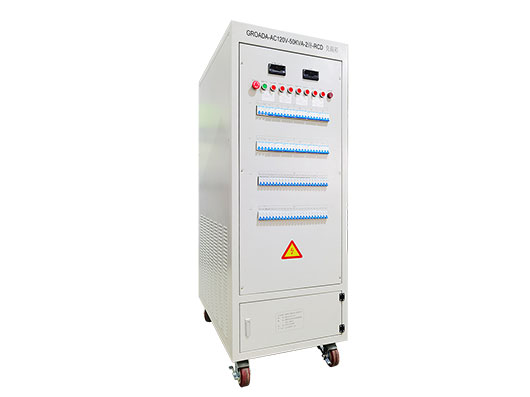
Na infraestrutura de energia moderna, a precisão no teste e validação do comportamento da fonte sob condições de carga real é essencial. OBanco de carga do inversor AC 120V 50 kVA RCDda GROADA é projetada para simular cargas elétricas reais para inversores, UPS, geradores e sistemas de bateria em condições seguras e repetidas.
Usando a simulação de carga resistiva, reativa ou combinada, os bancos de carga do inversor ajudam a revelar problemas latentes de desempenho ou estabilidade antes que possam impactar as operações. Este dispositivo é particularmente valioso para:
Començamento de novos sistemas de energia ou inversores
Manutenção de rotina de sistemas de armazenamento de energia
Teste de tensão de geradores de backup e UPS
Garantir a conformidade do sistema com as normas de segurança e regulamentares
Here is a high-level breakdown of the features your visitors will care about — and that will help search engines understand the page’s relevance and depth:
Rated Output: 120 V AC, 50 kVA
RCD protection & safety: includes Residual Current Device to protect operator and equipment
Inverter-compatible operation: supports bidirectional or controlled load injection to mimic inverter behavior
Precise load control: multi-step or continuous control, with accurate current/voltage metering
Cooling & thermal management: forced air cooling with intelligent fan control to manage resistor element temperature
Monitoring & communication: local display and optional remote interface (e.g. via RS-485, Ethernet, or other protocol)
Modular & maintainable design: replaceable resistor modules, easy access panels
Protection & safety features: overcurrent, overtemperature, short circuit, emergency stop
By emphasizing these aspects, the page signals both to users and to Google that it contains useful, detailed product content rather than shallow marketing fluff.
To build trust and authority, it’s useful to situate this product into its broader technical and market context:
What is a load bank?
A load bank is a device that imposes an electrical load on a power source in a controlled manner, converting that energy (usually via resistors) to heat, often dissipated by forced-air or water cooling systems. This allows engineers to test generators, UPSs, inverters, or batteries under known, stable loads without relying on unpredictable real-world load behavior.
Why inverter-compatible load banks?
Traditional resistive load banks impose static loads; inverter load banks, however, can more closely mimic dynamic power conversion behaviors (e.g. voltage drop, harmonic response) and can be used in conjunction with power electronics. This is especially relevant in modern microgrids, renewable systems, and energy storage test benches.
Market trends & demand
The global load bank market is projected to grow at a compound annual growth rate (CAGR) of ~3.7% from 2025 to 2032, expanding from ~$300 million in 2025 to ~$387 million by 2032.
Drivers include increased deployment of data centers, renewable energy integration, stricter power reliability standards, and wider use of battery/inverter systems. Enercon+1
In Asia-Pacific, especially China and India, industrial expansion and power infrastructure upgrades are accelerating demand for load testing and commissioning equipment.
By referencing these data points (with citations), the page demonstrates that the product is relevant in a growing, technology-driven sector.
To further increase relevance and user trust, lay out concrete scenarios where your product adds value:
| Aplicação | Benefit / Use Case |
|---|---|
| Generator commissioning & acceptance testing | Verify full-load performance, thermal stability, load transient response |
| UPS & battery system verification | Confirm DC–AC inverter behavior under load, simulate real consumption profiles |
| Renewable + storage systems | During debugging/integration, impose known loads on inverter systems to test control logic |
| Maintenance & preventive testing | Routinely exercise systems to avoid “wet stacking,” carbon build-up, or capacity derating |
| Data center & mission critical facilities | Validate that backup systems can seamlessly take over under full load |
Including real user scenarios helps Google and users see your page as practically useful, boosting engagement and dwell time (factors that support SEO).
To help engineers / purchasers make informed decisions, you can include guidance or best practices:
Sizing margin: Choose a load bank with at least 20% headroom above expected maximum load to ensure longevity and safety under transient stress.
Power factor and reactance: If users need to test non-unity power factor loads (e.g. inductive or capacitive), consider combining with reactive modules or using R / L / C combination load banks.
Cooling & ambient conditions: The design must account for ambient temperature, ventilation constraints, and altitude.
Measurement accuracy: Use high-precision voltage and current sensors, with calibration, to ensure valid test data.
Safety and compliance: Design must comply with relevant electrical safety standards (e.g. IEC, UL, local codes), use proper insulation, earthing, overcurrent protection, and safe operator interface.
Maintenance tips: Periodic inspection of resistor elements, fan filters, connection integrity, insulation resistance, and firmware upgrades (if remote control is supported).
By offering this level of detail, the page becomes more than a sales pitch — it’s a resource, strengthening EEAT.
To boost trust (the “T” in EEAT), you should include or anchor (in surrounding parts of the site) elements like:
Company credentials & history: e.g. years of experience in power test / electrical load equipment manufacturing
Certifications & standards compliance: ISO, CE, UL, or others
Case studies / project references: real projects where this unit or similar ones were deployed (data centers, utility projects, etc.)
Third-party validation / testimonials: quotes from users, labs, or certifications
After-sales support & warranty: spare parts, calibration service, technical support coverage
In the body you can include a brief paragraph like:
GROADA is a specialist in power test solutions, with X years of experience designing reliable load banks. All units are factory tested, and we provide global after-sales support, spare parts, and calibration service to assure your long-term operational reliability.
Conclude with a user-focused, persuasive call to action, e.g.:
For detailed specifications, drawings, or customized configurations of the 120 V 50 kVA RCD inverter load bank, please contact our technical team. Let us help tailor a load testing solution that fits your system needs — from initial sizing to full test commissioning and long-term support.
 01
01
The GROADA AC600V-25kW RCD Load Bank is a professional testing device designed to simulate real-worl...
 02
02
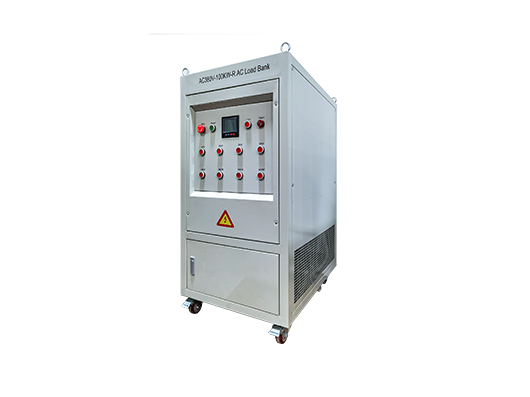
ModelAC220V-6KW-RAC380V-30KW-RAC380V-60KW-RAC380V-100KW-RAC380V-200KW-RAC380V-400KW-RAC380V-500KW-RA...
 03
03
High-performance AC 120V 50 kVA RCD inverter load bank for generator, UPS, and power system testing....
 04
04
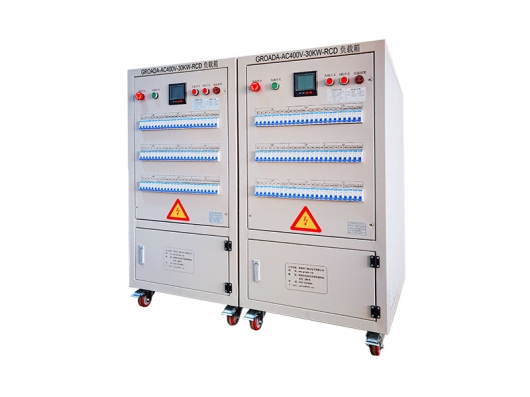
GROADA-AC400V-30KW-RCD nonlinear load box_Shenzhen guangluda electronics co., ltd. is a high-tech en...









