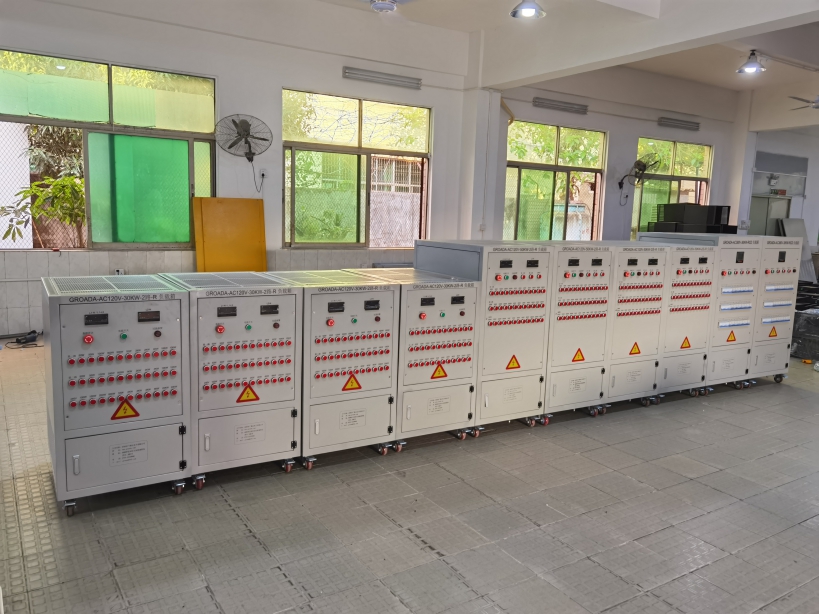
Resistive load banks are essential tools in the testing and validation of generator systems, ensuring reliable performance under real-world conditions. These devices simulate electrical loads by converting electrical energy into heat through resistive elements—typically made from high-temperature alloy materials such as nichrome or Kanthal. Unlike reactive or capacitive load banks, resistive models provide a constant power factor close to unity (typically 0.98–1.0), making them ideal for assessing mechanical output, fuel efficiency, cooling system effectiveness, and overall engine stability during both factory acceptance tests (FAT) and site commissioning.
The core function of a resistive load bank is to apply controlled, stable resistance across one or more phases, enabling engineers to verify that a generator can deliver its rated power without overheating or voltage instability. According to IEC 60034-1, generators must be tested under full-load conditions to ensure compliance with insulation class ratings and thermal limits—a process where resistive load banks are indispensable. For example, a 500 kW three-phase resistive load bank may be used to gradually increase load from 25% to 100% over 2 hours while monitoring voltage regulation, frequency response, and exhaust temperature rise. This methodically confirms that the prime mover (e.g., diesel engine) operates within acceptable parameters per ISO 8528-1 standards.
Modern portable resistive load banks often feature remote control via Modbus RTU or Ethernet protocols, allowing operators to adjust load levels automatically based on pre-set profiles. They also include safety features such as overtemperature shutdown, short-circuit protection, and emergency stop buttons, all certified to CE/UL standards depending on regional requirements. Thermal management is typically air-cooled using forced convection fans rated for continuous operation at 60°C ambient temperature. Maintenance includes annual calibration of current and voltage sensors, replacement of resistor blocks every 5–7 years, and inspection of fan assemblies for dust accumulation.
In an anonymized case study involving a 1 MW diesel generator installed at a remote mining facility, a resistive load bank test revealed a 5% voltage dip at 80% load due to inadequate excitation system tuning—a condition not visible during no-load testing. After corrective adjustments, subsequent tests confirmed stable operation up to full load. Such findings underscore the importance of resistive load bank testing in identifying hidden faults before critical operational deployment.