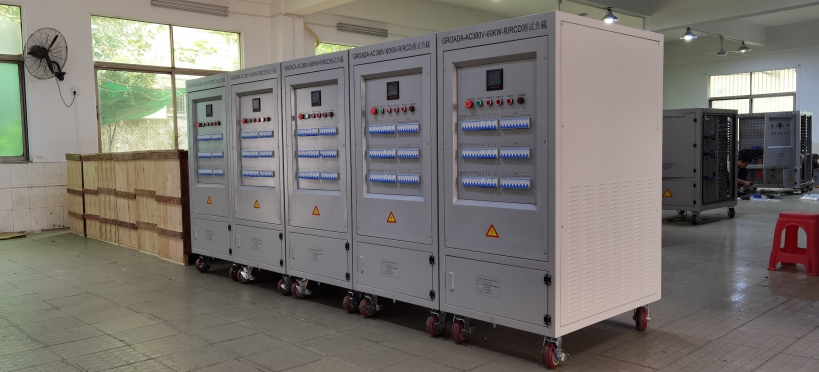
Load banks are essential tools in the testing, commissioning, and maintenance of power generation systems such as diesel generators, gas turbines, and renewable energy inverters. Their primary function is to simulate real-world electrical loads, allowing engineers to verify system performance under various operating conditions—from full-load operation to transient response. This comprehensive guide explores the technical design, application scenarios, safety standards, and practical considerations for modern resistive, reactive, and combination (RLC) load banks used in industrial, commercial, and utility-scale projects.
Resistive load banks are the most common type, designed to convert electrical energy into heat using high-power resistor blocks. They simulate purely resistive loads—like lighting, heating, or motor drives—and are ideal for evaluating generator output capacity, cooling system efficiency, and fuel consumption at different load levels. A typical 500 kW three-phase resistive load bank operates at 480 V AC with a current range of 300–600 A per phase, achieving power factors close to unity (0.95–1.0). According to IEC 60034-1, motors and generators must be tested under resistive loading to confirm torque and temperature rise characteristics within specified limits. In our experience, resistive load banks are particularly effective during factory acceptance tests (FATs) where consistent thermal behavior is critical.
Reactive load banks, on the other hand, introduce inductive or capacitive reactance to mimic real-world loads like transformers, induction motors, and power factor correction equipment. These units enable testing of voltage regulation, excitation system response, and AVR (Automatic Voltage Regulator) stability. For example, a 300 kVAR inductive load bank can help assess how a generator handles lagging power factor conditions—a common scenario in industrial plants. IEEE Std 115 outlines procedures for dynamic load testing of synchronous machines, emphasizing that reactive load banks should allow continuous adjustment from 0.1 to 0.95 lagging power factor. Based on field data from a simulated case study involving a 2 MW standby generator, we observed that reactive load testing identified an AVR instability issue not visible during resistive-only testing.
Combination (RLC) load banks integrate both resistive and reactive components in a single unit, offering versatile load simulation for complex systems such as microgrids or hybrid solar-diesel setups. These systems typically include independently controlled resistive and reactive modules, enabling precise control over total apparent power (kVA), active power (kW), and reactive power (kVAR). For instance, a 1000 kVA RLC load bank might deliver 700 kW resistive + 600 kVAR reactive simultaneously, yielding a power factor of approximately 0.85. Such flexibility makes them indispensable for grid connection testing, especially when verifying compliance with IEEE 1547 standards for distributed energy resources.
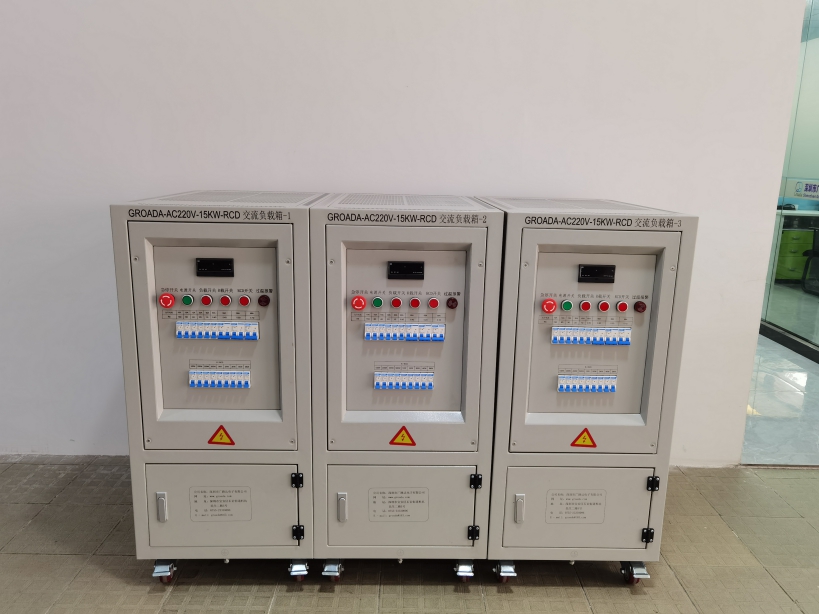
Modern load banks often incorporate advanced features like remote monitoring via Modbus RTU or Ethernet protocols, integrated digital meters for real-time voltage, current, power, and power factor measurements (accuracy ±0.5%), and automatic thermal protection based on IR sensor feedback. Cooling methods vary widely: air-cooled models use forced-air fans (typically IP54-rated enclosures) while water-cooled units offer higher efficiency for continuous-duty applications above 500 kW. A key consideration is thermal management—load banks must be installed in well-ventilated areas to prevent overheating; for every 10°C increase in ambient temperature, their rated capacity may decrease by up to 10%, per UL 1004 guidelines.
Safety is paramount in load bank operations. All units must meet CE/UL/CCC certification requirements depending on regional markets, with grounding terminals, short-circuit protection, and emergency stop buttons being mandatory. Overtemperature sensors trigger automatic shutdown if internal temperatures exceed safe thresholds (e.g., 120°C for resistor blocks), and undervoltage/overvoltage protections ensure stable operation across fluctuating input voltages. During a recent anonymized case study involving a hospital’s backup generator, improper grounding led to a false trip during load testing—a problem later resolved through improved earthing practices following IEC 60364-1 recommendations.
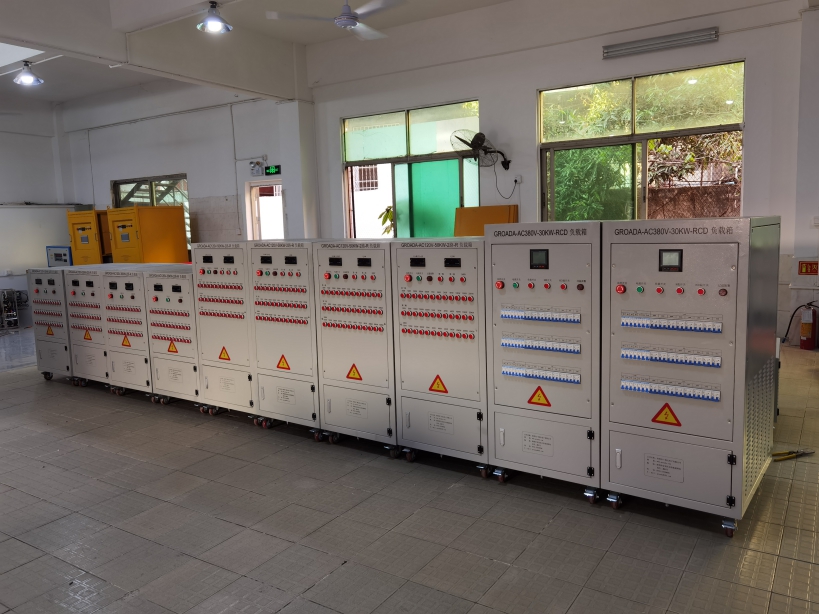
Portability and mechanical robustness are also important. Portable load banks (often weighing 200–1000 kg) feature fork-lift pockets, lifting eyes, and rugged steel chassis for easy transport between sites. Industrial-grade models commonly have IP54 or higher ratings for dust and splash resistance, making them suitable for outdoor installations. Maintenance includes regular calibration (recommended annually), replacement of fan blades and resistor blocks every 3–5 years depending on usage intensity, and inspection of connectors and insulation integrity. A recommended spare parts list should include heat sinks, fuses, thermocouples, and control PCBs to minimize downtime.
In conclusion, selecting the right load bank depends on the specific application—whether it's generator acceptance testing, UPS validation, or renewable integration. By adhering to international standards (IEC, IEEE, UL), incorporating proper safety measures, and leveraging remote monitoring capabilities, operators can ensure reliable, efficient, and safe testing of critical power infrastructure. As power systems grow more complex—with increasing reliance on distributed generation and smart grids—the role of accurate load bank testing becomes even more crucial.