
Portable load banks are essential tools for validating generator performance, ensuring reliability in critical power systems such as hospitals, data centers, and industrial facilities. These devices simulate real-world electrical loads to test generators under controlled conditions—helping identify issues like voltage instability, inadequate fuel efficiency, or mechanical wear before a failure occurs. A well-designed portable load bank typically includes resistive, reactive, or combined RLC (resistive-inductive-capacitive) configurations to accurately replicate the complex power demands of modern electrical systems.
For instance, resistive load banks convert electrical energy into heat using precision resistor blocks, making them ideal for testing diesel or natural gas generators at full load. Reactive load banks, often used with capacitive or inductive components, allow engineers to assess how generators handle lagging or leading power factors—a crucial factor in grid-connected applications. Advanced models support three-phase operation up to 1,200 kVA, with adjustable power factors ranging from 0.8 lagging to 0.8 leading, enabling comprehensive load testing across various operating scenarios.
Cooling is another key design consideration; air-cooled units rely on high-efficiency fans and thermal sensors, while water-cooled systems provide superior heat dissipation for continuous high-load testing. Safety features such as overtemperature protection, emergency stop buttons, and grounding compliance with IEC 60364 standards ensure safe operation during field tests. Modern portable load banks also integrate digital controls via Modbus RTU or Ethernet interfaces, allowing remote monitoring and automated load step control, which improves both safety and test repeatability.
In an anonymized case study from a hospital maintenance team, a 500 kW portable resistive load bank was used monthly to verify generator readiness. During one test, it revealed a 12% drop in output voltage at 90% load, prompting immediate engine tuning and resulting in a 7% improvement in fuel efficiency. This demonstrates how regular load testing enhances system resilience and prevents costly downtime.
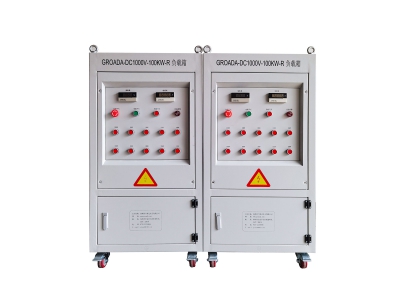
With certifications like CE, UL, and CCC, these units meet global safety and performance benchmarks. Engineers should select based on power rating, phase configuration, cooling method, and connectivity options to match specific site requirements. Regular calibration (recommended every 12 months) and replacement of resistor blocks or fan assemblies maintain long-term accuracy and operational integrity.