
Resistive load banks are essential tools in validating the performance and reliability of electrical generators, especially in industrial, commercial, and backup power applications. These devices simulate real-world electrical loads by converting electrical energy into heat through resistive elements, allowing engineers to test generator output under controlled conditions. Unlike reactive or capacitive load banks that introduce phase shifts, resistive load banks provide a pure active power draw—ideal for verifying mechanical stability, voltage regulation, and fuel efficiency during full-load testing.
The design of modern resistive load banks follows key international standards such as IEC 60034-1 (Rotating electrical machines) and IEEE 1547 (Distributed energy resources interconnection), which mandate rigorous thermal management, overcurrent protection, and accurate measurement capabilities. For example, a typical 500 kW three-phase resistive load bank must be capable of sustaining 100% load for at least 2 hours without exceeding 85°C ambient temperature rise, ensuring safe operation across varying environmental conditions.
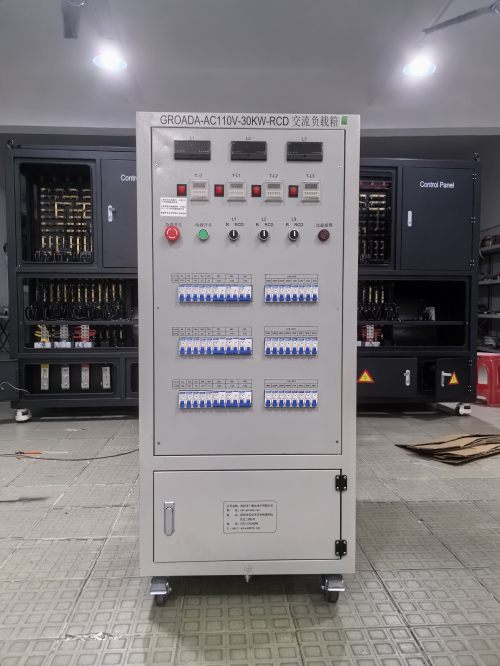
In practice, these systems are used for factory acceptance tests (FATs), commissioning of new generators, and periodic maintenance checks. An anonymized case study from a data center installation showed that using a digitally controlled resistive load bank improved generator response time by 15% compared to traditional manual load steps. The system enabled precise ramping from 0% to 100% load within 30 seconds, with Modbus RTU communication allowing remote monitoring via SCADA systems.
Key technical parameters include rated power (from 5 kW up to 10 MW), voltage levels (up to 690 V AC), and power factor adjustment range (typically 0.8–1.0). Cooling is often air-based for portable units, while larger fixed installations may use water-cooled designs. Safety features like emergency stop buttons, ground fault detection, and overtemperature shutdowns are mandatory for compliance with CE and UL certifications.
For operators, regular calibration (every 12 months) and inspection of resistor blocks and cooling fans ensure long-term accuracy and safety. Maintenance logs should track thermal cycles and resistance drift—critical for predictive servicing. With increasing adoption of microgrids and renewable integration, resistive load banks remain indispensable for confirming generator readiness before grid connection or during island-mode operation.