
Resistive load banks are essential tools for testing the performance, reliability, and safety of generators, UPS systems, and other power sources under real-world operating conditions. Unlike reactive or capacitive loads, resistive load banks convert electrical energy directly into heat, allowing engineers to simulate full-load scenarios without introducing complex phase shifts or harmonic distortions. This makes them ideal for factory acceptance testing (FAT), commissioning, and periodic maintenance checks in industrial, commercial, and utility environments.
A typical resistive load bank is designed for single-phase or three-phase AC systems, with power ratings ranging from 5 kW up to 2,000 kW or more. The key parameters include voltage levels (e.g., 120/240 V, 480 V, or 600 V), current capacity (up to 1,000 A per phase), and a wide range of power factor adjustment (from 0.8 lagging to unity). These units are built using high-quality resistor blocks made from materials like nichrome or ceramic, which ensure long-term thermal stability and minimal degradation over time. Cooling is typically achieved via forced-air convection using industrial-grade fans, with some models offering water-cooled options for higher-density applications.
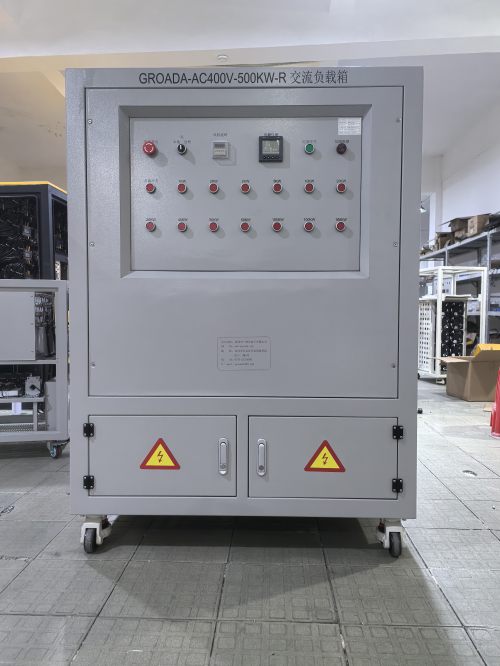
According to IEC 60034-1, generator tests must verify mechanical integrity, temperature rise, and voltage regulation under various load conditions — all of which resistive load banks support effectively. In an anonymized case study from a power generation facility in Southeast Asia, a 500 kW three-phase resistive load bank was used to validate a diesel generator’s ability to sustain full load for 4 hours. The test confirmed stable output voltage within ±2%, no overheating, and compliance with ISO 8528 standards for generator performance. Similarly, during microgrid integration testing in Germany, a portable resistive load bank enabled controlled ramp-up of power demand, helping grid operators assess synchronization and protection relay coordination.
Safety features such as ground fault detection, overtemperature shutdown, and emergency stop buttons meet CE and UL certification requirements. Remote monitoring via Modbus RTU or Ethernet allows operators to log real-time data including active power, current, voltage, and power factor. Calibration cycles should be performed annually using traceable equipment per IEEE 1159 guidelines to maintain measurement accuracy within ±1%.
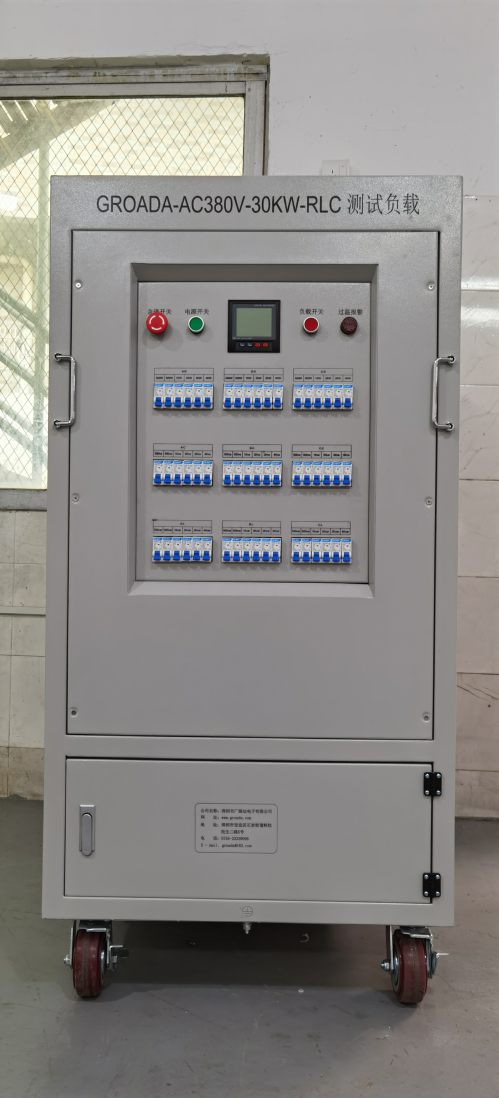
In summary, resistive load banks provide a reliable, repeatable, and safe method to validate electrical systems across diverse industries — from backup power installations to renewable energy grid interconnection projects. Their simplicity, robustness, and standard-compliant design make them indispensable for both field technicians and project engineers seeking verified system readiness.