
UPS (Uninterruptible Power Supply) load bank testing is a critical procedure used to verify the performance, reliability, and safety of backup power systems in data centers, hospitals, industrial facilities, and commercial buildings. Unlike routine inspections, load bank testing simulates real-world electrical loads—typically from 25% to 100% of rated capacity—to ensure that UPS units can deliver consistent power under stress conditions. This process helps identify hidden faults such as battery degradation, inverter inefficiency, or control system anomalies before they cause unplanned outages.
There are two primary types of load banks used in UPS testing: resistive and reactive. Resistive load banks simulate purely real power (kW), commonly used to test the thermal and mechanical performance of UPS systems. Reactive load banks introduce inductive or capacitive loads to assess how the UPS handles reactive power (kVAR), which is essential for evaluating power factor correction and harmonic distortion mitigation. Advanced systems often use combination (RLC) load banks that apply both resistive and reactive components simultaneously, enabling comprehensive load testing aligned with IEC 62040-3 standards for UPS performance verification.
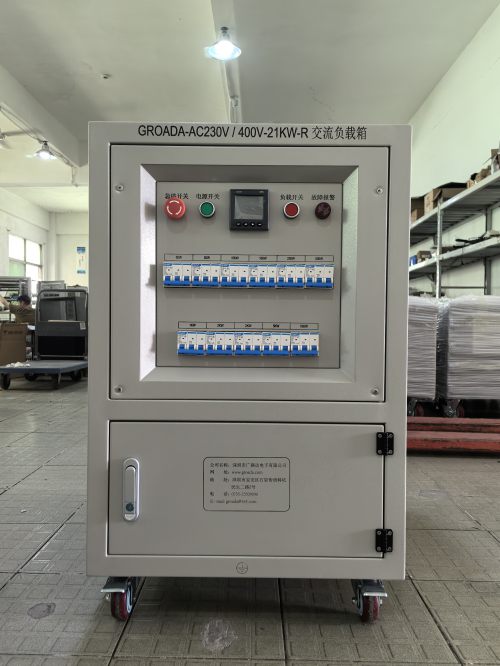
A typical UPS load bank test includes steps like pre-test inspection, ramp-up to full load over 15–30 minutes, stabilization period (usually 30–60 minutes), and post-load analysis. During this time, parameters such as voltage regulation, frequency stability, output waveform THD (Total Harmonic Distortion), and runtime under load are recorded using calibrated instruments. According to IEEE Std 1100-2015, periodic load testing—recommended quarterly or biannually—is vital for maintaining uptime in mission-critical environments.
Modern portable load banks integrate remote monitoring via Ethernet or Modbus RTU protocols, allowing engineers to perform tests without physical presence. Features like automatic shutdown on overtemperature, E-STOP buttons, and CE/UL certification ensure safe operation. Thermal protection mechanisms prevent overheating of resistor blocks, while accurate measurement accuracy within ±0.5% for voltage, current, and power ensures reliable validation data.
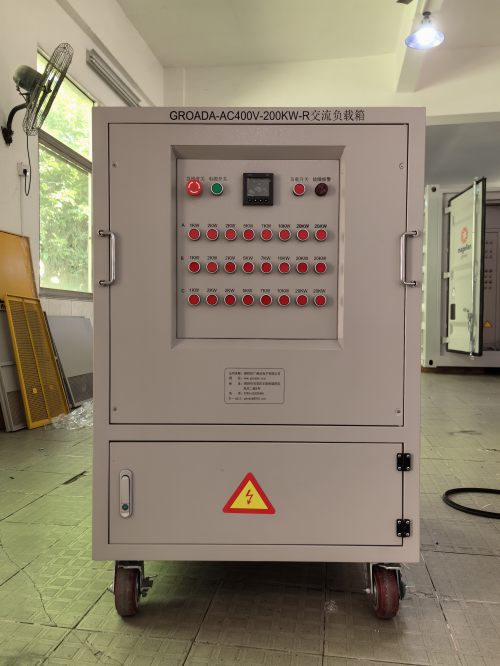
An anonymized case study from a Tier III data center in Singapore demonstrated that after implementing scheduled UPS load bank testing, the facility reduced unscheduled downtime by 78% over 12 months. The test revealed a failing battery string and an aging inverter module, both corrected prior to failure—a direct result of proactive load testing.
In summary, UPS load bank testing is not just compliance-driven—it’s a foundational element of resilient infrastructure design. It bridges the gap between theoretical ratings and actual operational readiness, ensuring that when utility power fails, your critical systems remain online.