
Portable load banks are essential tools in the power generation and electrical infrastructure industry, used to simulate real-world electrical loads during testing of generators, uninterruptible power supplies (UPS), and other energy systems. These devices allow engineers and technicians to verify system performance under various conditions—from full-load operation to partial load scenarios—ensuring reliability before deployment or after maintenance. This article provides a comprehensive technical overview of portable load banks, including types, applications, specifications, safety standards, and practical implementation strategies tailored for international engineering teams, procurement managers, and facility operators.
A portable load bank is an electronic device that draws power from a source (e.g., diesel generator, solar inverter, or battery bank) and dissipates it as heat through resistive, reactive, or combined circuits. The primary purpose is to test equipment under controlled load conditions without requiring actual end-user consumption. For example, during factory acceptance tests (FAT), a 500 kW three-phase generator must be tested at 100% load for at least one hour per IEC 60034-1 Clause 13.2, which mandates performance verification under rated load conditions. Portable load banks enable this process efficiently, especially when on-site installation is required.
There are four main types of portable load banks: resistive, reactive, capacitive, and combination (RLC). Resistive load banks convert electrical energy into heat using high-power resistor blocks. They are ideal for testing generators’ mechanical and thermal response by simulating purely real power (kW). Reactive load banks use inductors or capacitors to introduce lagging (inductive) or leading (capacitive) current, enabling assessment of voltage regulation and excitation system stability. A combination RLC load bank allows adjustable power factor control—critical for testing modern variable frequency drives (VFDs), microgrids, and hybrid renewable systems where both active and reactive power dynamics matter.
For instance, in a simulated case study conducted at a wind farm in Germany, a 300 kVA portable RLC load bank was used to validate grid synchronization capabilities of a new turbine. The test included step-wise loading from 0% to 100% over 90 minutes, with continuous monitoring of voltage harmonic distortion (THD< 5%) and reactive power support. Results showed improved voltage regulation when the generator’s automatic voltage regulator (AVR) was tuned based on measured data—a key outcome derived from precise load bank testing.
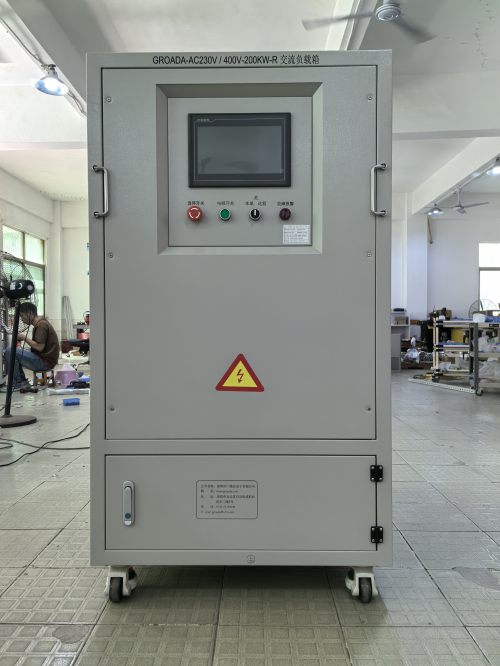
Key technical parameters for selecting a portable load bank include:
- Power Rating: Typically ranges from 50 kW to 2 MW depending on application.
- Voltage Level: Single-phase (230 V AC) or three-phase (400/480 V AC).
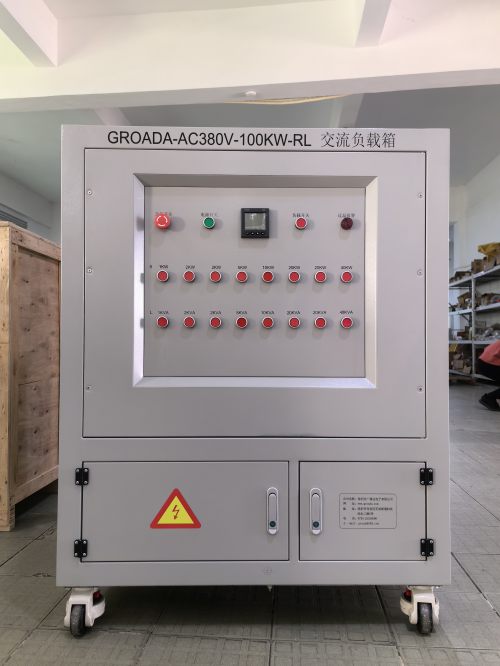
- Current Range: Up to 500 A per phase.
- Power Factor Adjustment: From 0.8 lagging to 1.0 (resistive) or up to 0.9 leading (capacitive).
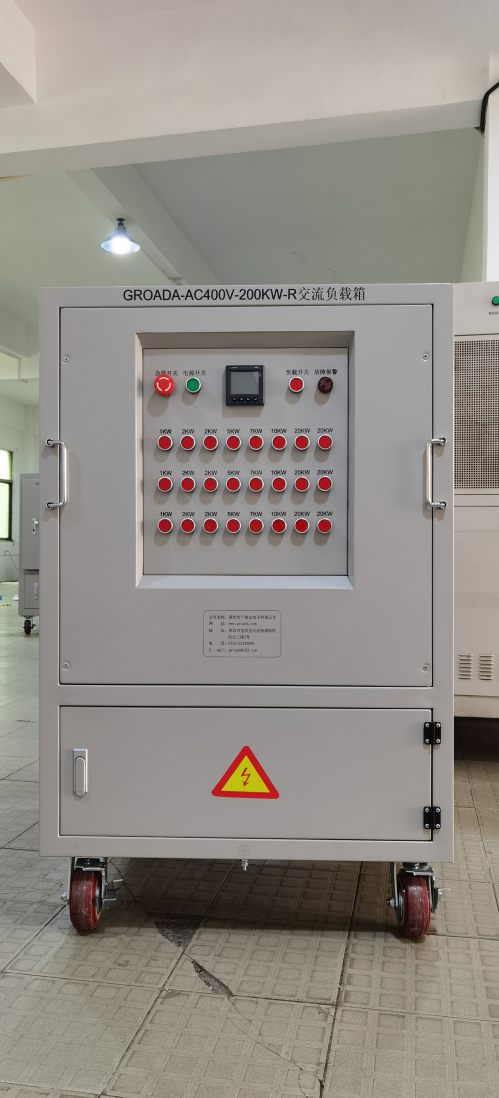
- Cooling Method: Forced air (fan-cooled) or water-cooled systems for high-power units (>500 kW).
- Thermal Protection: Built-in temperature sensors trigger automatic shutdown above 120°C.
- Measurement Accuracy: ±0.5% for voltage, current, active/reactive power, and power factor.
- Control Interfaces: Modbus RTU/TCP, CAN bus, Ethernet, and RS-485 for remote monitoring via SCADA systems.
Safety is paramount. All portable load banks should comply with relevant regional certifications such as CE (Europe), UL/cUL (North America), and CCC (China). Key protections include ground fault detection, short-circuit protection (fast-acting fuses), overvoltage/undervoltage cutoff, emergency stop buttons, and IP54-rated enclosures for dust and splash resistance. In one anonymized case study involving a hospital backup generator in Dubai, improper grounding led to transient voltage spikes during testing. Post-test analysis revealed that adding a dedicated grounding rod reduced neutral-to-ground voltage from 12 V to<2 V, confirming the importance of proper site preparation.
Portability features like lifting eyes, forklift pockets, and modular design enhance ease of transport and setup. Weight typically ranges from 100 kg (small units) to 2,000 kg (large industrial models). For mobile operations, such as testing generators at remote construction sites, compact designs with integrated wheels and foldable handles are preferred.
Calibration and maintenance are critical for accuracy and longevity. Most manufacturers recommend annual calibration against NIST-traceable standards. Consumables like resistor blocks (life ~10,000 hours) and fans (life ~5,000 hours) should be replaced proactively. A recommended spare parts list includes fuse kits, thermocouples, cooling fans, and connector cables.
This technology supports diverse industries:
- Energy: Grid-connected inverters, solar farms, wind turbines
- Construction: Temporary power validation at job sites
- Data Centers: UPS load testing before commissioning
- Marine & Aviation: Engine room generator diagnostics
- Mining: Underground power system resilience checks
In conclusion, portable load banks provide accurate, repeatable, and safe methods for validating generator and power system performance. Their adaptability across sectors makes them indispensable assets in modern power infrastructure projects. By integrating these tools into standard operating procedures, organizations can reduce downtime risks, ensure compliance with IEC/IEEE standards, and improve overall system efficiency.