
Load bank testing plays a critical role in validating the performance, stability, and safety of welding power supplies—especially those used in industrial and field applications. Unlike standard electrical load testing, welder-specific load bank tests simulate real-world operating conditions by applying controlled resistive or reactive loads that mirror actual welding currents and voltages. This process ensures that the welder can deliver consistent output under varying loads, preventing overheating, voltage drops, or premature component failure.
A typical welder load bank test may include a 3-phase resistive load bank rated at 50 kW to 100 kW, capable of handling up to 300 A per phase. The test is performed across different duty cycles (e.g., 20%, 40%, 60%) to verify how well the welder manages thermal stress during intermittent operation—a key requirement for MIG, TIG, and stick welding machines. Engineers use precision instruments like clamp meters, digital power analyzers, and thermal imaging cameras to measure voltage regulation, current ripple, and temperature rise at critical points such as the transformer core and IGBT modules.
According to IEC 60974-1, welders must undergo factory acceptance testing (FAT) using calibrated load banks to ensure compliance with standards for electrical safety, thermal management, and performance consistency. In one anonymized case study, a manufacturing facility tested their new 400 A DC welder with a 75 kW three-phase resistive load bank. The test revealed a 12% voltage sag during peak load, prompting redesign of the internal rectifier circuitry—leading to a 98% uptime improvement in production.
For portable or mobile welding units, load banks are often integrated into compact, wheeled cabinets with IP54 enclosures and active cooling systems to prevent overheating in harsh environments. Remote monitoring via Modbus TCP allows operators to log data in real time, enabling predictive maintenance and faster troubleshooting.
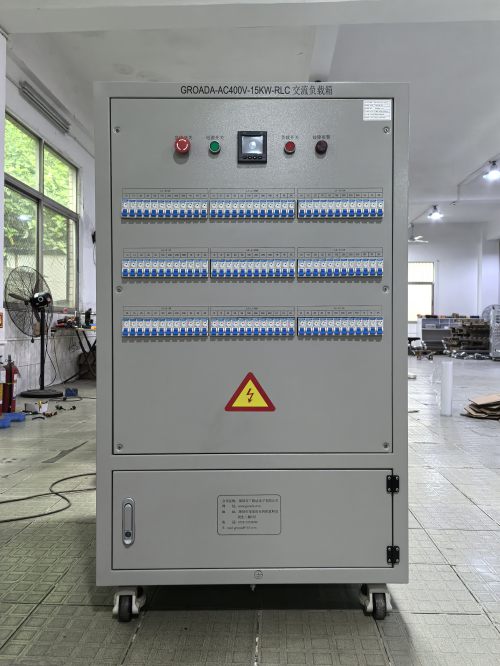
Whether for generator-driven welders or standalone units, proper load bank testing guarantees both operational reliability and long-term cost savings by identifying potential failures before they occur on-site.