
A water-cooled load bank is an essential testing tool in power systems engineering, especially for applications requiring high continuous power dissipation that exceed the cooling capacity of air-cooled alternatives. Unlike traditional resistive load banks that rely on forced-air convection, water-cooled load banks use a closed-loop liquid cooling system to transfer heat away from internal resistive elements, enabling higher efficiency, compact design, and safer operation under demanding conditions. These systems are commonly used in generator factory acceptance tests (FAT), diesel or gas engine performance validation, UPS system verification, and renewable energy grid integration testing—particularly for microgrid and wind farm installations where thermal stability is critical.
The core component of a water-cooled load bank is its resistive element array, typically made of high-temperature alloys like Kanthal or Nichrome, which can withstand sustained operating temperatures up to 600°C. The load bank is connected to a chiller unit via insulated piping, allowing controlled circulation of deionized water at regulated flow rates and temperatures (typically 15–35°C). This active cooling method ensures stable resistance values during long-duration tests and minimizes thermal drift, improving measurement accuracy of voltage, current, and power factor across all phases—especially important for three-phase load banks used in industrial and utility-scale projects.
Key technical parameters include rated power from 50 kW to 5 MW, voltage levels from 230 VAC to 15 kVAC, and full three-phase capability with independent phase control. Power factors can be adjusted from 0.8 lagging to 1.0, enabling reactive and combined RLC load testing. Cooling performance is optimized through variable-speed pumps and intelligent heat exchangers, reducing noise and energy consumption compared to fixed-speed air systems. Safety features include overtemperature sensors, emergency shutdown (E-STOP), short-circuit protection, and compliance with IEC 61000-4-4 (electrical fast transient immunity) and UL 1598 standards for electrical safety.
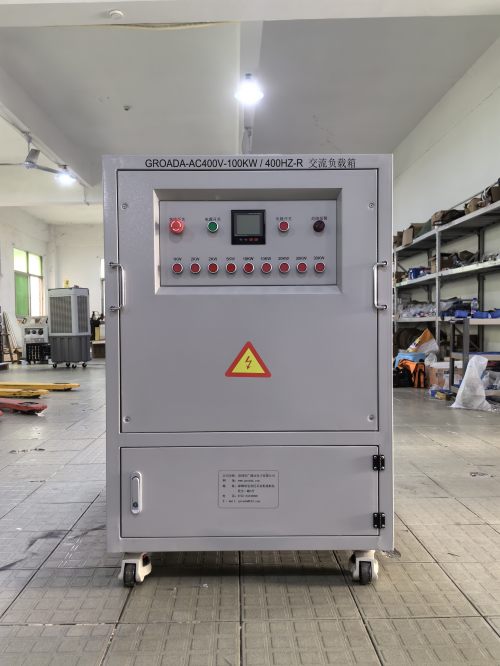
Portability is enhanced by robust steel chassis with IP54 enclosures, lifting eyes, and fork-lift pockets for easy transport. Remote monitoring via Modbus RTU, Ethernet, or CAN bus allows real-time data logging and automated test sequences, making these systems ideal for remote site testing or unattended operation. Calibration intervals are typically every 12 months using NIST-traceable instruments, and maintenance includes periodic inspection of coolant quality, fan replacements, and resistor block integrity checks.
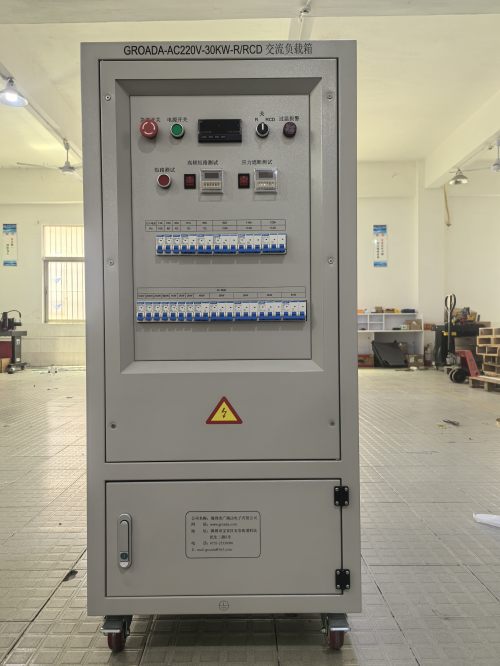
An anonymized case study from a marine generator manufacturer demonstrated that switching from an air-cooled to a water-cooled load bank reduced test time by 22% due to faster thermal stabilization and allowed continuous operation at 95% of rated power without overheating—a significant improvement over previous limitations of 70%. Based on field experience, such systems are increasingly adopted in data centers, hospitals, and military facilities where uninterrupted power reliability is non-negotiable.









