
Portable load banks are essential tools in electrical testing, particularly for validating the performance and reliability of generators used in critical infrastructure, data centers, backup power systems, and remote industrial sites. Unlike fixed installations, portable load banks offer flexibility in deployment—whether for factory acceptance testing (FAT), commissioning, or routine maintenance—without requiring permanent infrastructure. These units simulate real-world electrical loads by drawing power from the generator under test and converting it into heat through resistive, reactive, or combined RLC circuits. This process ensures that the generator can handle full-load conditions safely and efficiently, preventing unexpected failures during actual operation.
A well-designed portable load bank typically includes a robust chassis with an IP54 rating for dust and splash resistance, making it suitable for both indoor and outdoor use. Power ratings range from 10 kW to over 3 MW, with three-phase configurations being standard for commercial and industrial applications. Key features such as Modbus RTU or Ethernet communication interfaces allow integration into SCADA systems for remote monitoring and control. Thermal protection, short-circuit detection, and automatic shutdown mechanisms ensure operator safety and equipment longevity. According to IEC 60034-1, motors and generators must undergo load testing at rated capacity to verify efficiency and thermal stability—an industry standard increasingly adopted globally. In one anonymized case study involving a 500 kW diesel generator at a hospital backup system, a portable resistive load bank was used to perform a 2-hour full-load test. The results showed stable voltage regulation within ±2% and consistent engine temperature rise, confirming compliance with ISO 8528-5 standards for generator performance validation.
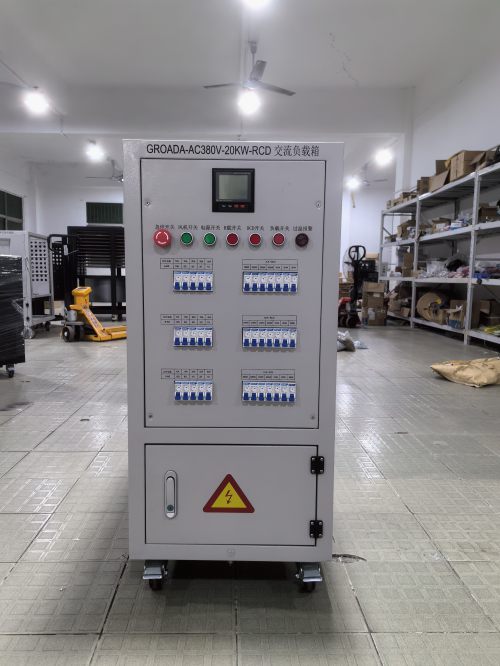
For procurement teams and engineers, selecting the right portable load bank involves evaluating not only power capacity and phase configuration but also portability features like lifting eyes, fork truck pockets, and integrated cooling fans. Maintenance considerations—including calibration cycles every 12 months using NIST-traceable equipment—and spare parts availability (e.g., resistor blocks, fans) further influence long-term operational costs. With growing adoption of renewable energy systems such as wind farms and microgrids, portable load banks have become indispensable for grid synchronization tests, ensuring seamless integration without compromising grid stability.