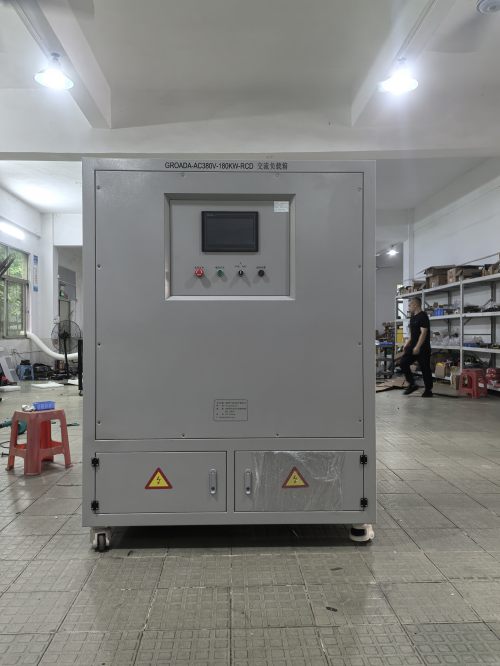
A load bank is an essential testing device used across industries such as power generation, renewable energy, and industrial maintenance to simulate real-world electrical loads on generators, transformers, UPS systems, and other power sources. Unlike traditional methods that rely on physical equipment or grid connections, a load bank allows engineers to safely and precisely evaluate system performance under controlled conditions—without causing damage or disruption.
The core function of a load bank is to absorb electrical power from the source being tested and convert it into heat, which is then dissipated using air or water cooling systems. This process ensures that the power system operates under full or partial load scenarios, verifying its ability to handle actual operational stress. For example, during generator factory acceptance testing (FAT), a load bank confirms that the unit delivers consistent voltage, frequency, and power output under various load conditions.
Load banks are categorized by type: resistive, reactive, capacitive, and combination (RLC). Resistive load banks simulate pure resistive loads like lighting and heating systems; reactive load banks mimic inductive or capacitive loads such as motors or transformers; while RLC units offer comprehensive testing for complex power systems, including microgrids and wind farms. Each type can be configured with adjustable power factors (typically 0.8 lagging to 1.0 leading) and precise control interfaces (Modbus, CAN, Ethernet) for remote monitoring and automation.
Safety features include thermal protection, short-circuit safeguards, overvoltage/undervoltage detection, and emergency stop mechanisms. Certified to standards like IEC 60034-1 for motor testing and UL/CE for safety compliance, modern load banks also support remote diagnostics via cloud platforms or mobile apps—a critical feature for asset management in distributed energy systems.

In practice, load banks help prevent unexpected failures by validating engine performance, checking fuel system efficiency, and ensuring battery backup reliability in data centers. An anonymized case study from a solar farm in Texas showed that monthly load testing reduced unplanned outages by 37% over six months by identifying early signs of inverter degradation.
Whether for routine maintenance, commissioning, or certification purposes, a load bank remains indispensable for any organization relying on stable and reliable power infrastructure. Its ability to emulate diverse loads makes it a cornerstone tool in power quality assurance and predictive maintenance strategies.