
Portable load banks are essential tools in the power generation and electrical testing industry, offering reliable and accurate methods to evaluate generator performance under real-world conditions. Whether used during factory acceptance tests (FAT), commissioning of new installations, or routine maintenance, these systems simulate electrical loads to ensure generators operate efficiently, safely, and within specifications. This article provides a comprehensive technical overview of portable resistive, reactive, and combination (RLC) load banks — including their design principles, operational capabilities, safety features, application scenarios, and compliance standards — with insights drawn from industry best practices and international test protocols.
A portable load bank is an active electrical load device that mimics the actual power consumption of a connected system such as a diesel or gas generator, UPS, or microgrid. Unlike static loads like light bulbs or heaters, modern load banks are dynamically controllable, enabling stepwise or continuous load application across multiple phases. The most common types include:
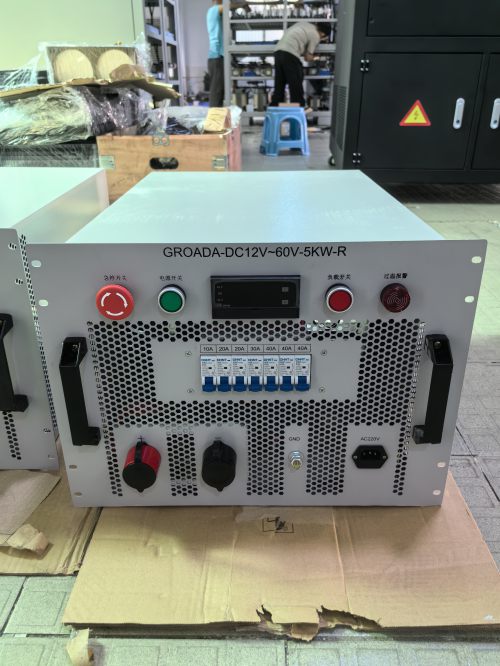
- Resistive Load Banks: These convert electrical energy into heat using high-power resistor elements. They are ideal for testing real power (kW) output and verifying engine cooling, fuel efficiency, and voltage regulation.
- Reactive Load Banks: Typically inductive (lagging PF) or capacitive (leading PF), they simulate reactive power (kVAR) demands without consuming active power. Used primarily for testing excitation systems, voltage regulators, and alternator capability.
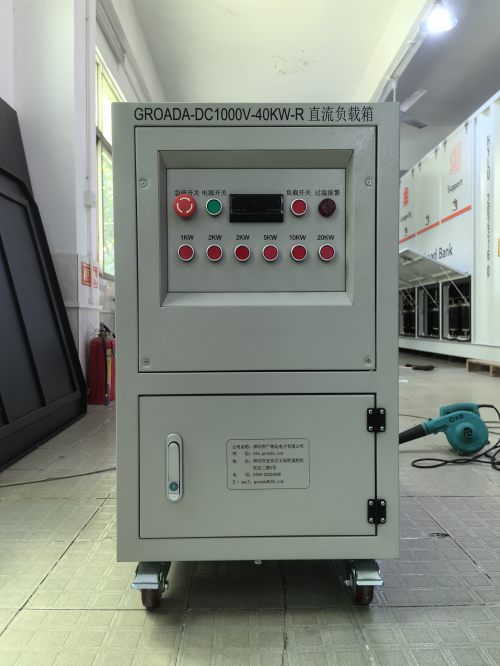
- Combination (RLC) Load Banks: Provide both resistive and reactive components simultaneously, allowing full-load simulation of three-phase generators at any power factor from 0.8 lagging to 0.8 leading. This makes them suitable for comprehensive generator validation per IEC 60348 and IEEE 1547 standards.
For example, a 100 kW three-phase resistive load bank operating at 400 V line-to-line will draw approximately 144 A per phase (calculated as P = √3 × V × I × PF; assuming PF = 1). Such calculations are critical when selecting appropriate cabling, circuit breakers, and ventilation systems for safe operation.
Key technical parameters for industrial-grade portable load banks typically include:
- Power Rating: From 25 kW up to 5 MW (with custom options available)
- Voltage Levels: 120/208 V to 480/600 V AC
- Phases: Single or three-phase configurations
- Current Range: Up to 600 A per phase (depending on configuration)
- Power Factor Adjustment: ±0.1 to ±0.9 (for RLC units)
- Cooling Methods: Forced air (fan-cooled), liquid-cooled (water-jacketed), or hybrid
- Thermal Protection: Built-in temperature sensors triggering automatic shutdown above 150°C
- Measurement Accuracy: ±0.5% for voltage, current, active/reactive power, and power factor
Safety is paramount in load bank operations. All certified models must meet strict electrical safety requirements such as those outlined in IEC 60947-1 (Low-voltage switchgear and controlgear general rules) and UL 1008 (Standard for Electrical Power Conversion Equipment). Additional protections include grounding terminals, short-circuit protection (e.g., fast-acting fuses or circuit breakers), overvoltage/undervoltage detection, and emergency stop buttons. For mobile use, robust chassis construction (typically IP54-rated enclosures), lifting eyes, and fork-lift pockets enhance portability and handling in field environments.
Modern load banks often integrate digital control interfaces via Modbus RTU/TCP, CAN bus, Ethernet, or RS-485 for remote monitoring and automation. Some advanced units support SCADA integration, cloud-based logging, and predictive analytics through IoT-enabled platforms — making them indispensable for smart grid testing and condition-based maintenance programs.
Case studies illustrate practical benefits. In an anonymized case study involving a 500 kW diesel generator at a remote mining site, a 100% resistive load bank was used to perform a 4-hour load test at 90% rated capacity. The test revealed uneven load distribution between phases due to improper wiring, which was corrected before full deployment. Another simulated example involved a 300 kVA standby generator in a hospital backup system. Using a 0.9 lagging power factor setting on an RLC load bank, engineers validated that the generator could maintain stable voltage and frequency under peak demand, ensuring uninterrupted medical services.
Calibration and maintenance are crucial for long-term reliability. Load banks should be recalibrated annually or after significant damage or service interruption, using calibrated DC reference sources or traceable AC calibrators per NIST guidelines. Consumables such as resistor blocks, fans, and contactors have estimated lifespans of 5–10 years depending on usage intensity. Recommended spare parts include replacement resistor grids, thermocouples, and fan motors.
In summary, portable load banks serve as indispensable tools for validating generator health, optimizing performance, and preventing unexpected failures. Their versatility across industries — from oil & gas to renewable energy — underscores their value in maintaining grid resilience and system uptime. As power systems grow more complex, especially with decentralized generation and hybrid microgrids, the role of precision load testing becomes increasingly vital.