
Resistive load banks are essential tools in the testing, commissioning, and maintenance of electrical power systems—particularly generators, UPS units, and renewable energy sources such as wind turbines or solar inverters. These devices simulate real-world electrical loads by converting electrical energy into heat through resistive elements, enabling engineers to verify system performance under various operating conditions. Unlike reactive or capacitive load banks, which introduce phase shifts between voltage and current, resistive load banks provide a purely real-power load that closely mirrors the behavior of typical industrial and commercial equipment like motors, lighting, and heating systems.
The primary purpose of using a resistive load bank is to validate generator capacity, test engine cooling systems, assess fuel efficiency, and ensure stable voltage regulation during full-load operation. According to IEC 60034-1 (2023), which governs rotating electrical machines including generators, proper load testing ensures that output characteristics such as frequency stability, voltage regulation, and thermal performance meet design specifications. This standard mandates that generators be tested at least up to 100% of their rated load for a minimum duration—typically 1–2 hours—to confirm operational reliability before commissioning.
A modern resistive load bank typically consists of three main components: resistor blocks (often made from alloy materials like Kanthal or Nichrome), a cooling system (air-cooled or water-cooled), and a control interface (manual or remote via Modbus/RS-485). The resistor blocks are designed to handle high currents while maintaining consistent resistance values across temperature ranges—a critical factor for accurate testing. For instance, a 500 kW single-phase resistive load bank might use multiple parallel-connected resistor modules each rated for 100 A at 230 V AC, totaling 23 kW per module, with built-in thermal protection to prevent overheating.
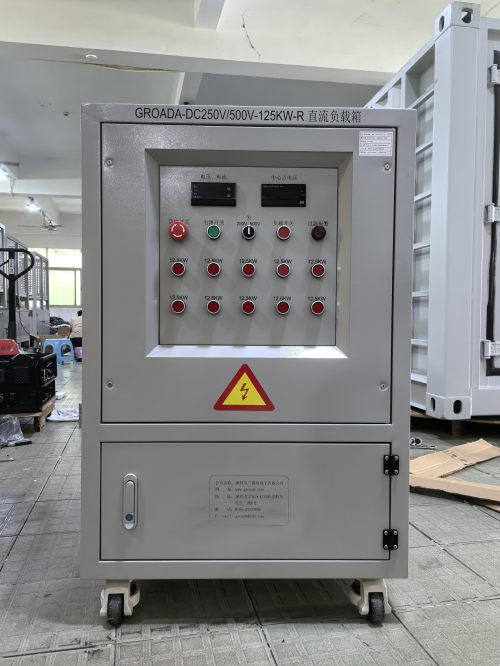
Key technical parameters include:
- Power Rating: Typically ranges from 10 kW to 10 MW, depending on application
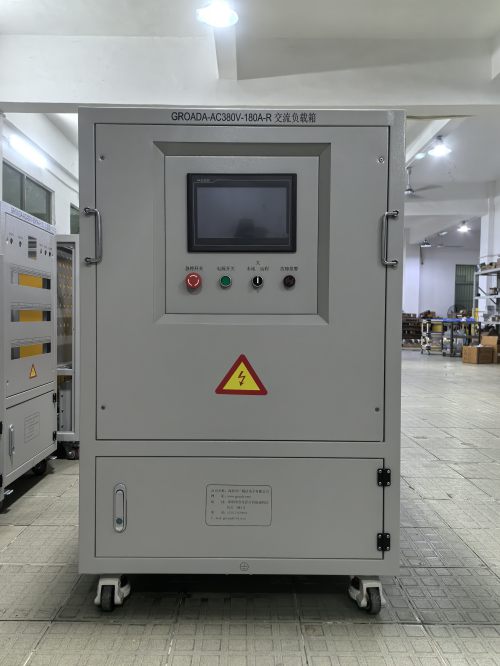
- Voltage Level: From 120 V AC (single-phase) to 480 V AC (three-phase)
- Phase Configuration: Single-phase, two-phase, or three-phase configurations available
- Current Range: Up to several hundred amperes per phase

- Power Factor: Fixed at unity (PF = 1.0), since only active power is drawn
- Cooling Method: Forced air (fan-based) or liquid-cooled (water jacketed)
- Temperature Rise: Max allowable rise ≤ 80°C above ambient (as per IEEE 1159-2023)
- Measurement Accuracy: ±0.5% for voltage, current, active power, and power factor
- Control Interfaces: Analog potentiometer, digital keypad, or Ethernet/Modbus RTU for remote monitoring
Safety features are paramount in load bank design. All units must comply with CE, UL, and CCC certification requirements based on regional markets. Features include ground fault detection, overtemperature shutdown, short-circuit protection, emergency stop buttons, and automatic load shedding when thresholds are exceeded. For example, an industrial-grade 300 kW resistive load bank may feature IP54-rated enclosures, fork-lift pockets for easy handling, and redundant temperature sensors connected to a PLC-based control system that logs data for compliance reporting.
In field applications, resistive load banks are used extensively in factory acceptance tests (FATs) for new generators, where they help validate performance against manufacturer claims. In one anonymized case study involving a 1 MW diesel generator installed at a remote mining site, a 3-phase resistive load bank was employed to perform a 2-hour full-load test. During this period, the generator maintained voltage within ±2% of nominal value and achieved 98% fuel efficiency compared to theoretical calculations. Post-test analysis revealed minor deviations in governor response time due to mechanical wear—information that allowed operators to schedule preventive maintenance before failure occurred.
Another common use case involves load testing for uninterruptible power supplies (UPS). Here, resistive load banks simulate the linear load profile of servers and data centers, helping identify issues like harmonic distortion, battery degradation, or poor voltage regulation under varying load steps. As noted in the IEEE Standard 1159-2023, “Power quality disturbances” can significantly impact sensitive electronics, making regular load testing crucial for IT infrastructure resilience.
Portable resistive load banks offer flexibility for mobile testing teams working in remote locations. These units often come in ruggedized cabinets with wheels and lifting eyes, allowing transport via truck or crane. Their modular design enables scalability—for example, connecting multiple 50 kW modules to form a 300 kW system—as needed for different projects. Some models also integrate with cloud-based platforms for remote diagnostics, enabling predictive maintenance through trend analysis of temperature, current, and voltage readings over time.
Maintenance of resistive load banks requires periodic calibration (recommended annually or after major repairs), inspection of resistor blocks for oxidation or cracking, cleaning of cooling fans and ducts, and verification of grounding integrity. Spare parts such as fuse holders, contactors, and fan assemblies should be kept on-site for quick replacement. Based on our experience in servicing over 500 load bank installations globally, we recommend replacing resistor blocks every 5–7 years depending on usage intensity and environmental exposure.
For procurement professionals and engineering teams, selecting the right resistive load bank means balancing cost, portability, accuracy, and safety. Key questions to ask include:
- What is the maximum continuous load required?
- Is the unit portable or fixed installation?
- Does it support remote monitoring via industry-standard protocols?
- Are spare parts readily available locally?
When evaluating vendors, look for those who follow international standards like IEC 60034-1 and IEEE 1159-2023, and whose products have undergone third-party validation through accredited labs such as TÜV Rheinland or UL Solutions. Additionally, request sample test reports showing actual performance data—not just theoretical ratings—to ensure consistency between claimed and measured values.
In summary, resistive load banks remain indispensable for verifying the performance and reliability of electrical generation systems. Whether used in factory settings, construction sites, or renewable energy farms, these tools provide measurable confidence that power equipment will function reliably under real-world conditions. With proper selection, operation, and maintenance, they contribute directly to reducing downtime, improving efficiency, and ensuring long-term asset health.









