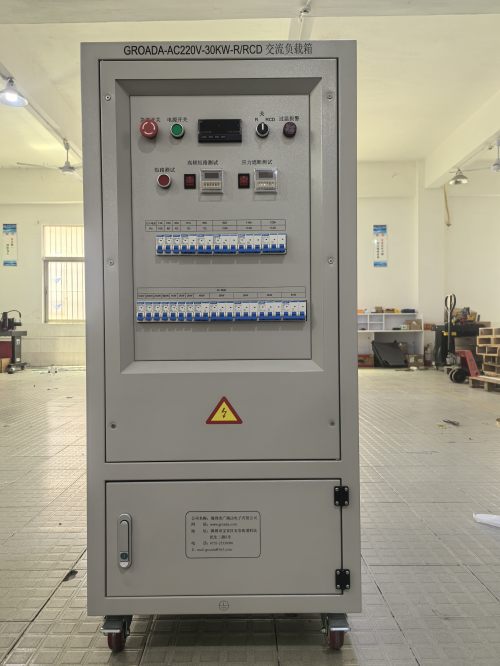
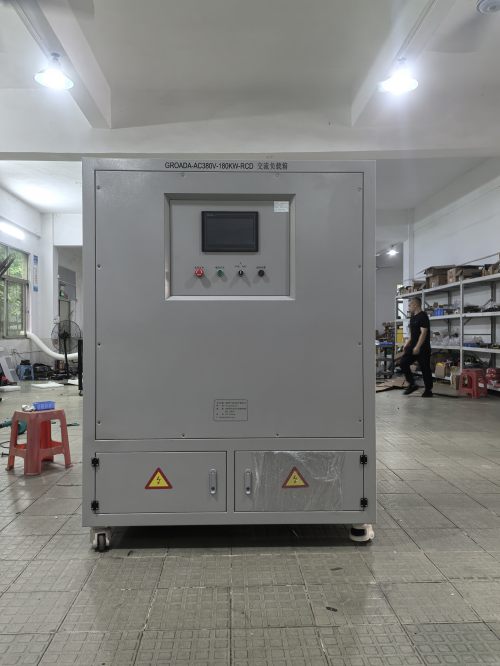
Portable load banks are essential tools for validating generator performance, ensuring reliable power delivery in both industrial and utility applications. These devices simulate real-world electrical loads by dissipating power as heat, allowing technicians to test generators under controlled conditions without requiring actual connected equipment. Common applications include factory acceptance testing (FAT), preventive maintenance of backup generators, and grid integration verification for renewable energy systems like solar farms or wind turbines. In critical infrastructure such as hospitals, data centers, and remote mining operations, portable load banks ensure that emergency power systems operate correctly under full load—preventing unexpected failures during outages.
One major advantage is their flexibility: unlike fixed load banks, portable units can be moved between sites, making them ideal for field service engineers. Modern models offer digital control interfaces (e.g., Modbus RTU or Ethernet), enabling remote monitoring, automated load steps, and real-time measurement of voltage, current, active power, reactive power, and power factor. This precision helps identify issues like voltage sag, frequency instability, or poor fuel efficiency early—leading to cost savings and improved uptime. Additionally, many portable load banks now feature automatic thermal protection, overcurrent safeguards, and E-STOP functionality compliant with IEC 60204-1 safety standards.
However, common problems arise from improper usage or lack of maintenance. For instance, overheating due to inadequate airflow or prolonged operation beyond rated capacity can damage resistor blocks—a frequent issue in tropical climates. Similarly, incorrect phase balancing in three-phase units may lead to inaccurate readings or uneven wear. To mitigate these risks, regular calibration (recommended every 12 months) and inspection of cooling fans and contactors are crucial. Manufacturers often provide spare parts kits including fuse holders, thermistors, and fan assemblies for rapid servicing.
Recent trends show increased adoption of smart load banks integrated with IoT platforms for predictive maintenance. Some models now support cloud-based data logging and AI-driven diagnostics, allowing operators to analyze historical load profiles and detect anomalies before failure. As microgrids become more prevalent, portable load banks are also being used to test dynamic response during islanding events—ensuring seamless transitions between grid-connected and off-grid modes.