
Load banks are essential tools in the testing, commissioning, and maintenance of electrical power systems—particularly generators, UPS units, and renewable energy sources such as wind turbines or solar inverters. Their primary function is to simulate real-world electrical loads under controlled conditions, allowing engineers to verify system performance, stability, and safety before actual deployment. This article provides a comprehensive technical overview of load banks, focusing on their types, applications, key specifications, industry standards, and practical implementation strategies for both fixed and portable installations.
Resistive load banks are the most common type, designed to convert electrical energy into heat using resistive elements like ceramic or metal oxide blocks. They primarily test active power (kW) capacity and are ideal for generator acceptance testing, especially during factory inspections or site commissioning. According to IEC 60034-1, motors and generators must be tested at full load to validate torque, temperature rise, and mechanical integrity—resistive load banks enable this by delivering stable, linear resistance across all phases. A typical 100 kW three-phase resistive load bank can draw up to 150 A per phase at 400 V AC, assuming unity power factor (PF = 1.0). For calculation purposes, the current per phase is derived from the formula:
$$ I = \frac{P}{\sqrt{3} \times V \times PF} $$
Where P = 100,000 W, V = 400 V, PF = 1.0 → $ I = \frac{100000}{\sqrt{3} \times 400} ≈ 144.3 \, \text{A} $
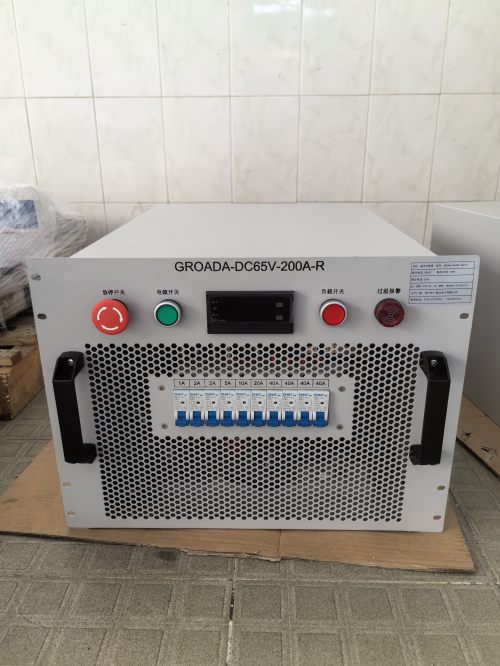
Reactive load banks introduce inductive or capacitive reactance to simulate reactive power (kVAR), enabling testing of voltage regulation, excitation systems, and power factor correction. These are critical in grid-connected microgrids where dynamic VAR support is required. IEEE Std 1547 mandates that distributed generation systems maintain voltage within ±5% of nominal under varying reactive loads—a condition only verifiable through proper reactive load bank testing. Capacitive load banks (used in reverse of inductive mode) help evaluate overvoltage protection systems in synchronous generators and inverters.
Combination (RLC) load banks integrate resistive, inductive, and capacitive components into a single unit, offering versatility for full-spectrum load simulation. These are often used in advanced laboratory settings or when testing hybrid systems such as diesel-battery backup systems for telecom towers. The ability to adjust power factor from lagging (inductive) to leading (capacitive) between 0.1 and 1.0 allows for realistic load profiles mimicking industrial motor loads or data center equipment.
Portable load banks, typically wheeled or skid-mounted, are widely used in field testing environments such as construction sites, oil rigs, or remote mining operations. They offer flexibility in deployment, with cooling methods ranging from forced-air fans to water-cooled jackets for high-power applications (>2 MW). Mechanical robustness, IP ratings (e.g., IP54 for dust and splash resistance), and compliance with CE/UL/CCC certifications ensure safe operation in harsh conditions. For instance, a 300 kW portable resistive load bank might weigh around 800 kg and feature lifting eyes for crane handling.
Thermal management is crucial in preventing overheating and ensuring long-term reliability. Most load banks use forced air cooling with multiple variable-speed fans controlled via PID algorithms based on internal temperature sensors. Some models incorporate liquid cooling for continuous duty cycles exceeding 8 hours. Heat dissipation rates typically range from 50–150 kW/m² depending on design efficiency and airflow velocity. Thermal protection mechanisms include automatic shutdown at temperatures >150°C, which aligns with UL 1004 requirements for thermal safety.
Control interfaces have evolved significantly—from manual dials and analog meters to digital PLC-based controllers with Modbus RTU/TCP, CAN bus, and Ethernet connectivity. Remote monitoring capabilities now allow operators to track real-time parameters including voltage, current, power factor, frequency, and harmonic distortion levels. Integration with SCADA systems enables automated load ramping, fault logging, and predictive maintenance alerts. For example, a modern 500 kVA RLC load bank may communicate via Modbus over RS-485 at baud rate 19200, providing data resolution down to 0.1% accuracy for active power measurements.
Safety features include redundant grounding paths, short-circuit protection (fuses or circuit breakers rated for 20x nominal current), emergency stop buttons, and overvoltage/undervoltage detection (±10% tolerance). All certified units undergo rigorous EMC testing per IEC 61000-6-2 to avoid interference with nearby electronic devices. Additionally, some manufacturers implement smart E-stop logic that triggers upon loss of communication or abnormal temperature gradients.
In terms of calibration and maintenance, load banks should be recalibrated annually or after significant repairs using traceable calibration equipment such as precision multimeters (Class 0.1 accuracy) and calibrated shunts. Consumable parts like resistor blocks and fan assemblies require inspection every 6 months. Recommended spare parts include replacement resistor grids, thermal fuses, and control boards. Proper documentation of test logs ensures compliance with ISO 50001 energy management systems and facilitates audits by regulatory bodies.
Case Study – Anonymized Data Center Generator Test:
A 1.5 MW diesel generator at a Tier III data center underwent routine load testing using a 1.2 MW three-phase resistive load bank. The test lasted 6 hours at 100% load, followed by a 2-hour ramp-up to 125%. Parameters recorded included: average output voltage (405 V), frequency deviation (<0.5 Hz), exhaust gas temperature (65°C), and fuel consumption rate (0.3 L/kWh). Post-test analysis revealed a 5% drop in efficiency compared to baseline, prompting scheduled maintenance on the fuel injectors—an issue not detected during idle runs. This case highlights how load testing identifies hidden inefficiencies before failure occurs.
Another simulated example involves a wind farm integration project in Germany, where a 2 MW grid-tied inverter was tested using an RLC load bank to simulate both lagging and leading power factors. Using IEEE 1547 guidelines, the system demonstrated stable voltage regulation across PF ranges of 0.8 lag to 0.9 lead, validating its suitability for future grid interconnection without additional reactive compensation hardware.
To optimize selection, users must consider:
- Required load level (kW/kVA)
- Number of phases (single or three-phase)
- Portability needs
- Cooling method (air vs. water)
- Control interface options
- Environmental conditions
Key considerations for procurement teams include adherence to IEC/IEEE standards, ease of transport, and lifecycle cost analysis (including maintenance intervals and part availability).