
Portable load banks are essential tools for validating the performance, reliability, and safety of electrical power systems such as generators, uninterruptible power supplies (UPS), and renewable energy inverters. These devices simulate real-world electrical loads to ensure that power sources can deliver their rated output under various operating conditions—from full-load operation to transient response testing. In today’s increasingly complex and interconnected energy infrastructure, portable load bank testing is not just a best practice—it's a necessity for maintenance planning, commissioning, and regulatory compliance.
A typical portable load bank consists of resistive, reactive, or combination (RLC) elements that draw current from the power source while dissipating the energy as heat. Resistive load banks simulate purely resistive loads like lighting, heating, and motor drives by converting electrical energy into thermal energy through precision resistor blocks. Reactive load banks, on the other hand, emulate inductive or capacitive loads—such as transformers, motors, and capacitor banks—by introducing phase shifts between voltage and current. Combination load banks offer both capabilities, enabling comprehensive testing of systems with mixed load characteristics, especially in industrial or data center environments where both active and reactive power must be managed.
The design of modern portable load banks reflects advances in materials science, thermal management, and digital control systems. For example, high-temperature resistant alloys (like Kanthal A1 or Nichrome V) are used in resistor elements to withstand continuous operation at up to 600°C. Air-cooled models typically use forced-air cooling via high-efficiency fans with variable speed control, while water-cooled units integrate closed-loop heat exchangers for higher power densities and reduced acoustic noise. Advanced models now support remote monitoring via Ethernet, Modbus RTU/TCP, or CAN bus interfaces, allowing operators to configure test profiles, log real-time parameters (voltage, current, power factor, THD), and receive alerts for overtemperature or fault conditions—all from a central control room or mobile device.
From a technical standpoint, IEC 60034-1 and IEEE Std 115 define minimum requirements for generator performance testing, including load acceptance tests, voltage regulation, and transient response. Portable load banks must comply with these standards to ensure accurate and repeatable results during factory acceptance testing (FAT) or site commissioning. For instance, a three-phase resistive load bank rated at 200 kW/480V must demonstrate stable power delivery within ±2% of setpoint across all phases, with no more than 5% deviation in measured power factor over a range of 0.8 lagging to unity. Similarly, IEEE 1547 outlines how distributed energy resources—including solar inverters and wind turbines—must undergo grid connection tests using dynamic load banks to verify anti-islanding protection and frequency/voltage ride-through capability.
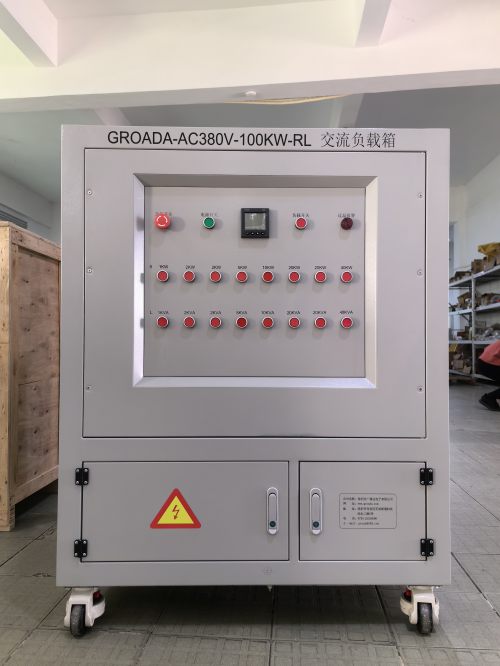
One common application is generator load testing in standby power systems. A simulated case study from a hospital facility in Singapore illustrates this well: During quarterly maintenance, a 1 MW diesel generator was tested using a portable resistive load bank capable of delivering 100% of its rated capacity over 3 hours. The test revealed an unexpected voltage dip when transitioning from 50% to 100% load, indicating inadequate governor tuning. After recalibration, subsequent tests confirmed stable voltage regulation (<±2%) and improved fuel efficiency—demonstrating how proactive load testing prevents failures during actual outages.
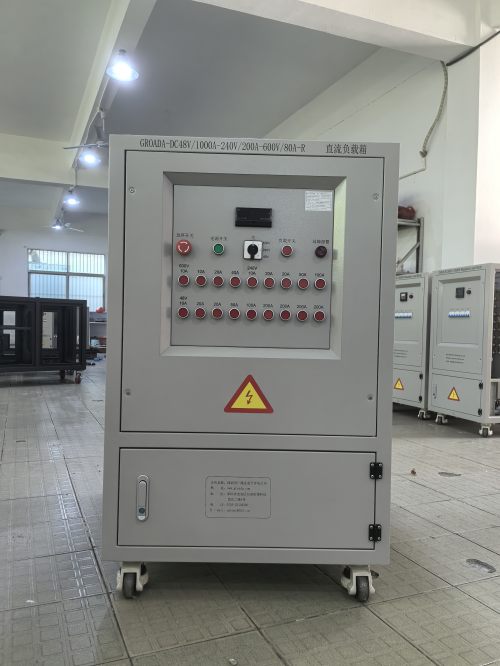
Another critical use case involves UPS system validation in data centers. Here, reactive and capacitive load banks help assess harmonic distortion, battery charging efficiency, and load sharing between parallel UPS units. For example, a Tier III data center in Germany conducted monthly load tests using a 150 kVA combination load bank. By simulating 70% inductive load (lagging PF = 0.8) followed by 30% capacitive load (leading PF = 0.9), engineers identified a resonance issue between the UPS and connected IT equipment that caused overheating in certain server racks. Corrective measures included installing passive filters and adjusting inverter settings—a solution validated through repeated load bank testing.
Portability makes these systems ideal for field deployment. Chassis designs often feature IP54-rated enclosures, forklift pockets, lifting eyes, and ruggedized wheels to facilitate transport across construction sites, offshore platforms, or remote substations. Typical weight ranges vary from 50 kg for small single-phase units to over 1,500 kg for multi-kilowatt three-phase models. Thermal protection mechanisms—including thermocouples, fan interlocks, and automatic trip circuits—prevent overheating, which could damage internal components or pose fire hazards. Most units also include built-in calibration verification features that allow users to check measurement accuracy against traceable reference instruments every six months.
Maintenance intervals for portable load banks depend on usage intensity. Under heavy duty (daily use in industrial plants), manufacturers recommend replacing resistor blocks every 5–7 years and inspecting cooling fans annually. Spare parts lists typically include fuse holders, contactors, and temperature sensors. Calibration should be performed by accredited laboratories following ISO/IEC 17025 procedures—at least once per year—to maintain measurement integrity. Remote diagnostics via cloud-based platforms are becoming standard, offering predictive maintenance insights based on historical load profiles and component wear trends.
In summary, portable load banks serve as indispensable tools for ensuring power quality, system resilience, and operational readiness. Whether deployed in emergency backup scenarios, renewable integration projects, or manufacturing facilities, they provide actionable data that supports decision-making for engineers, facility managers, and procurement teams alike. As global demand for reliable power grows—with increasing reliance on microgrids, EV charging stations, and hybrid power solutions—the role of intelligent, adaptable load testing technology will only become more vital.









