
Portable load banks are essential tools for verifying the performance, reliability, and safety of electrical power systems such as generators, uninterruptible power supplies (UPS), and microgrids. These devices simulate real-world electrical loads by drawing power from a source—typically in resistive, reactive, or combination modes—and enabling engineers to test system behavior under controlled conditions without relying on actual consumer demand. This capability is critical during factory acceptance testing (FAT), commissioning, maintenance, and grid integration scenarios.
In industrial settings—from oil refineries to data centers—power continuity is non-negotiable. A generator that fails during an outage can result in costly downtime, safety hazards, or even environmental damage. Similarly, a UPS system that doesn’t deliver full rated capacity may leave sensitive equipment vulnerable during a power event. Portable load banks provide a repeatable, measurable method to ensure these systems meet design specifications before they’re deployed in mission-critical environments.
The most common type of portable load bank is the resistive load bank, which converts electrical energy into heat using precision resistor blocks. It is ideal for testing generator output capacity, engine cooling systems, and fuel efficiency at various load levels (e.g., 25%, 50%, 75%, 100%). For example, when testing a 100 kW diesel generator, a resistive load bank allows engineers to gradually increase load while monitoring voltage stability, frequency response, and temperature rise in both the generator and load bank itself.
Reactive load banks, meanwhile, introduce inductive or capacitive reactance to simulate the effects of motors, transformers, and other reactive loads commonly found in industrial plants. These units are vital for assessing power factor correction systems and ensuring that generators can handle lagging (inductive) or leading (capacitive) loads without instability or excessive heating. Some advanced models offer adjustable power factor control between 0.1 lagging and 0.9 leading, allowing for comprehensive testing across different load profiles.
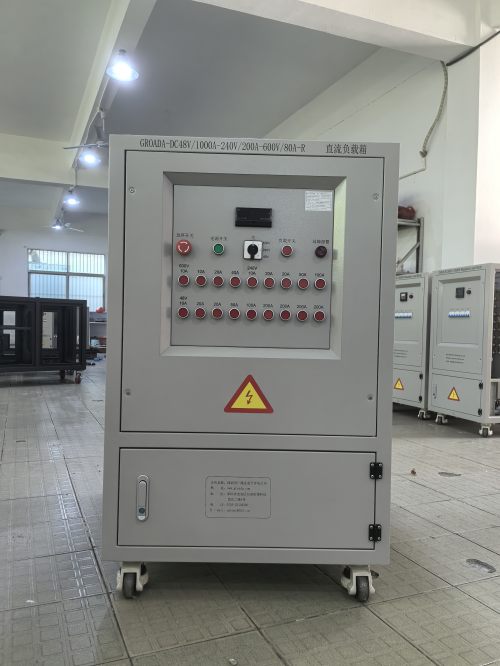
Combination (RLC) load banks integrate resistive and reactive components into a single unit, offering flexibility for complex load testing. They are particularly useful for validating the performance of three-phase systems used in manufacturing facilities, hospitals, and telecom infrastructure. For instance, an RLC load bank can mimic a full industrial plant’s load profile—including motors, lighting, HVAC, and IT equipment—to verify that a new backup generator can sustain operations during a prolonged outage.
Modern portable load banks come equipped with digital controllers, remote monitoring capabilities via Ethernet or Modbus RTU protocols, and integrated measurement systems that log voltage, current, active power, reactive power, and power factor in real time. This level of automation reduces manual intervention, improves accuracy, and supports predictive maintenance strategies based on historical load data. Many models also feature thermal protection circuits and automatic shutdowns if internal temperatures exceed safe thresholds—a key safety requirement for continuous operation in harsh environments.
Certifications such as CE, UL, and CCC ensure compliance with international safety standards for electrical equipment. In Europe, IEC 60034-1 defines requirements for motor and generator testing including temperature rise limits, insulation class, and mechanical robustness. Load banks must be designed to withstand these conditions, especially when operated continuously at 100% load for extended periods (e.g., up to 8 hours). Cooling methods vary: air-cooled models rely on forced convection fans, while water-cooled variants use closed-loop coolant systems for higher power densities (>500 kW per unit).
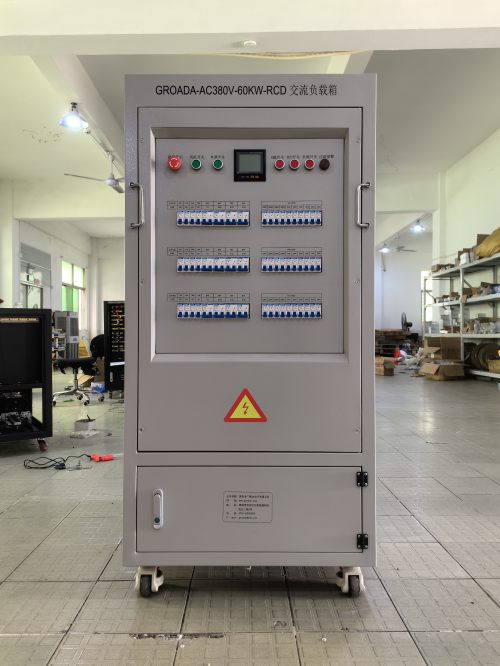
Mechanical design considerations include IP ratings (typically IP54 or higher), rugged chassis construction, lifting eyes, and forklift pockets for easy transport. Weight ranges typically span from 150 kg for small single-phase units to over 1,000 kg for three-phase systems capable of handling 1 MW or more. Portability makes them indispensable for field service teams who need to perform tests at remote locations like wind farms, offshore platforms, or construction sites where permanent load banks aren’t feasible.
Maintenance best practices include regular calibration of voltage/current sensors (recommended annually), inspection of resistor blocks for signs of wear, cleaning of cooling fans, and replacement of fan blades every 3–5 years depending on operating environment. Spare parts such as resistor cartridges, fuses, and connectors should be kept on-site to minimize downtime. Calibration certificates traceable to national metrology institutes (like NIST in the U.S. or PTB in Germany) enhance credibility for regulatory audits.
Case Study – Anonymized Example:
A mid-sized chemical processing plant in Texas conducted routine load testing on its primary diesel generator using a 150 kW resistive load bank. The generator had previously shown minor voltage fluctuations under heavy load. During the test, the load bank was programmed to apply 100% load for 4 hours while logging power parameters. Engineers observed that the generator's voltage dropped below acceptable limits (±5% of nominal) after 2.5 hours due to inadequate governor tuning. After adjusting the speed control settings, subsequent tests confirmed stable operation under full load, preventing potential production disruption.
Another simulated case involved a hospital’s backup UPS system rated at 200 kVA. Using a 3-phase reactive load bank set to 0.8 lagging power factor, the team discovered that the UPS’s battery management system could not maintain runtime beyond 15 minutes under full load—a failure point missed during initial commissioning. Corrective action included upgrading the battery packs and reconfiguring the inverter logic, resulting in a certified runtime of 30 minutes, meeting NFPA 110 standards for emergency power systems.
These examples demonstrate how portable load banks enable proactive troubleshooting rather than reactive fixes, directly contributing to operational resilience and compliance with industry regulations such as IEEE 1159 (power quality), IEC 62040 (UPS), and OSHA workplace safety guidelines.
From a technical standpoint, understanding the difference between apparent power (kVA), active power (kW), and reactive power (kVAR) is crucial when interpreting test results. Power factor (PF = kW/kVA) determines how efficiently power is utilized; low PF indicates wasted energy and increased strain on distribution equipment. Proper load bank selection ensures accurate representation of real-world conditions—whether it's a standalone generator test or part of a larger hybrid energy system incorporating solar inverters and battery storage.
As industries adopt smarter grids and renewable energy sources, portable load banks will remain indispensable for ensuring interoperability, dynamic stability, and fault tolerance in modern power architectures. Their role in testing microgrid controllers, grid-forming inverters, and hybrid diesel-battery systems underscores their evolving importance beyond traditional generator verification.
In conclusion, portable load banks are not just diagnostic tools—they are strategic assets for maintaining uptime, optimizing asset lifecycle, and building confidence in critical infrastructure. Whether deployed in factory environments, construction zones, or off-grid installations, they provide actionable insights backed by precise measurements and standardized procedures aligned with global engineering excellence.