
Portable load banks are essential tools in the testing, commissioning, and maintenance of power generation systems—ranging from small diesel generators to large-scale industrial turbines. These devices simulate real-world electrical loads, allowing engineers to verify performance under various conditions without relying on actual consumer demand. Whether used during factory acceptance tests (FAT), site commissioning, or routine preventive maintenance, portable load banks provide critical insights into generator output stability, voltage regulation, frequency response, and thermal behavior.
A resistive load bank primarily dissipates electrical energy as heat through high-power resistors. It is commonly used to test the mechanical and thermal capacity of a generator by simulating purely resistive loads such as lighting, heating elements, or motor drives operating at unity power factor. For instance, a 500 kW three-phase resistive load bank can be configured to apply full-load conditions across all phases simultaneously, enabling precise measurement of active power delivery, cooling system efficiency, and fuel consumption patterns.
Reactive load banks, on the other hand, introduce inductive or capacitive reactance into the circuit, mimicking loads like transformers, induction motors, or capacitor banks that draw reactive power. These are crucial for assessing how a generator handles varying power factors—from lagging (inductive) to leading (capacitive)—and whether its excitation system responds correctly to maintain terminal voltage within specified limits. In applications involving microgrids or renewable integration (e.g., wind farms), reactive load banks help validate grid synchronization capabilities and reactive power support functions required by IEC 61400-21 standards.
Combination (RLC) load banks offer the flexibility to simulate both resistive and reactive components simultaneously. This makes them ideal for comprehensive testing scenarios where multiple load types coexist, such as in data centers with servers (resistive) and uninterruptible power supplies (reactive). Such systems often require dynamic load changes over time, which modern digital load banks can replicate using programmable control logic.
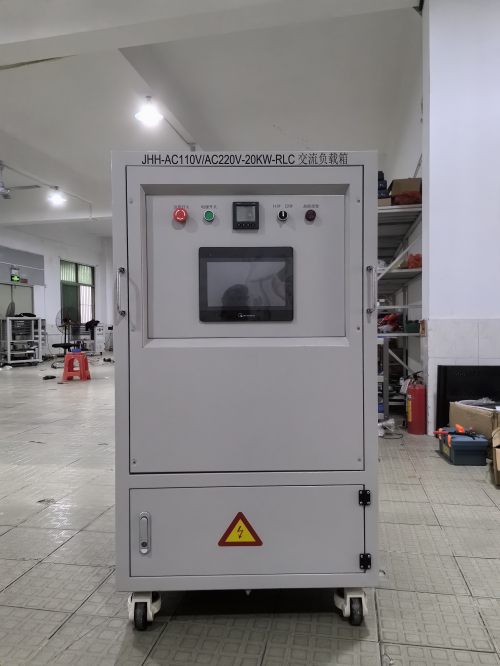
The selection of a suitable portable load bank depends on several key parameters: rated power (kW/kVA), phase configuration (single or three-phase), voltage level (typically 120/208 V to 480 V AC), current range (from tens to hundreds of amperes), and power factor adjustment capability (usually adjustable from 0.8 lagging to 0.8 leading). Additionally, users must consider environmental conditions such as ambient temperature, airflow requirements, and portability needs—especially when deploying in remote locations or temporary installations.
Cooling mechanisms are vital for safe and sustained operation. Passive air-cooled units rely on forced ventilation via fans, while water-cooled models transfer heat directly to a liquid coolant loop, making them more efficient for continuous high-load operations exceeding 4 hours. Thermal protection systems—including temperature sensors, automatic shutdowns, and alarm thresholds—are integral to preventing overheating and ensuring long-term reliability.
Modern portable load banks incorporate advanced control interfaces such as Modbus RTU/TCP, CAN bus, Ethernet, and RS-485 communication protocols. These enable remote monitoring, automated load cycling, and integration with SCADA or building management systems (BMS). Some models also feature built-in digital meters for real-time measurements of voltage, current, active power (kW), reactive power (kVAR), and power factor (PF), providing accurate data for compliance reporting and diagnostic analysis.
Safety remains paramount in load bank operations. Certified products comply with international standards including IEC 60034-1 (for electric machines), IEC 61010 (electrical safety), and regional certifications like UL/cUL (North America), CE (Europe), and CCC (China). Key safety features include grounding terminals, short-circuit protection, overtemperature cutoffs, undervoltage/overvoltage safeguards, and emergency stop (E-STOP) buttons. Mechanical design considerations include robust steel chassis, IP54-rated enclosures for dust and splash resistance, and lifting eyes or fork pockets for easy transport.
Maintenance practices significantly influence operational lifespan. Manufacturers typically recommend annual calibration of measuring instruments against traceable standards, with resistor blocks and fan assemblies inspected every 6–12 months depending on usage intensity. A recommended spare parts list should include replacement resistor packs, thermocouples, contactors, and filter modules. Proper storage—away from humidity, direct sunlight, and corrosive environments—is equally important to avoid premature degradation.
Case Study 1: Anonymized Factory Acceptance Test (FAT) of a 1 MW Diesel Generator
During FAT at an OEM facility, a three-phase resistive load bank was employed to conduct stepwise loading from 25% to 100% of rated output. The generator demonstrated stable voltage regulation (<±2%) and consistent frequency response (50 Hz ±0.2 Hz). However, excessive vibration occurred at 75% load, indicating misalignment between the engine and alternator shafts. Corrective action led to improved alignment and reduced bearing wear—a finding only detectable through controlled load application rather than no-load running.
Case Study 2: Simulated Grid Connection Test for Wind Farm Integration
Using a combination RLC load bank, a utility-scale wind farm underwent reactive power compensation validation prior to grid interconnection. By gradually increasing inductive load (lagging PF), the system’s ability to inject reactive power was confirmed per IEEE 1547 guidelines. At 0.95 lagging PF, the generator maintained voltage within ±5% of nominal, confirming readiness for connection to the distribution network.
In summary, portable load banks are indispensable assets in the power industry. Their versatility in emulating diverse load profiles ensures thorough evaluation of generator performance across different operating conditions. With advancements in digital controls, remote diagnostics, and modular designs, they now serve not just as testing tools but as integral components of predictive maintenance strategies and smart grid infrastructure development.









