
Portable load banks are essential tools for verifying the performance, reliability, and safety of electrical power systems such as generators, uninterruptible power supplies (UPS), and microgrids. These devices simulate real-world electrical loads to test how equipment behaves under varying conditions—from no-load to full-load operation—ensuring that critical infrastructure performs as expected during actual use. A well-designed portable load bank typically offers resistive, reactive, or combination (RLC) load capabilities, allowing engineers to test power factor behavior, voltage regulation, and thermal stability in both single-phase and three-phase configurations.
For example, a 500 kW resistive load bank can be used to validate a diesel generator’s ability to maintain stable output at 100% load for extended periods—a requirement often mandated by IEC 60348 standards for factory acceptance testing (FAT). Similarly, a reactive load bank with adjustable lagging or leading power factor settings enables testing of voltage regulation under inductive or capacitive loads, crucial for data center UPS systems. Portable units are engineered with robust cooling systems (air or water-based), temperature sensors, and remote monitoring via Modbus or Ethernet interfaces to support automated diagnostics and safe operation in field environments.
In one anonymized case study from a telecom tower installation, a 200 kVA three-phase portable load bank was used to validate backup generator performance before commissioning. The test revealed an unexpected voltage drop at 80% load due to inadequate wiring, which was corrected prior to final deployment. This proactive approach saved time, reduced downtime risk, and ensured compliance with IEEE 1159 standards on power quality. Such applications highlight why load bank testing is not just a procedural step—it’s a vital engineering practice for resilience.
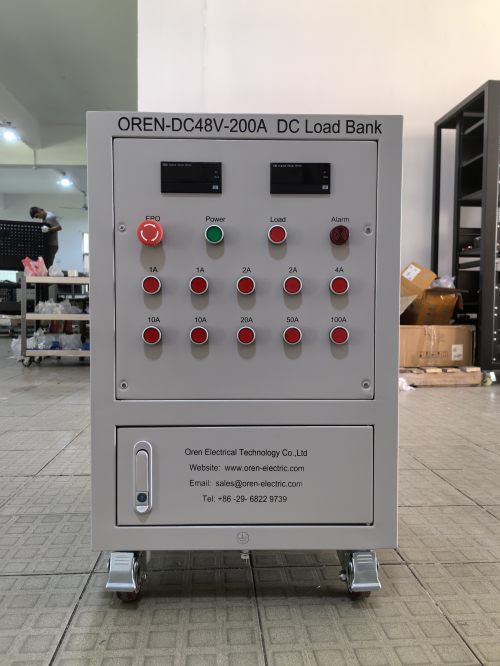
Modern portable load banks also feature modular designs for easy transport and scalability, with IP54-rated enclosures, fork-lift pockets, and E-stop functionality for operator safety. Calibration every 12 months ensures measurement accuracy within ±1%, while built-in overvoltage, overcurrent, and short-circuit protections meet UL/CE certification requirements. As renewable energy integration grows, especially in wind and solar farms, portable load banks are increasingly used for grid connection testing to verify system stability under dynamic load conditions.