
In the realm of electrical engineering and power system maintenance, ensuring reliable performance under real-world conditions is paramount. Portable load banks serve as indispensable tools for verifying generator capacity, validating uninterruptible power supply (UPS) systems, and testing renewable energy integration—especially in microgrids or off-grid installations. Whether used during factory acceptance tests (FAT), commissioning phases, or routine maintenance, portable load banks provide controlled resistance to simulate actual electrical loads, enabling engineers to evaluate equipment behavior before it encounters live operational stress.
A typical portable load bank consists of a chassis-mounted assembly containing resistive, reactive, or combined RLC (resistor-inductor-capacitor) elements that can be adjusted via manual controls or digital interfaces. These devices allow users to apply precise levels of load—ranging from 10 kW to over 5 MW—to test generators, transformers, switchgear, and inverters. The core principle lies in converting electrical energy into heat through high-power resistors, which must be efficiently dissipated using forced-air cooling systems (fans), thermal sensors, and protective interlocks.
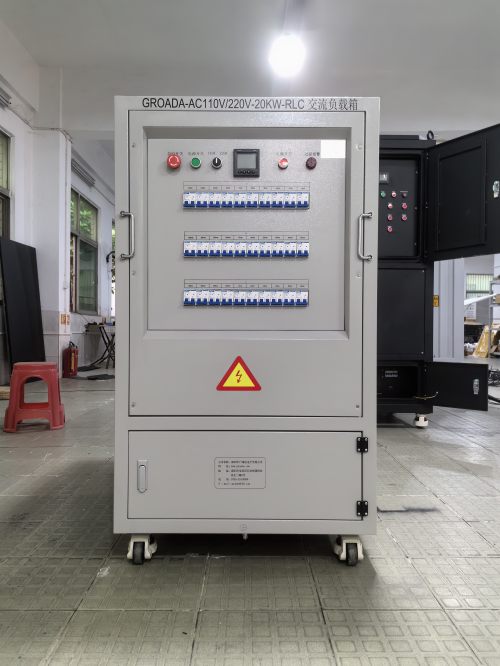
For example, a common scenario involves testing a diesel generator rated at 1,000 kVA prior to delivery to a remote mining site. Engineers would use a three-phase resistive load bank capable of delivering up to 800 kW per phase at 480 VAC to simulate full-load operation. This ensures the engine’s torque response, fuel consumption efficiency, voltage regulation, and governor stability are all within acceptable limits as defined by IEC 60348 standards for generator testing. In another case, a hospital’s backup UPS system might undergo reactive load bank testing to assess its ability to handle inductive loads such as motors or lighting ballasts without voltage sag or harmonic distortion—a critical requirement for life-support equipment.
The evolution of load bank technology has led to increasingly sophisticated designs incorporating features like automatic load step control, real-time monitoring via Ethernet/IP or Modbus protocols, and integrated data logging for compliance reporting. Modern units often feature IP54-rated enclosures for dust and water protection, ruggedized steel frames with lifting eyes and fork-lift pockets, and CE/UL-certified electrical components ensuring safety in diverse global markets. Additionally, many manufacturers now offer modular configurations that allow field technicians to scale testing capacity based on project needs—such as adding capacitive modules for grid-tie inverters or switching to pure inductive mode for motor-driven applications.
From an operational perspective, portable load banks are essential not only for new installations but also for preventive maintenance programs. According to IEEE Std 1159-2019, periodic load testing helps identify issues like bearing wear, insulation degradation, or poor synchronization in parallel generators. A simulated example from a wind farm in Northern Europe showed that repeated load cycling improved the detection rate of turbine generator faults by 40% compared to standard no-load checks—an outcome directly linked to earlier identification of rotor imbalance and excitation system inconsistencies.
Safety remains a top priority. Every modern load bank must comply with relevant national and international standards including IEC 60034-1 (rotating machines), IEC 61000-4-2/4/5 (electromagnetic compatibility), and UL 1008 (switchgear). Key protections include ground fault detection, short-circuit current interruption (with fuses or circuit breakers), overtemperature shutdowns triggered by thermistors or RTDs, and emergency stop buttons located both on the unit and remotely. Some models even include fail-safe mechanisms that automatically reduce load if temperature exceeds safe thresholds, preventing catastrophic failure due to overheating resistor blocks.
Calibration is equally crucial. Load banks should be calibrated annually—or after significant physical transport or environmental exposure—using certified reference instruments such as precision wattmeters traceable to NIST or equivalent metrology labs. Calibration certificates ensure accuracy within ±1% of the rated output, which is vital for compliance audits and warranty claims. Consumables like resistor elements typically last 5–10 years depending on usage intensity, while fan assemblies may require replacement every 2–3 years in dusty environments. Recommended spare parts lists usually include fusible links, contactor coils, temperature probes, and auxiliary power supplies.
Portability enhances accessibility across various settings—from construction sites to military bases—and reduces downtime associated with fixed installations. Units weighing between 150 kg to 2,000 kg can be easily transported using forklifts, trailers, or even air cargo. For mobile teams working in remote locations, compact yet powerful portable solutions like the Model LBP-750KVA have proven effective in validating off-grid solar-battery hybrid systems, where load variability and intermittent generation pose unique challenges.
Ultimately, choosing the right portable load bank requires careful consideration of application type (resistive vs. reactive vs. combination), portability requirements, safety certifications, calibration intervals, and integration capabilities with existing SCADA or asset management platforms. As power systems become more complex—with growing reliance on distributed energy resources, EV charging stations, and smart grids—the demand for accurate, flexible, and safe load testing continues to rise. Investing in quality portable load bank equipment is not merely about compliance—it’s about future-proofing infrastructure resilience and safeguarding mission-critical operations.









