
Load bank testing is a critical procedure used to verify the performance, reliability, and safety of power generation systems such as generators, uninterruptible power supplies (UPS), and backup energy sources. This method simulates real-world electrical loads in a controlled environment, allowing engineers to validate system functionality under various operating conditions without relying on actual grid or load demands.
The introduction of load bank testing begins with the need to ensure that standby power systems—commonly found in hospitals, data centers, and industrial facilities—are ready to operate when required. Without regular testing, hidden faults like fuel system issues, voltage instability, or poor cooling efficiency can go undetected until a failure occurs during an emergency.
In the body of this article, we examine four main types of load banks: resistive, reactive, capacitive, and combined (RLC). Resistive load banks simulate purely resistive loads (e.g., lighting, heating) and are widely used for basic generator performance verification. Reactive load banks mimic inductive or capacitive loads (such as motors or transformers) and help assess power factor and excitation system response. Combined RLC load banks provide a more realistic simulation by applying all three load characteristics simultaneously—a necessity for modern three-phase systems in renewable energy applications. Active load banks, which use electronic switching and feedback control, offer precise load regulation and are ideal for automated test environments.
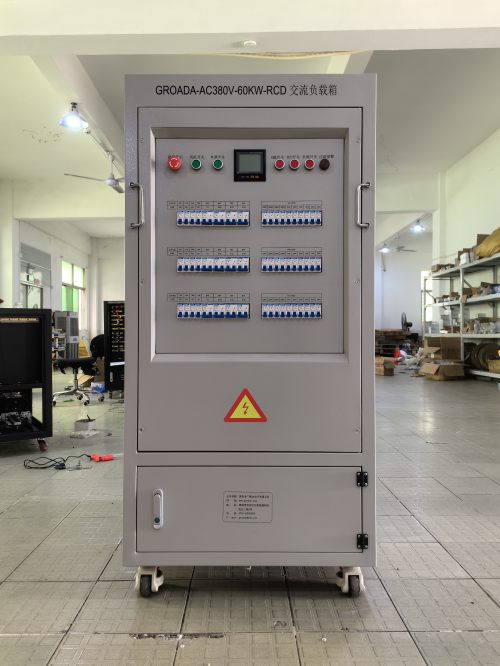
Safety standards such as IEC 60034-1 and IEEE 1547 guide the design and operation of load banks. These standards mandate grounding, over-temperature protection, short-circuit safeguards, and compliance with CE/UL/CCC certifications depending on regional markets. Mechanical considerations include IP protection ratings for dust and water resistance, portability via lifting rings or fork-lift bays, and robust chassis structures for field use.
A simulated case study from a data center highlights the value of periodic load testing: during a 4-hour resistive load test at 80% rated capacity, a diesel generator showed inconsistent voltage regulation due to aging AVR components—an issue only detected through active load monitoring. This allowed preventive maintenance before a critical outage.

In conclusion, load bank testing ensures operational readiness, prevents unexpected failures, and supports long-term asset management. Whether used in factory acceptance tests or routine site inspections, it remains one of the most effective methods to validate power system integrity across industries.