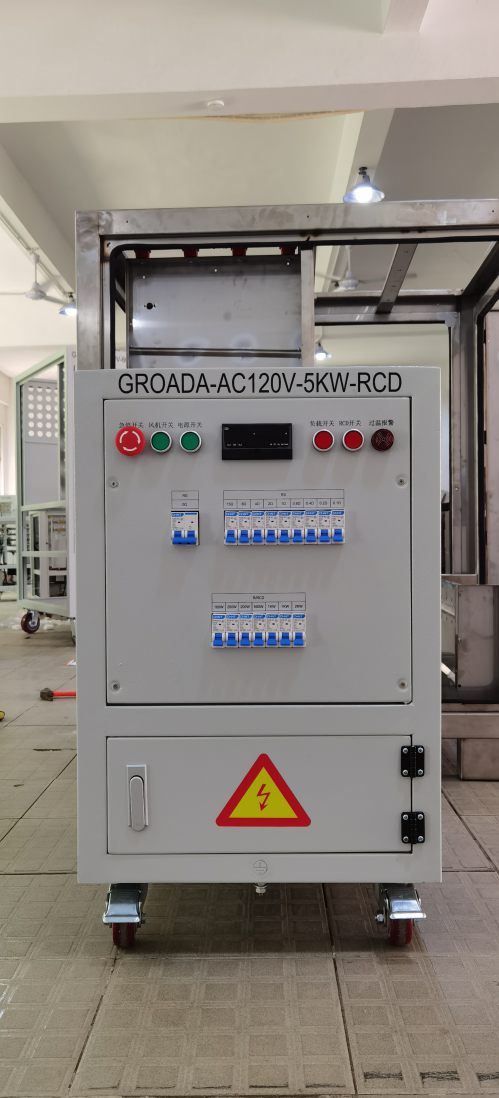
When testing generators, uninterruptible power supplies (UPS), or microgrids, selecting the appropriate load bank is critical to ensure reliability, efficiency, and compliance with international standards such as IEC 60034-1 and IEEE 115. A load bank simulates real-world electrical loads by converting electrical energy into heat, allowing engineers to verify system performance under full, partial, or varying load conditions. Resistive load banks are ideal for testing diesel generators and fuel cells, offering stable thermal characteristics and predictable power factor behavior. For applications involving reactive components—such as motors, transformers, or inductive loads—reactive load banks (inductive or capacitive) help assess voltage regulation, harmonic distortion, and dynamic response. Combined RLC load banks provide comprehensive testing across all three parameters and are essential for validating complex systems like wind farms or hybrid power systems during grid synchronization. Portable load banks offer flexibility for on-site generator acceptance testing, while fixed installations support continuous monitoring in data centers or industrial facilities. Safety features including short-circuit protection, over-temperature shutdown, and grounding compliance with UL/CE/CCC certifications are mandatory for safe operation. Proper calibration every 12 months using NIST-traceable equipment ensures measurement accuracy, while fan replacement every 2–3 years maintains cooling efficiency. Based on field experience from anonymous case studies, a 500 kW three-phase resistive load bank successfully validated a standby generator at a hospital facility, confirming 100% load capacity and automatic transfer switch functionality over a 4-hour test period. This practical approach not only meets technical validation needs but also supports operational readiness and regulatory compliance.