
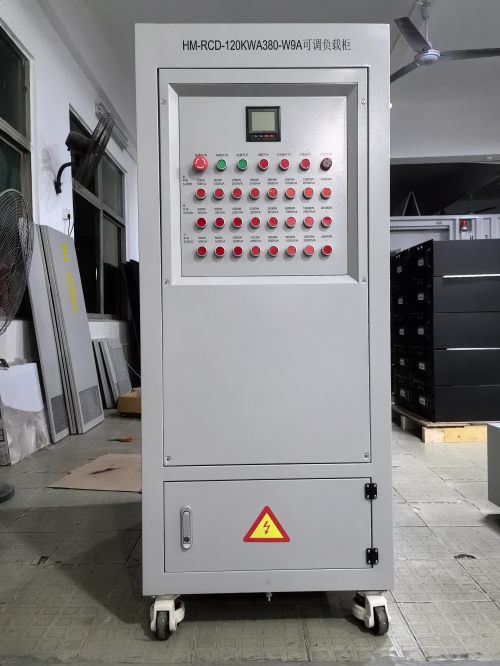
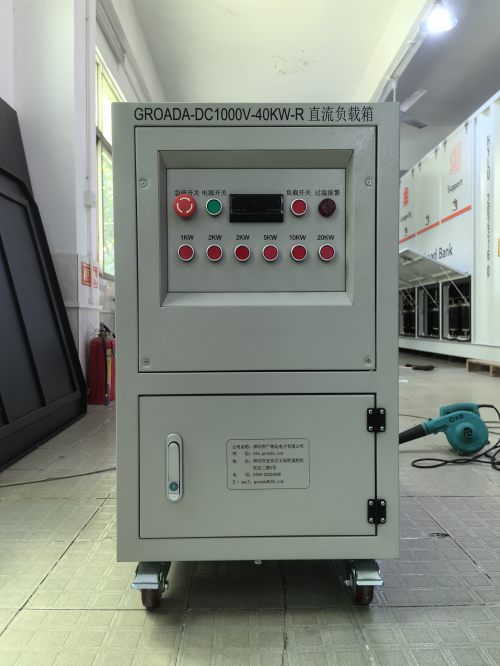
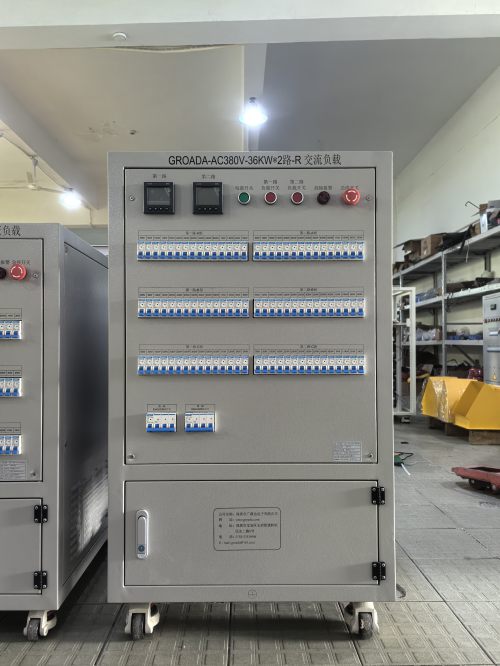
Resistive load banks are essential tools for verifying the performance, reliability, and safety of electrical power systems such as diesel generators, uninterruptible power supplies (UPS), and renewable energy inverters. Unlike reactive or capacitive loads, resistive load banks convert electrical energy directly into heat through high-power resistors, offering a stable and predictable load profile. This makes them ideal for factory acceptance testing (FAT), commissioning, and routine maintenance of power generation equipment.
Practical applications include simulating real-world loading conditions during generator start-up tests, ensuring that engine cooling systems, fuel delivery, and voltage regulation function correctly under full load. In data centers, resistive load banks help validate UPS systems by applying steady current draws to confirm backup runtime and automatic transfer switch responsiveness. They are also used in microgrid integration projects—such as solar farm grid synchronization—to test how inverters respond when subjected to sudden load changes.
Advantages of resistive load banks include simplicity of design, high accuracy in load simulation, minimal harmonic distortion, and compatibility with both single-phase and three-phase systems. Compared to passive reactive load banks, resistive units do not require complex switching or control logic, reducing failure points. Modern portable resistive load banks often feature digital control interfaces, remote monitoring via Ethernet or wireless modules, and built-in protection systems like over-temperature sensors and E-STOP functionality.
Recent trends show increased demand for smart load banks integrated with IoT platforms for predictive maintenance. For example, a 2023 IEEE paper highlights how cloud-connected resistive load banks can log thermal profiles and alert operators before resistor overheating occurs—an important advancement in preventing unplanned downtime. Additionally, industry standards such as IEC 60034-1 (rotating machines) and UL 1008 (automatic transfer switches) now explicitly recommend periodic load testing to ensure system compliance.
Frequently asked questions:
1. What is the difference between resistive and reactive load banks?
Resistive loads simulate real power consumption; reactive loads mimic inductive or capacitive loads (e.g., motors).
2. How often should a generator be tested with a resistive load bank?
Typically monthly for critical systems, annually for non-critical setups—per NFPA 37 guidelines.
3. Can resistive load banks damage a generator if overloaded?
Yes—if exceeding rated capacity, but modern units have auto-shutdown features to prevent this.
4. Are portable resistive load banks safe to use indoors?
Yes, provided ventilation is adequate and temperature limits are monitored.
5. What certifications should I look for in a load bank?
CE, UL, CCC, and ISO 9001 certification ensure safety and quality.
6. How do you calibrate a resistive load bank?
Annually using NIST-traceable multimeters and calibrated current clamps.
7. Do resistive load banks consume electricity?
They convert it to heat, so yes—they’re an energy sink, not a source.
8. Why is grounding important for load bank operation?
To prevent electric shock hazards and reduce electromagnetic interference (EMI).
Based on field experience across North America and Europe, resistive load banks remain the most reliable method for validating generator and UPS performance under controlled conditions.









