
Standby and prime generators are only as reliable as the load banks used to test and condition them. When a generator must run around the clock—powering data centers, hospitals, manufacturing lines, or critical infrastructure—the load bank behind it has to survive continuous duty without derating, overheating, or nuisance shutdowns. This guide breaks down the five load bank types proven in real 24/7 testing environments, how they behave under sustained load, and how to choose the right unit for nonstop operation.
Why 24/7 Duty Changes Load Bank Selection
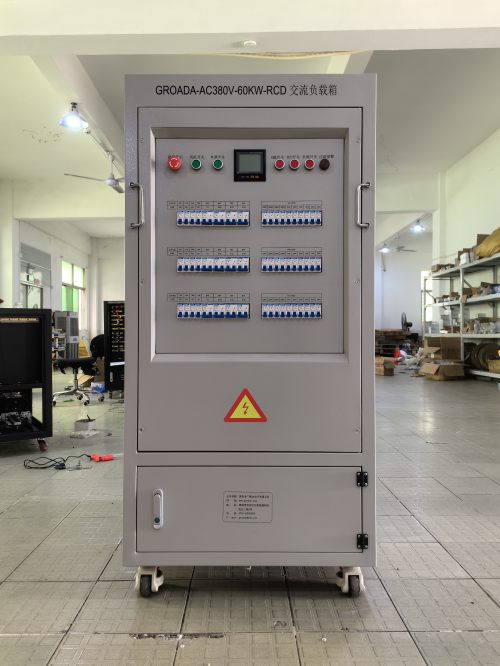
A load bank that performs well during a 30-minute acceptance test can fail badly during days of continuous operation. Sustained duty exposes weaknesses that short tests hide: element fatigue, cooling airflow limits, control-system drift, and connection heating. For true 24/7 use you need components rated for continuous duty, not intermittent duty. That means heavy-gauge resistive elements, oversized cooling, industrial contactors, and control logic designed to hold a stable load indefinitely.
Two performance factors matter most. First, thermal stability—the ability to dissipate rated power hour after hour without airflow starvation or element degradation. Second, load accuracy over time, because generator load testing and battery conditioning both depend on holding a precise kW or kVA setpoint as ambient conditions shift.
1. Resistive Load Banks for Continuous kW Loading
Resistive load banks remain the workhorse for 24/7 generator testing. They apply a pure resistive (unity power factor) load, converting electrical energy to heat through wire-wound or ribbon elements, then rejecting that heat with forced-air cooling. For continuous operation, the key specifications are element temperature rating, airflow volume, and duty cycle rating.
Look for stainless-steel or nickel-chromium elements rated for continuous service and mounted with room for thermal expansion. Continuous-duty resistive units typically use redundant cooling fans and temperature-monitored zones so a single fan fault does not cascade into an element burnout. When sized correctly at 20–30% above the required test load, a resistive load bank can hold full rated kW for days without derating, making it the default choice for prime-power and endurance testing.
2. Reactive (Inductive) Load Banks for Realistic Power Factor
Real-world generator loads are rarely unity power factor. Motors, transformers, and UPS systems draw reactive current, so testing at 0.8 power factor reveals how a generator's alternator and voltage regulator behave under realistic stress. Inductive load banks add a lagging reactive component that resistive-only testing cannot reproduce.
For 24/7 duty, inductive reactors generate significant heat in their windings, so continuous-rated units use larger cores and dedicated cooling. Combined resistive/reactive load banks let engineers dial in both kW and kVAR simultaneously, which is essential for validating alternator sizing and long-term thermal margins on generators that run continuously at partial power factor.
3. Combined Resistive/Reactive Load Banks
When a single unit must reproduce complete facility load profiles, combined resistive/reactive load banks are the practical answer. They integrate resistive kW and inductive kVAR sections in one enclosure with unified controls, allowing operators to simulate the exact power factor a generator will see in service.
These units shine in commissioning and load-acceptance testing for mission-critical sites. For continuous operation, choose a design with independent cooling for the resistive and reactive sections and interlocks that prevent applying reactive load without adequate resistive load—a common cause of alternator instability during extended runs.
4. Load Banks with Advanced Cooling and Redundant Fans
Cooling is the single biggest limiter of continuous load bank operation. The fourth category is any load bank—resistive or combined—engineered specifically around thermal endurance. Features that separate a true 24/7 unit from an intermittent-duty unit include multiple cooling fans on independent circuits, airflow proving switches, over-temperature protection per element zone, and enclosures designed for outdoor continuous service.
In sustained testing, ambient temperature climbs around the equipment, so front-to-top or bottom-to-top airflow layouts prevent hot-air recirculation. Continuous-rated units also use temperature-derated conductors and torque-verified terminations, because connection heating is a leading cause of failure during multi-day runs.
5. Automated and Networked Load Banks for Unattended Operation
True 24/7 testing usually means unattended operation, and that demands intelligent controls. The fifth type covers load banks with automated load stepping, PLC or microprocessor control, data logging, and remote monitoring over Ethernet or Modbus. These systems hold a programmed load profile, log kW, voltage, current, and temperature continuously, and shut down safely on fault without an operator present.
For endurance testing and periodic exercise of standby generators, automated load banks can run scheduled load profiles that mirror real duty cycles, then export trend data for analysis. Remote alarms and safe-shutdown logic make them the safest choice for facilities where the load bank runs overnight or across weekends without staff on site.
How to Size a Load Bank for Continuous Duty
Sizing for 24/7 operation follows a simple discipline: rate for continuous, not peak. Confirm the load bank carries a continuous-duty rating at your site's maximum ambient temperature, then add margin so the unit is not running at 100% capacity indefinitely. Verify the power factor range matches your generator's real load, and confirm the control system supports the load steps and logging you need for the test duration.
Also account for cable sizing and connection torque, since these components heat continuously under sustained load. A load bank correctly matched to the generator, with adequate cooling headroom and verified terminations, will test and condition a generator reliably through any continuous-operation cycle.
Conclusion
For nonstop generator testing, the best load bank is the one engineered for continuous duty from the elements outward: robust resistive loading, realistic reactive capability, redundant cooling, and intelligent automated controls. Match the load bank type to your generator's real-world power factor and run duration, size with thermal margin, and you gain confidence that your generator will perform when it matters most—continuously, without interruption.









