
Electronic load banks are essential tools in the testing, validation, and performance evaluation of electrical power systems such as diesel generators, uninterruptible power supplies (UPS), solar inverters, and microgrids. These devices simulate real-world electrical loads without requiring actual consumption of energy, making them indispensable for factory acceptance tests (FAT), commissioning, preventive maintenance, and grid integration verification. As power infrastructure becomes more complex—with increased renewable penetration, hybrid systems, and distributed generation—load bank testing is no longer optional but a critical step to ensure reliability, efficiency, and compliance with international standards like IEC 60034-1 and IEEE 115.
A load bank can be categorized based on its impedance type: resistive, reactive (inductive or capacitive), or a combination (RLC). Resistive load banks primarily dissipate active power as heat using high-power resistor blocks and are used to test generator capacity under full-load conditions. Reactive load banks simulate inductive or capacitive loads found in motors, transformers, or capacitor banks, allowing engineers to assess voltage regulation, excitation system response, and harmonic distortion. RLC load banks combine both types to replicate complex nonlinear loads typical in industrial facilities or data centers. For instance, a three-phase resistive load bank rated at 500 kW at 480 V AC can be configured to operate across all phases simultaneously, enabling balanced loading during generator set testing.
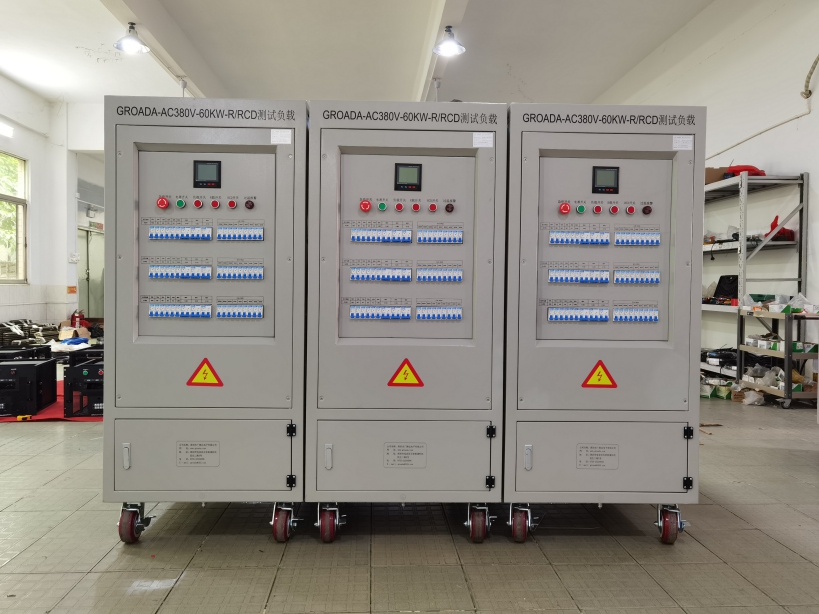
Modern electronic load banks often feature digital control interfaces such as Modbus TCP/IP, CAN bus, or Ethernet protocols, which allow remote monitoring and automation via SCADA systems. This capability enhances operational safety by reducing manual intervention while increasing precision through programmable load steps, ramp rates, and hold times. Many units also include built-in measurement instruments that provide accurate readings of voltage, current, active power (kW), reactive power (kVAR), and power factor (PF) with an accuracy within ±0.5% of full scale. Such features are vital when verifying generator performance against manufacturer specifications or certifying compliance with utility interconnection requirements.
Thermal management is another key design consideration. Passive air-cooled models rely on forced convection from axial fans, typically operating up to 70°C ambient temperature, while water-cooled variants use closed-loop fluid circulation to maintain lower internal temperatures—ideal for continuous operation over several hours. The heat dissipation capability must match the rated load; for example, a 200 kW resistive load bank might require a cooling airflow of at least 20 m³/min to avoid overheating. Thermal protection mechanisms like RTD sensors and automatic shutdown upon exceeding safe temperature thresholds (e.g., 120°C) prevent damage to components and enhance equipment longevity.
Safety certifications such as CE, UL, and CCC ensure that load banks meet regional electrical safety regulations. Key protective features include grounding terminals, short-circuit protection (with fuses or circuit breakers), overvoltage/undervoltage detection (±10% tolerance), and emergency stop buttons (E-STOP) mounted on accessible panels. In addition, modern designs incorporate IP54-rated enclosures to protect against dust ingress and splashing water, making them suitable for outdoor deployment in construction sites or temporary power setups.
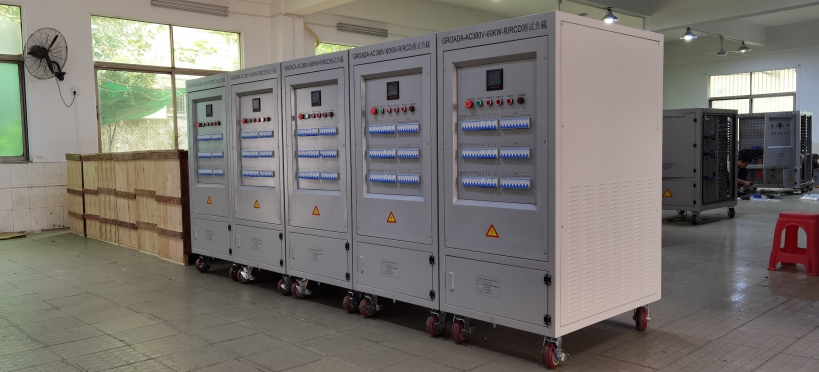
Portability is increasingly important for field applications. Units designed for mobile use weigh between 50–300 kg depending on power rating, with lifting eyes, fork-lift pockets, and ruggedized chassis made from stainless steel or powder-coated aluminum. A simulated case study from a wind farm in Northern Europe illustrates this point: a portable 300 kVA three-phase reactive load bank was deployed to validate the dynamic response of a 2 MW turbine during grid synchronization. Over a 4-hour test period, the unit maintained a stable reactive power output of 200 kVAR, confirming the turbine’s ability to regulate voltage under varying load profiles—a result later verified by the local distribution network operator.
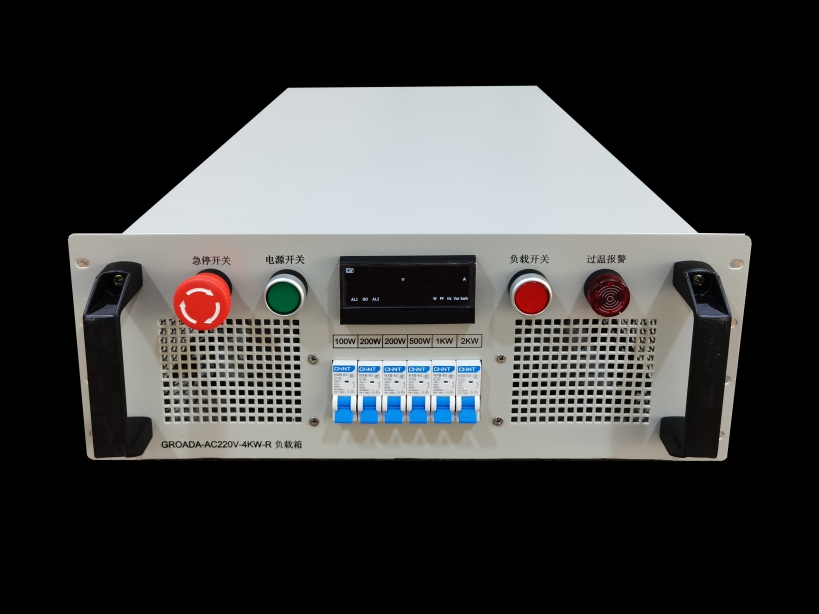
Calibration is crucial for maintaining accuracy over time. Most manufacturers recommend annual calibration using traceable standards like those provided by NIST or national metrology institutes. Replacement intervals for consumable parts—such as resistor blocks (every 3–5 years depending on usage) and fan assemblies (every 2 years)—should be documented in a preventive maintenance schedule. Spare parts lists typically include thermal sensors, contactors, control boards, and replacement resistor packs.
In summary, electronic load banks serve as the backbone of power system diagnostics. Their versatility in simulating diverse load profiles, combined with advanced control, measurement, and safety features, makes them ideal for both laboratory and field environments. Whether it's validating a backup generator before a hospital emergency drill or testing a UPS system prior to commissioning, proper load bank testing ensures that power systems perform reliably under real-world conditions—not just on paper.









