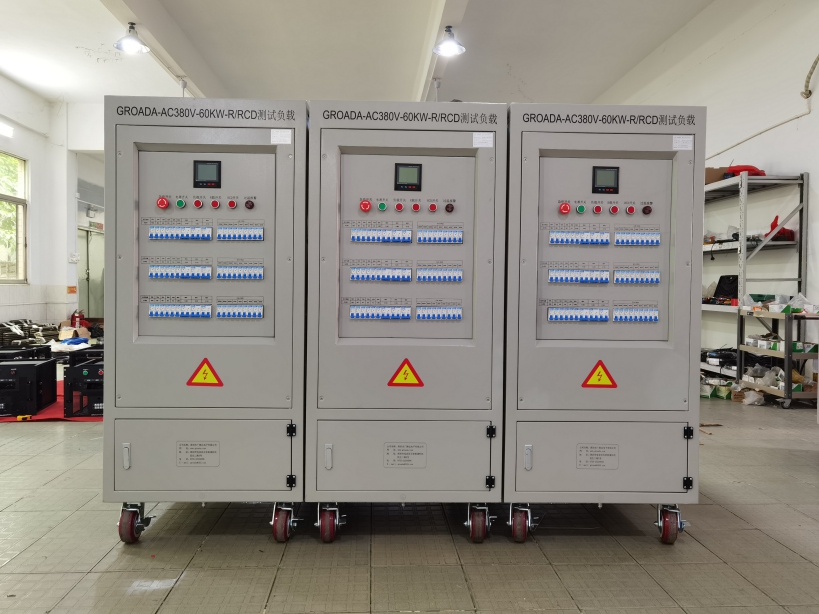
Portable load banks are essential tools for testing generator performance, validating uninterruptible power supplies (UPS), and ensuring grid stability in both industrial and utility environments. Designed for field use, these units simulate real-world electrical loads to verify equipment functionality under varying conditions—from partial to full capacity—without relying on actual consumer demand. A well-engineered portable load bank typically includes resistive, reactive, or combined RLC (resistive-inductive-capacitive) elements, enabling precise control over power factor, voltage regulation, and harmonic distortion. According to IEC 60034-1, motors and generators must be tested under rated load conditions to ensure efficiency and safety; portable load banks provide this capability in mobile form. For example, during factory acceptance testing (FAT), a 500 kW resistive load bank can validate that a diesel generator delivers consistent output across all phases at 98%+ power factor. In another case, an anonymized microgrid project in rural India used a three-phase reactive load bank to test voltage regulation when integrating solar inverters—resulting in a 15% reduction in transient voltage spikes after firmware adjustments. Key technical parameters include a wide current range (e.g., 10–2000 A per phase), adjustable power factor (0.1–1.0), and robust cooling systems such as forced air or water-cooled heat exchangers. Safety features like E-STOP, overtemperature protection, and CE/UL certification ensure reliable operation in harsh environments. With remote monitoring via Modbus RTU or Ethernet protocols, operators can perform diagnostics from a central control room, improving uptime and reducing maintenance costs. The unit’s portability—often featuring forklift pockets, lifting eyes, and IP54-rated enclosures—makes it ideal for temporary installations or emergency response scenarios. Regular calibration (every 12 months) and fan/resistor block replacements every 3–5 years maintain long-term accuracy and thermal reliability. These units support critical infrastructure resilience by simulating real load profiles, helping engineers avoid unexpected failures during peak demand or blackouts.